
How each route works
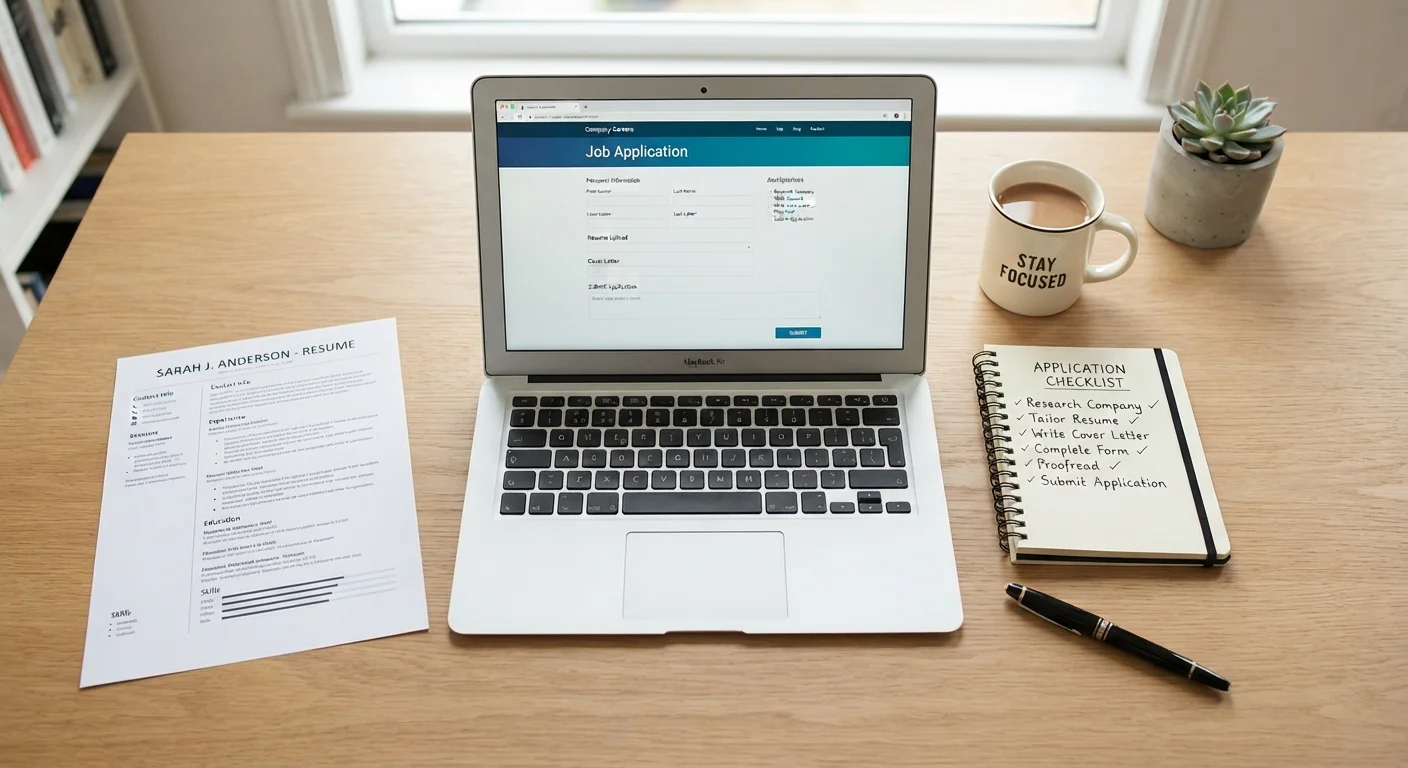
When you apply through a company website, you go directly to the employer's careers page and submit your materials into their applicant tracking system (ATS). The ATS is software that stores resumes, filters applications against job criteria, and routes candidates to recruiters. Most mid-size and large employers use one.
When you apply through a job board such as Indeed, LinkedIn, or a niche industry site, your application may follow one of two paths. Some boards redirect you to the company's ATS anyway, so the end result is the same as applying directly. Others let you apply within the board's own platform, which means your materials sit in a third-party system until the employer retrieves them. Understanding how different boards route applications helps you know which situation you are in before you submit.
What direct applications offer
Applying through a company website gives you the cleanest signal that a position is real and currently open. Job boards sometimes display listings that have already been filled or that the employer forgot to close. The company's own careers page is more likely to reflect its actual hiring status.
Direct applications also let you explore the full scope of what a company has posted. A board may only surface certain roles based on its algorithm or the employer's paid promotion budget. The careers page shows everything, including roles that were never syndicated to any board.
One practical drawback: each company's portal has its own format. You may need to create a new account, re-enter information already on your resume, and navigate an unfamiliar interface for every employer you target. That friction adds up during a high-volume search.
| Criterion | Company website | Job board |
|---|---|---|
| Listing accuracy | Generally current and employer-maintained | May include filled or expired roles |
| Role discovery | Limited to one employer per visit | Many employers in one search |
| Application speed | Slower; separate account per employer | Faster; stored profile and quick apply |
| Posting timeliness | Available as soon as the role is posted | Delay of hours to days after original post |
| Role visibility | All posted roles, including un-syndicated ones | Only roles the employer chose to advertise |
| ATS destination | Directly into employer's ATS | Employer's ATS or board's own system |
What job boards offer
Job boards consolidate discovery. Instead of visiting twenty careers pages, you search once and get results from many employers. For someone who is open to a range of companies or locations, that efficiency matters. Boards also let you set up alerts so you hear about new postings without checking manually.
Many boards store your resume and let you apply to multiple roles quickly, which suits a broad campaign. However, speed can work against you. When the apply process takes two clicks, it is easy to send the same generic resume to every posting. Hiring managers notice that, and a generic resume performs poorly against ATS keyword filters. A repeatable tailoring approach keeps quality high even when volume is part of your strategy.
There is also a timing issue. Job boards pull listings on a delay. A role posted on a company careers page on Monday may not appear on a board until Wednesday or later, by which point some employers have already started reviewing applications.
Application visibility and ATS behavior
What an ATS actually does with your application
An applicant tracking system stores every incoming application and lets recruiters search or filter by keyword, credential, or location. Most large employers and many smaller ones use one. Your resume does not land in a human inbox the moment you submit it; it enters a database. How quickly a recruiter sees it depends on how actively they are reviewing and how well your resume matches the role's criteria.
Whether you apply through a board or a careers page, your materials usually pass through the same ATS. What varies is the metadata attached to your application. Some ATS platforms flag the source of each application, so a recruiter can see that yours came from Indeed, from LinkedIn, or directly from the company site. Whether that affects how an application is treated depends entirely on the employer; there is no universal rule.
What does affect visibility is how well your resume matches the language in the job posting. Both routes funnel into keyword-based screening. Understanding why applications go unanswered covers this filtering process and what you can do before hitting submit. A well-matched resume performs better regardless of which channel you used to submit it.
Choosing based on your search stage
The two routes are not mutually exclusive. Many active job seekers use boards to find openings and then go to the company's careers page to apply, getting discovery from the board and submitting through the more direct channel. That approach captures most of the advantages of both.
If you have a defined list of target employers, start with their careers pages. Check them weekly, create profiles where the portal allows, and apply as soon as a relevant role appears. If your search is still in an exploratory phase, a board is a practical starting point. Use it to map the market, then narrow to direct applications once you have clearer targets.
Before submitting through either route, run through a readiness check. An application readiness checklist covers resume formatting, cover letter alignment, and profile consistency so your materials hold up wherever they land.