
Define your target before you search
The single step that most job seekers skip is also the one that determines how productive everything else will be: deciding exactly what job they are looking for. Without a clear target, every subsequent action from writing a resume to answering interview questions becomes harder and less effective.
Start by listing the role titles that match your skills and interest. Check how those titles appear in actual job postings, because the same role can carry different names across industries. Identify two or three industries or company types where you have the strongest fit or the most genuine interest. Set a realistic geographic scope, including whether remote or hybrid options expand your range.
This definition work also shapes your networking conversations, your resume framing, and the questions you ask in interviews. A candidate who can say clearly what they do and what they are looking for makes every interaction more productive for both sides.
Build and position your materials
Your resume, LinkedIn profile, and cover letter are not static documents. They are working materials that should shift slightly for each application to reflect the language and priorities of the specific role.
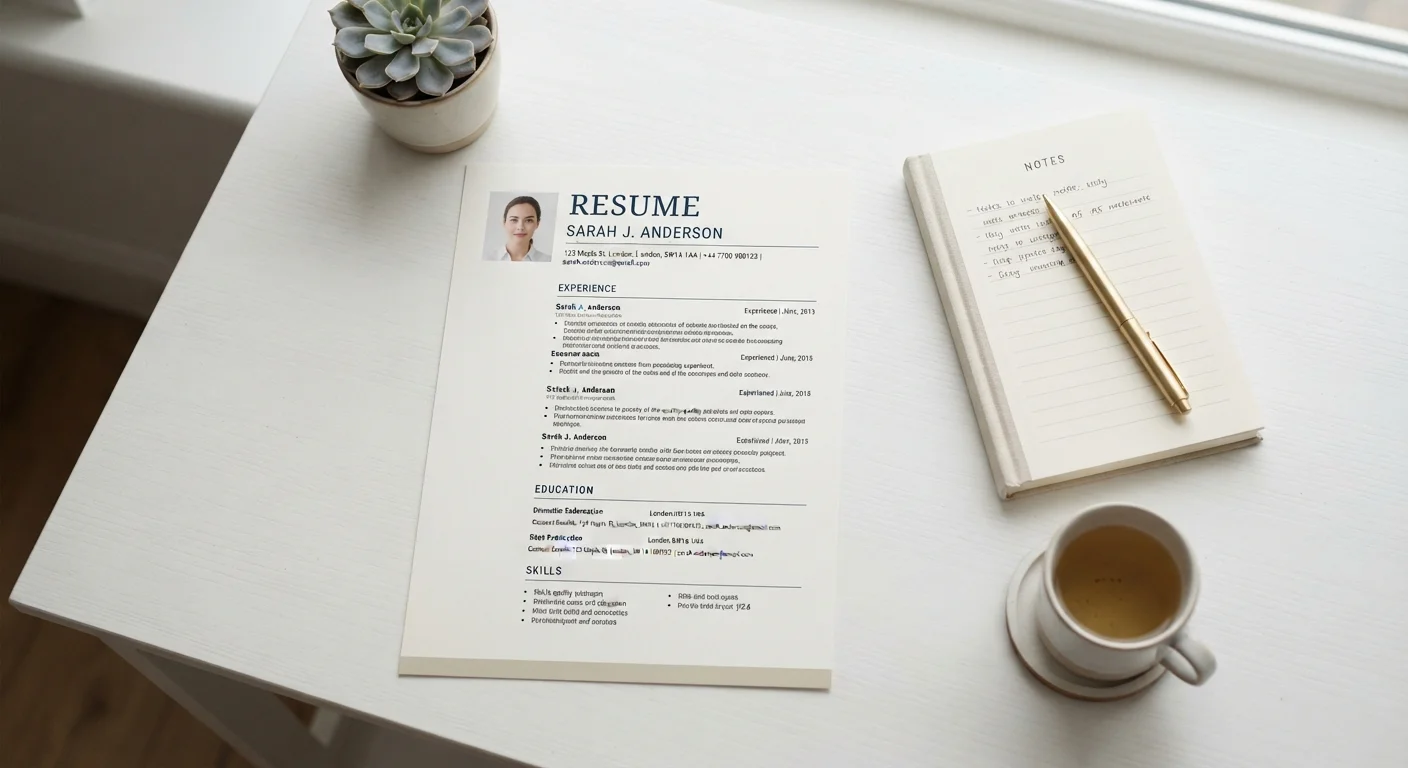
For your resume, use a clean, single-column format that passes ATS software. Lead each bullet point with a strong action verb and include a specific result where you have one. Avoid generic phrases like 'responsible for' or 'assisted with.' A recruiter scanning your document for the first time needs to understand your contribution, not your job description.
When reviewing a job description, copy it into a plain text document and highlight every skill or responsibility that appears more than once. Those repeated terms are the ones the hiring team cares about most, and your resume should reflect them directly.
Applicant tracking systems (ATS) score resumes partly by keyword density against the job description, so matching language improves the odds your application reaches a human reviewer.
Before your first interview with a company, look up the interviewer on LinkedIn and review any public content they have shared. This gives you genuine context for their perspective, not flattery material.
Interviewers respond more positively to candidates who ask informed questions, and researching your specific interviewer takes the conversation beyond generic company research.
Your LinkedIn profile should tell the same story as your resume but with more room for context. A complete profile with a professional photo, a specific headline, and a summary written in the first person performs better in recruiter searches than a sparse one.
Cover letters are not always required, but when they are, treat them as a specific argument for why this role at this company suits you. One focused paragraph connecting your experience to the employer's stated needs is more useful than three generic ones.
Find open roles efficiently
Job boards are a legitimate part of a search, but they should not be the whole strategy. Postings on large boards attract hundreds of applications, and many roles are filled before they are ever publicly listed.
70%
Jobs filled through networking
A widely cited LinkedIn workforce report found that up to 70% of positions are filled through professional connections rather than public postings.
7 seconds
Average initial resume review time
Research by Ladders, a career platform, found that recruiters spend an average of about seven seconds on an initial resume scan before deciding to read further.
Expand your search by reaching out directly to people in your target field. A brief, specific message asking for a 20-minute informational conversation, not a job, is well-received far more often than job seekers expect. These conversations often surface roles that are not posted or give you an inside view of a company's culture before you apply.
Set up job alerts on two or three platforms with precise keyword and location filters rather than browsing broadly. This delivers relevant listings to your inbox and frees time for the outreach that actually moves a search forward.
Apply with intention, not volume
Applying to hundreds of roles rarely works
Mass-applying to jobs without tailoring your resume or researching the employer produces very low response rates and burns time you could spend on targeted outreach. A focused list of 10 to 20 well-matched roles each week, applied to with care, outperforms a spray-and-pray approach. Quality signals effort to a hiring team in ways that volume cannot.
Before submitting any application, verify that you meet the core requirements. Job descriptions often include a mix of required and preferred qualifications. If you meet roughly 70 to 80 percent of the listed requirements, the application is worth making. Waiting for a perfect match that never exists is a common reason searches stall.
Track every application in a spreadsheet
Create a simple spreadsheet with columns for company name, role title, date applied, contact name, interview dates, and current status. Updating it after every action takes less than two minutes and prevents the common mistake of following up too late or losing track of where you stand with each employer.
After applying, a brief follow-up email to the hiring manager or recruiter, sent three to five business days later, is appropriate and often appreciated. Keep it short: confirm your interest, reference the specific role, and offer to answer questions. Do not send multiple follow-ups in quick succession.
Prepare for interviews at every stage
Modern hiring processes often include a phone screen, one or more video interviews, and sometimes a skills assessment or panel interview. Each stage has a different purpose and calls for different preparation.
Phone screens are typically run by a recruiter whose goal is to confirm basic fit and salary alignment. Have your resume and the job description in front of you. Be ready to state your interest in the role clearly and to give a realistic compensation range.
For video and in-person interviews, use the STAR method (Situation, Task, Action, Result) to structure behavioral answers. Prepare three to five examples from your experience that you can adapt to different question types. Practice delivering them out loud, not just in your head.
“The most dangerous phrase in the language is 'we've always done it this way.' The job search has changed more in the last decade than in the previous fifty years, and candidates who adapt to that change find opportunities that others miss.”
— Richard Bolles, Author of 'What Color Is Your Parachute?', the best-selling career guidance book
Research the company's recent activity, its stated values, and the team you would join. Prepare four or five questions that reflect that research. Asking nothing, or asking only about salary and vacation time, signals low interest.
Evaluate offers and negotiate
When an offer arrives, you do not need to respond immediately. It is standard to ask for 24 to 48 hours to review the full package, which includes base salary, benefits, paid time off, remote work policies, and any equity or bonus structure.
Compare the offer against salary data from sources such as the U.S. Bureau of Labor Statistics or the Department of Labor's wage data tools. Consider your total compensation picture, not just the base figure.
Salary research is general information
Published salary ranges from sources such as the U.S. Bureau of Labor Statistics Occupational Outlook Handbook reflect broad averages across industries, regions, and experience levels. Use them as a reference point, not a guarantee of what any specific employer will pay. For decisions about compensation, benefits, or financial planning during a job transition, consult a qualified professional. You may also find the financial planning guide useful for managing income changes during a search.
Negotiation is normal. Most employers build a range into their offer and expect some discussion. State your counteroffer with a specific number rather than a range, and connect it briefly to your experience or market data. The vast majority of employers do not withdraw offers because a candidate negotiated professionally.
Once you accept, confirm the start date and any pre-employment steps in writing. Give your current employer proper notice and close that chapter professionally, since professional networks are smaller than they appear.