Why battery myths are so persistent
Old habits from older technology die hard. Many widely repeated rules about phone charging come from the era of nickel-cadmium (NiCd) batteries, which genuinely did benefit from full discharge cycles. Lithium-ion (Li-ion) batteries, which power virtually every smartphone sold today, work on entirely different chemistry. The rules that made sense in the 1990s are either irrelevant or actively counterproductive when applied to your current phone.
Because battery wear is invisible and slow, people rarely get clear feedback that a habit is harmful. A phone that degrades gradually over 18 months does not give you a moment where you can say "that charge cycle did it." That ambiguity lets myths survive.
If you have noticed your phone slowing down alongside its battery declining, those issues can be related. See why phones slow down over time for more context on how age affects overall performance.
The most common battery myths, corrected
The myths below cover the beliefs that affect most people's daily charging habits. Each correction reflects how lithium-ion technology actually behaves.
Myth
You should drain your battery to zero before charging it.
Fact
Fully discharging a lithium-ion battery repeatedly shortens its lifespan. Partial charges are better.
Full discharge cycles were recommended for NiCd batteries to prevent a "memory effect" where the battery would forget its full capacity. Lithium-ion cells have no memory effect. Draining them to 0% repeatedly puts measurable stress on the cell chemistry. Most battery researchers and phone manufacturers recommend keeping charge levels between roughly 20% and 80% for the longest cell life.
Myth
Closing all your apps saves significant battery life.
Fact
Force-closing apps typically has little effect on battery life and can increase drain by forcing apps to reload from scratch.
When an app is in the background on a modern smartphone, the operating system puts it into a low-power suspended state. It uses almost no energy sitting there. When you force-close it and then reopen it, the phone has to reload the app entirely, which burns more battery than leaving it suspended would have. Systematic app-closing is a habit without measurable benefit for most users under normal conditions.
Myth
Using your phone while it charges damages the battery.
Fact
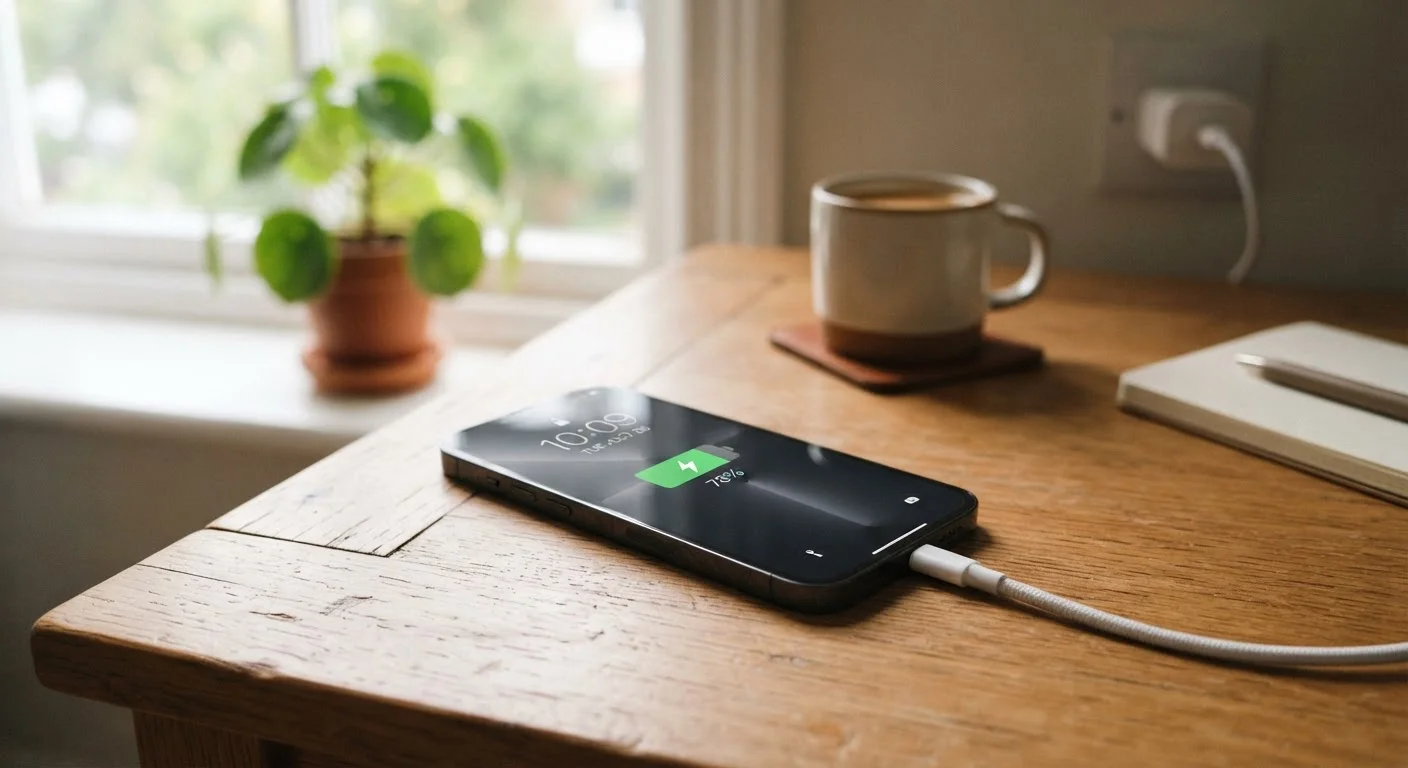
Normal use while charging is fine. The risk is heat, not the act of using the phone.
Charging circuits in modern phones are designed to handle simultaneous charging and use. The scenario to genuinely avoid is heavy, prolonged use (such as gaming for an hour) while charging, because that combination generates significant heat. Light use during charging, checking messages, reading, browsing, does not harm the battery in any meaningful way.
Myth
You must use the charger that came in the box or you will damage the battery.
Fact
Any charger that meets the correct voltage and amperage specifications for your phone is safe to use.
Modern smartphones use charging standards with built-in protections. The phone's own charging controller regulates how much power flows in, regardless of the charger attached. A quality charger that matches your phone's input requirements works safely. That said, very cheap, uncertified chargers from unknown sources can carry real risks: inconsistent output, poor insulation, or lack of safety circuitry. Using a quality charger is about safety, not brand loyalty.
Myth
Keeping your phone at 100% charge at all times is ideal.
Fact
Sitting at full charge for extended periods adds low-level stress to the battery over time.
Lithium-ion cells experience a condition called "high state of charge stress" when held at 100% for long periods. Many phone manufacturers now include options to cap charging at 80% or 85% for this reason. Keeping your phone perpetually at full charge is not catastrophic, but it is not the gentlest option for long-term capacity. A phone used at 50% to 80% most of the time will generally retain more capacity after two years than one kept at 100% daily.
What genuinely affects battery health
Once you stop worrying about the myths, a few real factors are worth your attention.
Heat is the primary enemy. Lithium-ion cells degrade faster when they are hot. Leaving your phone on a car dashboard in summer, placing it under a pillow while charging, or using it heavily while it is already warm all accelerate wear. Keeping your phone reasonably cool is more useful than any charging ritual.
Charge cycles add up. Every battery has a finite number of charge cycles before capacity noticeably drops. A charge cycle is a full 100% worth of charging, not a single plug-in session. Partial top-ups count as fractions of a cycle. The goal is not to avoid charging; it is to avoid stressing the battery with extremes at either end of the scale.
Charging speed matters in context. Fast charging generates more heat than standard charging, so using it constantly when you have no time pressure adds wear faster than necessary. It is a useful tool for urgent situations, not a reason to avoid slower charging when you can afford the time.
If you travel frequently, preparing your devices before a trip covers charging essentials worth sorting out before you leave home.
Simple habits that extend your battery's lifespan
None of these require apps, accessories, or strict routines. They are small adjustments to how you already use your phone.
- Plug in before you hit 20% rather than running to zero.
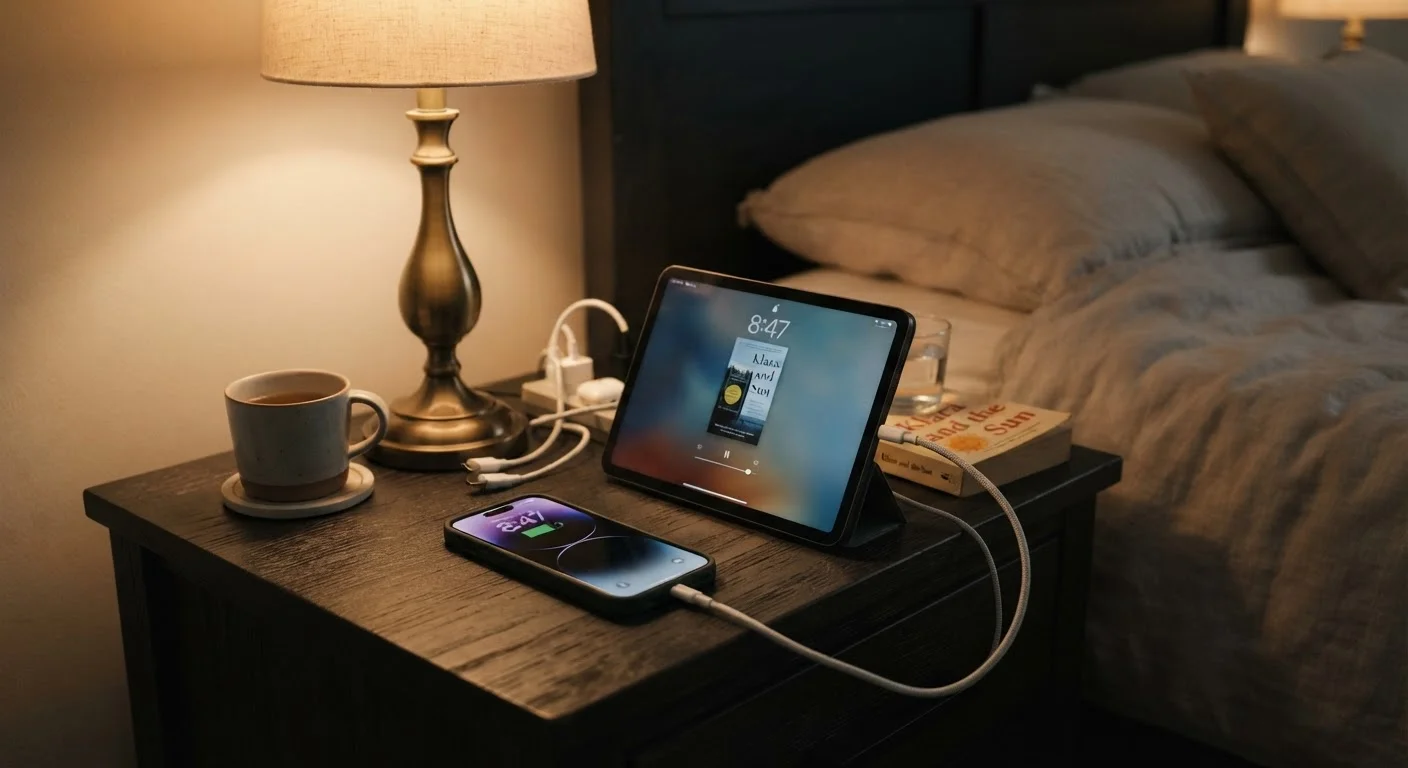
- Unplug or use a scheduled charging feature when you are above 80%, especially overnight.
- Avoid leaving your phone in direct sun or in a hot car.
- Use fast charging when you need it, not as a default.
- If your phone will sit unused for weeks, store it around 50% charge rather than full or empty.
For a closer look at overnight charging specifically, the evidence on charging devices overnight goes into how modern charging circuits manage the process and what habits genuinely matter.