

Why an emergency fund needs a place in your budget
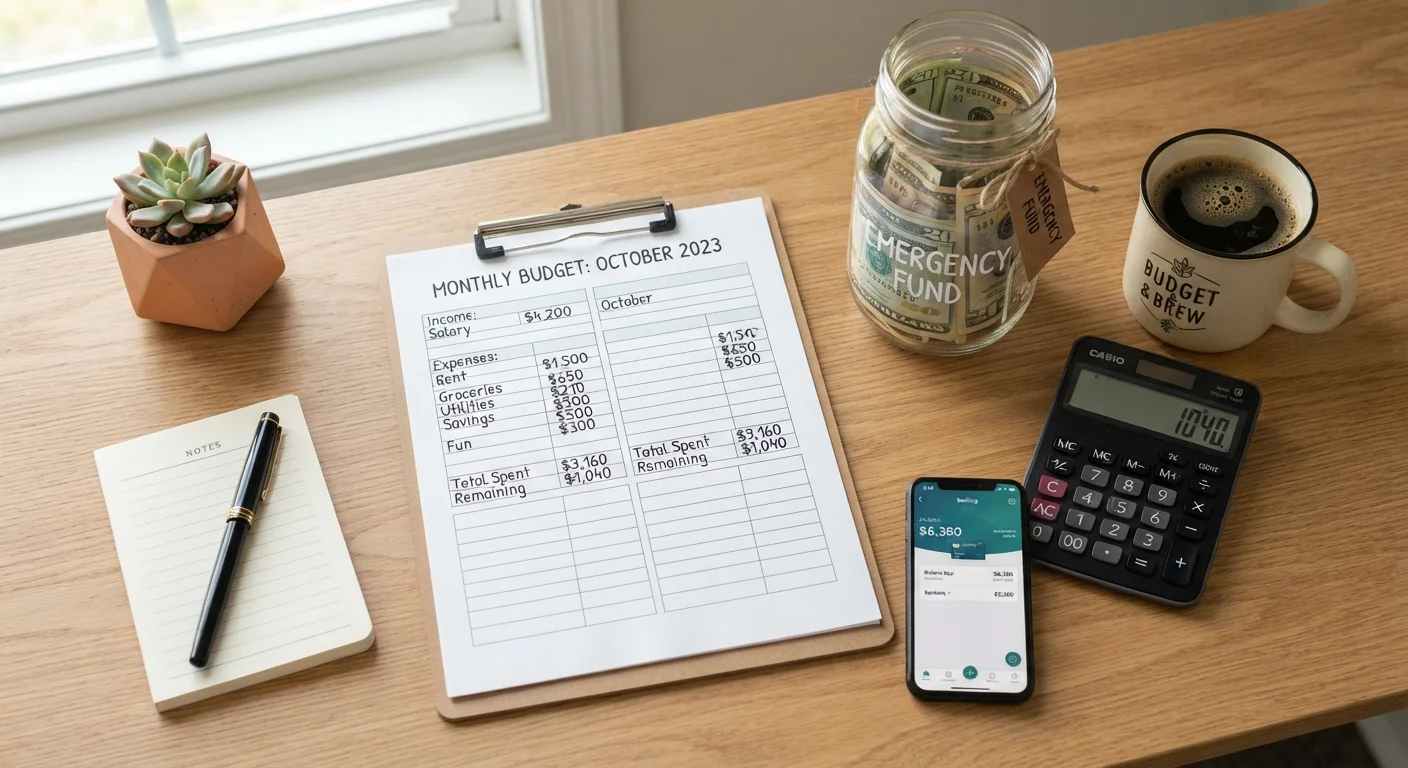
A monthly budget is a system for directing income toward its intended uses. Without a line item for emergency savings, contributions tend to happen only when money is left over, which means they often do not happen at all. Giving the emergency fund a fixed position in the budget changes it from a vague intention into a concrete monthly obligation.
This framing matters because an emergency fund is not optional padding. It is what keeps a single unexpected expense from pushing everything else off track. A car repair that costs $800 is manageable when that money already exists in a separate account. Without the fund, the same repair can mean carrying a credit card balance for months.
The budget also answers a practical question: how much to contribute each month. Rather than saving what is left, you decide in advance what the fund line item is, move that money on payday, and build the balance steadily. This is the same logic applied to rent, insurance, and groceries. The emergency fund simply gets treated the same way.
Automate the transfer on payday
Schedule your emergency fund contribution to move automatically the same day your paycheck arrives. This prevents the money from being absorbed into everyday spending before you decide to save it. Even a modest automatic transfer builds a real cushion over months.
How an emergency fund differs from other savings categories
Budgets often contain multiple savings categories, and it helps to understand what each one does. An emergency fund covers events that are impossible to predict in timing or size. A sinking fund covers expenses you know are coming, even if they arrive once a year rather than monthly. Examples include annual insurance premiums, holiday gifts, or a planned appliance replacement.
Mixing these two categories in one account blurs the picture. If your emergency fund also holds your vacation savings, you may hesitate to use it in a real emergency because it will deplete the vacation balance. Keeping them separate gives each fund a clear purpose and makes spending decisions easier.
Investments serve a third purpose: long-term growth. Money in a stock-based account can lose value in the short term, which is why it should not double as an emergency reserve. If the market drops 30 percent the same month you lose your job, selling investments at that moment is costly. The emergency fund removes the need to do that. See the right order of operations for guidance on how to sequence these two goals.
~57%
Americans unable to cover a $1,000 emergency from savings
According to a Bankrate survey conducted in early 2024, more than half of U.S. adults said they could not pay for a $1,000 emergency expense from their savings account.
3-6 months
Recommended emergency fund coverage of essential expenses
This range reflects guidance widely cited by nonprofit credit counseling organizations and the Consumer Financial Protection Bureau for household financial resilience.
$1,000
Common starter emergency fund target
Many personal finance educators recommend a $1,000 starter fund as an initial milestone before aggressively paying down debt, to prevent small setbacks from derailing progress.
Deciding how much to build and how long it will take
The standard target of three to six months of essential expenses is a range, not a single prescription. Someone with stable employment, dual household income, and no dependents might aim for the lower end. A self-employed person with variable income, a single-income household, or a family with specific health needs has more reason to aim higher.
Start by calculating your actual monthly essentials: housing, utilities, groceries, transportation, minimum debt payments, and any required insurance. Multiply that number by your target number of months. The result is your savings goal.
If that total feels large, focus on the rate of progress rather than the distance to the finish line. Contributing $150 per month builds $1,800 in twelve months. Most people find a starter amount of $1,000 is achievable within a few months and meaningfully reduces financial fragility. Once the starter goal is reached, sustaining consistent contributions will grow the fund to its full target over time.
For households paid biweekly rather than monthly, the timing of contributions requires a small adjustment. Matching pay cycles to monthly obligations takes some planning, but the core principle is the same: treat the emergency fund transfer as a bill due on payday.
Placing the emergency fund inside your budget structure
Different budgeting methods handle savings in slightly different ways, but all of them can accommodate an emergency fund contribution. In a percentage-based budget such as the 50/30/20 framework, emergency savings typically fall within the savings and debt category alongside retirement contributions. In a zero-based budget, where every dollar is assigned a job, the emergency fund gets its own named category with a fixed monthly amount.
The envelope budgeting method, adapted for digital use, works the same way: one envelope is labeled for emergencies, and it is funded before discretionary categories are filled. Regardless of the method, the structural principle is consistent: the emergency fund contribution is treated as a non-negotiable outflow, not a discretionary one.
When the fund reaches its target balance, stop funding it and reallocate that budget line. If you draw it down to cover a real emergency, restore the contribution until the balance is back at its target. This replenishment step is easy to forget and worth writing into your budget explicitly.
For a broader view of how this fits within an overall financial plan, the complete budgeting overview covers how emergency savings interact with other budget priorities across different income levels.
This article is for general informational purposes only and does not constitute personalized financial advice. Consult a qualified financial professional before making decisions about your own savings strategy.


