

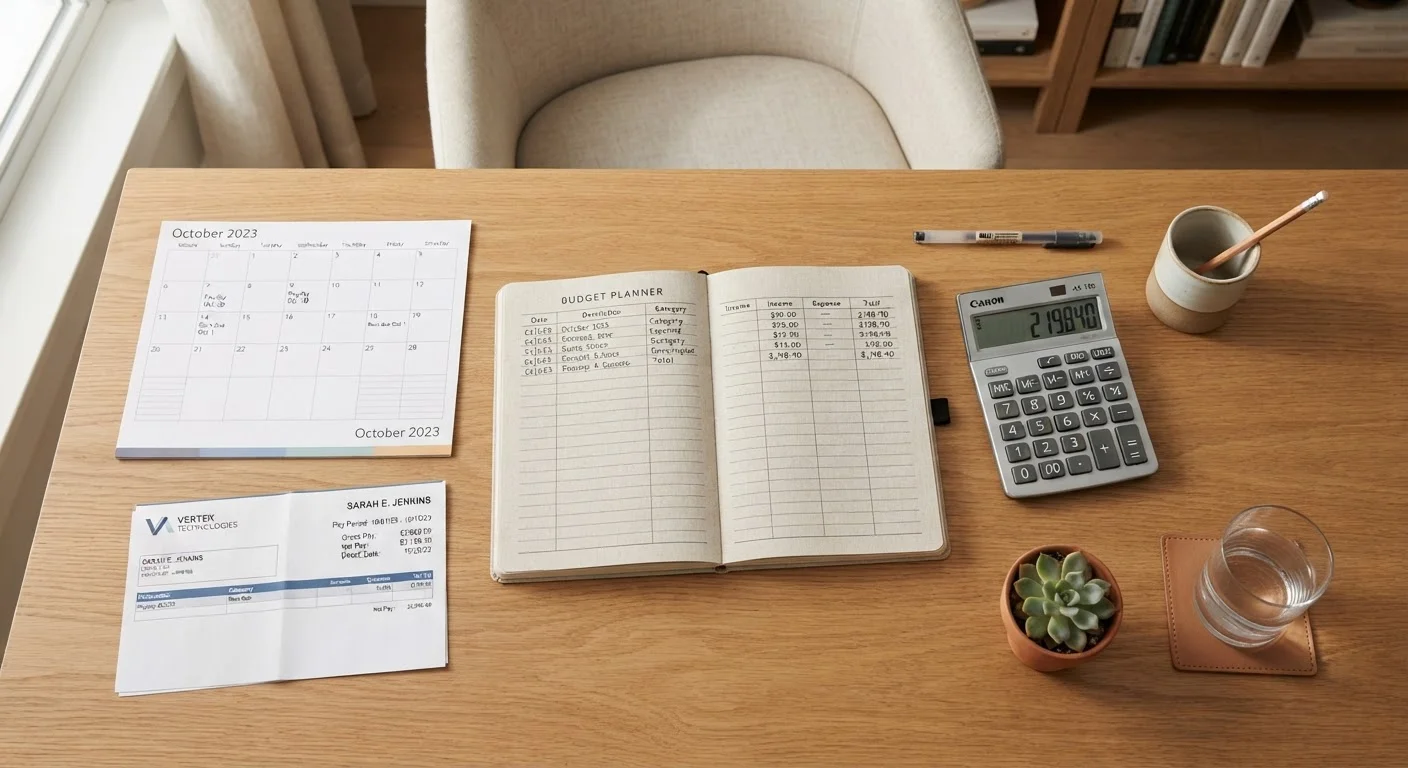
Why biweekly pay and monthly bills clash
Most household bills arrive on a fixed monthly date. Rent or mortgage, car payments, insurance premiums, and subscription services all expect money on the same day each month. A biweekly paycheck, however, arrives every 14 days, which means pay dates rotate through the calendar. In some months you receive two paychecks; in two months of the year you receive three.
The mismatch creates a timing problem. A bill due on the 1st may land four days before your next paycheck. A bill due on the 15th may fall perfectly one month and awkwardly the next. Without a plan, the gap between what you owe and when money arrives invites overdrafts and late fees.
If you have not yet built out a full spending plan, the household budget walkthrough is a useful starting point before applying the paycheck-specific steps below.
What you will need
What you need before you start
Gathering a few pieces of information before you map your budget will make each step faster and more accurate.
Pay date calendar
Lists every paycheck date for the next 12 months so you can see which months have three pay periods.
Bill due date list
A written record of every recurring bill, its amount, and its due date each month.
Spreadsheet or budgeting app
Lets you assign each bill to a specific paycheck and track running balances.
Buffer or holding account
A separate checking or savings account used to park funds and release them on bill due dates.
Step-by-step: aligning paychecks to bills
Follow these steps in order. Each one builds on the previous, so skipping ahead can leave gaps in your plan.
List every pay date for the next 12 months
Write out all 26 pay dates for the coming year. Mark the two months that contain three pay dates. Those months are where extra-paycheck income will appear, and knowing them in advance lets you plan rather than react.
Map every bill to its due date
Create a two-column list: the bill name on the left, the due date and amount on the right. Include annual charges such as vehicle registration or subscription renewals by dividing the annual cost by 12 and treating it as a monthly line item. Missing an irregular charge is one of the most common sources of budget drift.
Assign each bill to the paycheck that will cover it
Working through your bill list, assign each expense to the paycheck that arrives closest before its due date. Write the paycheck date next to the bill. The goal is that every bill has exactly one paycheck designated as its source, so there is no ambiguity when money arrives.
Split larger bills between two paychecks if a single check does not cover them. For example, if rent is $1,400 and each paycheck is $1,100, set aside $700 from each of the two checks that land before rent is due.
Calculate the leftover from each paycheck
Subtract assigned bill amounts from the paycheck that covers them. What remains is available for groceries, fuel, and variable spending for that pay period. Do this for each of the 26 checks. A paycheck that shows a negative remainder signals a coverage problem you need to fix now by shifting a bill date or building a buffer.
Set up a buffer account if gaps remain
If bill assignments still leave some paychecks overextended, open a separate account as a cash buffer. Deposit a fixed amount from every paycheck into this account, then pay bills from it on their due dates rather than directly from the paycheck. The account absorbs the timing mismatch so your checking balance does not swing dangerously low. For help setting up automatic deposits into a buffer account, see automating your finances.
Review and adjust after the first two full months
After running the plan for 60 days, compare your actual spending to your assignments. Variable categories such as groceries and fuel often differ from estimates. Adjust the amounts assigned to each paycheck to reflect real costs. Also check your budget line item categories to confirm you have not combined expenses that hide where money is going.
Using the two extra paychecks strategically
Because a year contains 52 weeks, a biweekly schedule produces 26 paychecks rather than 24. If you budget as though you only receive 24, those two extra paychecks arrive as genuinely unallocated income.
The most common uses are paying down high-interest debt and funding an emergency reserve. Paying a lump sum toward a credit card balance reduces the principal on which interest accrues, which lowers your total repayment cost. To understand how minimum payments extend that cost over time, see what minimum payments actually cost. For guidance on sizing an emergency fund and fitting it into your monthly plan, the emergency fund and monthly budget guide covers both questions.
If debt and savings are already on track, a second option is prepaying a recurring bill one month ahead. This shifts the timing relationship between income and expenses permanently, removing the coverage gap without requiring a buffer account.
Automating the transfer of extra-paycheck funds the moment they arrive prevents spending them by accident. The guide to automating finances walks through setting up scheduled transfers that move money before discretionary spending can absorb it.
This article is for general informational purposes only and does not constitute personalized financial advice. Consult a licensed financial professional for guidance specific to your situation.


