

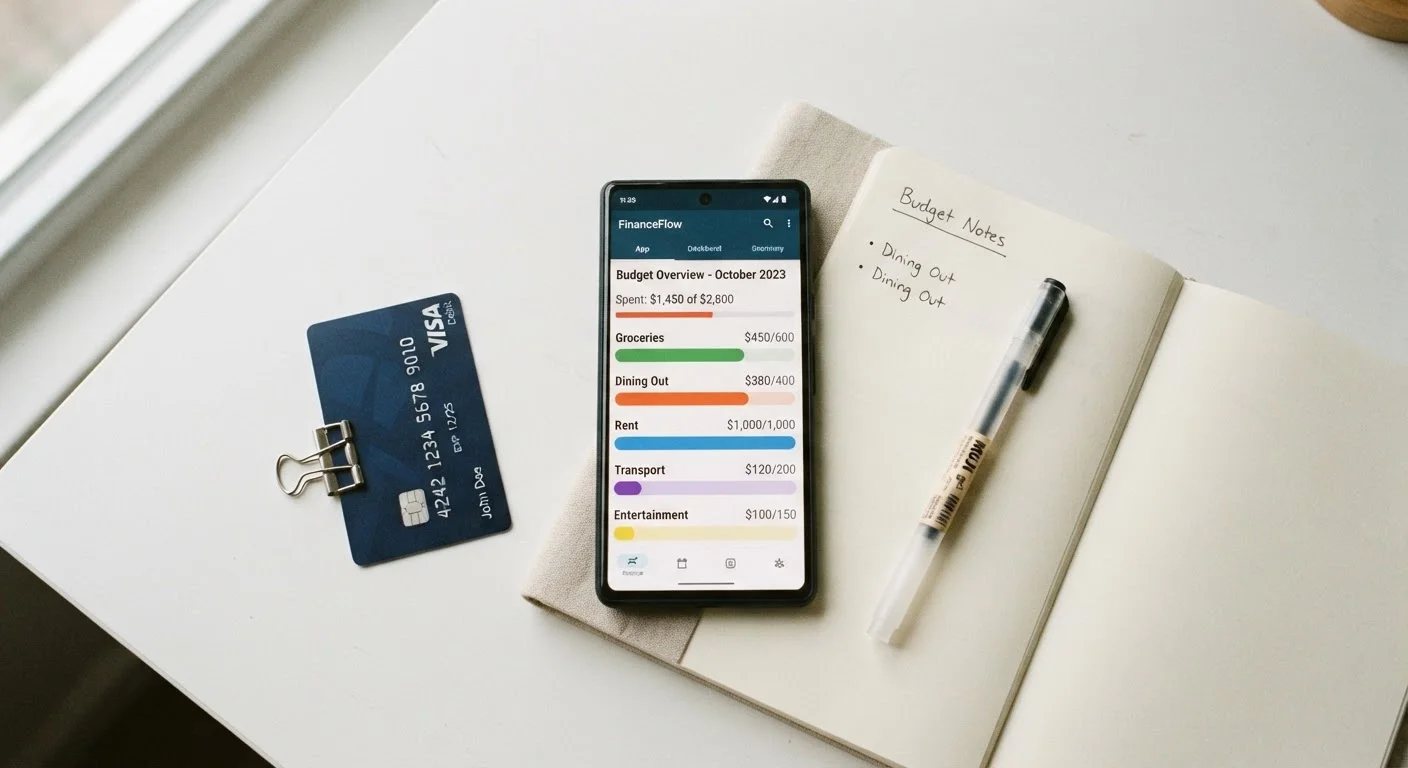
The original logic, separated from the cash
The classic envelope method works because physical cash creates a hard limit. When the grocery envelope is empty, you cannot spend more on groceries without visibly robbing another envelope. The friction is the point.
In a digital household, card transactions do not create that friction on their own. But the underlying rule, that each spending category gets a predetermined ceiling and spending stops when the ceiling is hit, transfers perfectly to digital tools. The method never depended on paper bills. It depended on category limits that were visible and enforced.
Personal finance budgeting covers a range of methods, and envelope budgeting sits at one end of the spectrum: simple, category-based, and psychologically concrete. Moving it to a digital format preserves all three of those properties.
Three ways to build digital envelopes
There is no single correct tool. The right setup depends on how much you want to automate versus how much manual awareness you find useful.
Budgeting apps with virtual categories
Apps designed around the envelope concept let you create named categories, fund them with a set dollar amount at the start of each month, and deduct automatically as linked accounts record transactions. When a category reaches zero, the app flags it. The main advantage is that imported transactions do the tracking for you.
Spreadsheets
A simple spreadsheet with one column per category and a running total below each one replicates the method with no subscription cost. You enter transactions manually, which some budgeters prefer because the act of recording reinforces awareness. Building a realistic household budget from scratch walks through how to identify and size those categories before you set them up.
Bank sub-accounts
Some banks offer free secondary checking or savings accounts that you can label and fund separately. Moving money into a labeled sub-account at the start of the month physically separates the funds, which replicates the original envelope separation more closely than a tracking-only approach.
Start with just four or five envelopes
New budgeters often create too many categories at once, which makes the system feel burdensome to maintain. Start with the four or five categories where your spending is most variable and hardest to control. Groceries, dining, entertainment, and personal care are common starting points. You can add categories in month two once the habit is established.
Setting category limits that hold
A digital envelope only works if the limit is realistic. Assigning $150 to groceries for a family of four does not create discipline; it creates a budget that collapses in week two.
Start by reviewing three months of actual spending in each category before setting any limits. Use those averages as your baseline. Then decide which categories have genuine room to shrink and which reflect fixed or near-fixed costs. Setting a spending limit you can honestly keep explains the principles behind choosing targets that are firm without being unrealistic.
Categories worth creating digital envelopes for typically include groceries, dining, gas, personal care, entertainment, clothing, and household supplies. Subscriptions and fixed bills can be tracked separately since they do not vary month to month and do not require the same active ceiling enforcement.
82%
Americans using cashless payments regularly
According to the Pew Research Center, as of a recent survey, the vast majority of American adults report making few or no purchases using cash in a typical week.
1 in 3
Adults with no budget of any kind
Survey data from the National Foundation for Credit Counseling has found that a significant share of American adults report not maintaining a budget, making structured methods like envelope budgeting particularly relevant.
Handling credit cards inside a digital envelope system
Credit cards are the most common friction point. Because the balance does not leave your bank account immediately, it is easy to mentally ignore a charge until the statement arrives.
The fix is to treat every credit card charge as spent the moment the transaction posts. In an app, this means categorizing and deducting the charge from the relevant envelope immediately. If you use a spreadsheet, log the charge the same day. Paying the full statement balance each month is a practical requirement for this approach; carrying a balance undermines the category limits because interest charges accumulate outside any envelope.
What zero-based budgeting actually requires each month is worth reading alongside this, because the two methods answer slightly different questions: envelope budgeting tells you when to stop spending in a category, while zero-based budgeting tells you how to allocate every dollar before the month starts.
Keeping an envelope for savings and unexpected costs
One envelope that many households undersize is the one for irregular but predictable expenses: car registration, annual subscriptions, back-to-school supplies. These costs are not monthly, but dividing the annual total by 12 and funding a digital envelope each month prevents a large charge from derailing the whole system.
A separate envelope for emergency savings operates differently. That money does not get spent in the ordinary monthly cycle. The role of an emergency fund inside a monthly budget explains how emergency savings and spending envelopes interact without conflicting.
This article is for general informational purposes only and does not constitute personalized financial advice. Consult a qualified financial professional for guidance specific to your situation.


