
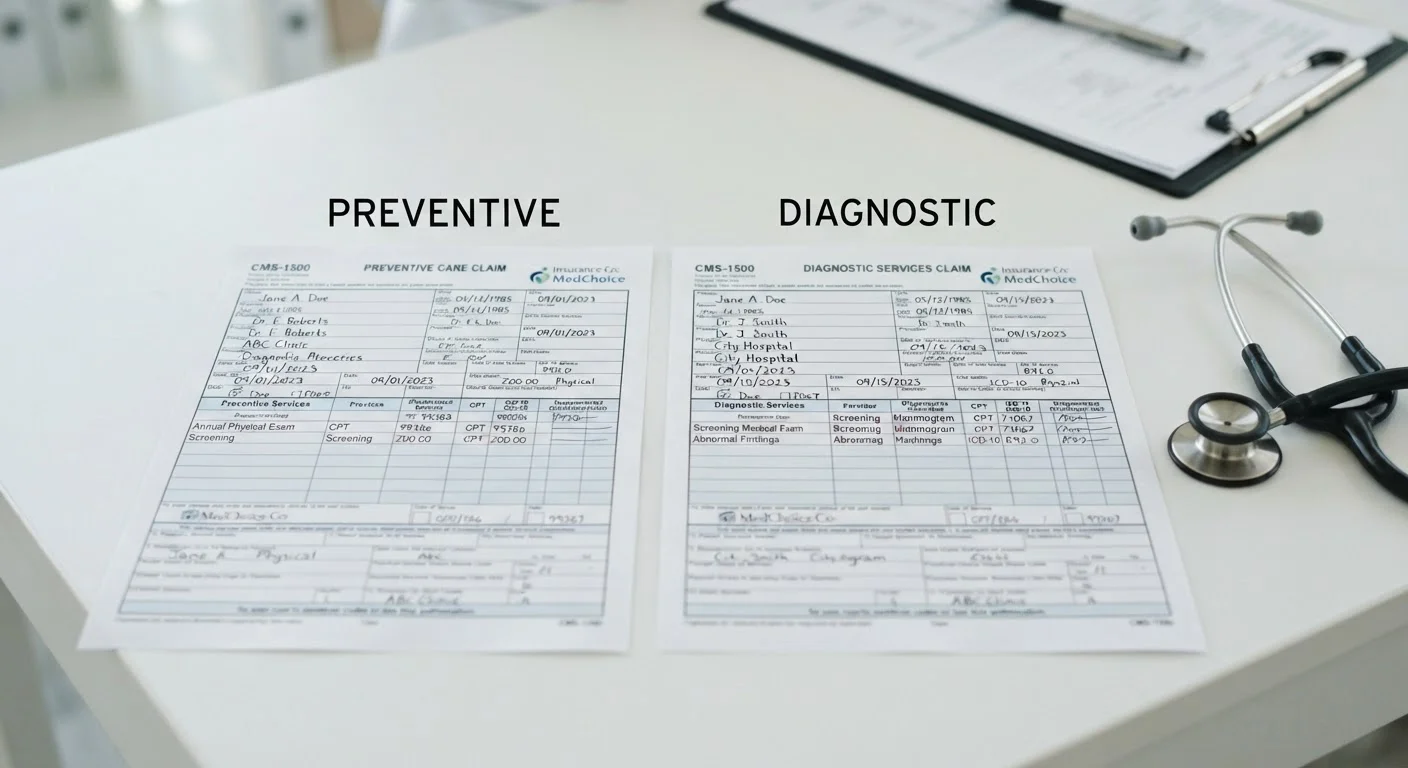
What makes a test preventive or diagnostic
The distinction is not about the test itself. It is about the clinical reason the provider documents for ordering it. A blood glucose test drawn at an annual physical for a patient with no symptoms is preventive. The same blood glucose test drawn because a patient reported fatigue and increased thirst is diagnostic. The needle, the lab, and the result may be identical. The billing code is not.
Preventive care refers to services delivered to people who have no current symptoms or known condition that would explain the test. The goal is early detection or risk assessment. Diagnostic care applies when a provider orders a test to evaluate a specific complaint, monitor a known condition, or investigate an abnormal finding from a prior test.
This difference has direct financial consequences. Under the Affordable Care Act, ACA-compliant health plans must cover a defined list of preventive services with no cost-sharing, meaning no copay, no coinsurance, and the test does not count toward your deductible. That protection disappears when the same test is classified as diagnostic, at which point your plan's normal cost-sharing rules apply.
Where it gets complicated
The clearest example is the colonoscopy. For a patient 45 or older with no symptoms and no personal history of colorectal disease, a colonoscopy is a covered preventive screening. If that same patient mentions rectal bleeding before the procedure, the provider now has a clinical reason to investigate a symptom. The procedure can shift to a diagnostic category, and the patient may owe a significant share of the cost.
| Criterion | Preventive tests | Diagnostic tests |
|---|---|---|
| Ordering reason | No symptoms; routine screening | Symptom, known condition, or abnormal result |
| ACA cost-sharing protection | Yes, for covered services | No |
| Counts toward deductible | Generally no | Yes, under most plans |
| Common examples | Annual mammogram, routine colonoscopy, fasting lipid panel | Colonoscopy after rectal bleeding, glucose test after fatigue complaints |
| Billing trigger | Provider documents no clinical complaint | Provider documents a specific clinical reason |
| Patient action to confirm | Verify CPT code is on ACA preventive list | Ask about cost-sharing before the appointment |
A similar situation can arise at an annual wellness visit. These visits are structured to be preventive, but if a patient raises a new complaint, the provider may open a separate diagnostic encounter during the same appointment. That portion of the visit can be billed differently, sometimes surprising patients with a charge they did not expect from what felt like a routine checkup.
Primary care providers and specialists follow the same billing logic, but the complexity increases when a referral is involved. A specialist visit prompted by a symptom is almost always diagnostic, even if the test performed is one that other patients receive preventively.
What to do before your appointment
The most practical step is to call your insurer before a scheduled screening and ask two things: whether the specific procedure code is covered as preventive under your plan, and what your cost-sharing would be if it is reclassified as diagnostic. Many insurers can answer both questions with the CPT (Current Procedural Terminology) code, which your provider's office can give you in advance.
When scheduling, state clearly that you want a preventive wellness visit, not a problem-focused appointment. If you have unrelated symptoms you want to address, consider scheduling a separate visit rather than raising them during a preventive one. That is not gaming the system; it reflects the actual clinical purpose of each encounter accurately.
A preventive care calendar can help you track which screenings are due and when, so you are not scrambling or conflating preventive and diagnostic needs in a single visit. Knowing your screening schedule in advance also makes it easier to book the right type of appointment.
If you receive a bill that surprises you, ask the provider's billing department for the diagnosis and procedure codes used. If the visit was genuinely preventive, an appeal to your insurer is possible and, in some cases, successful. Keep notes from your appointment to support that process.
This article is for general informational purposes only and is not medical or financial advice. Always consult a qualified healthcare provider about your specific health needs and a licensed insurance professional or your plan documents for coverage questions.