What you need before you buy anything
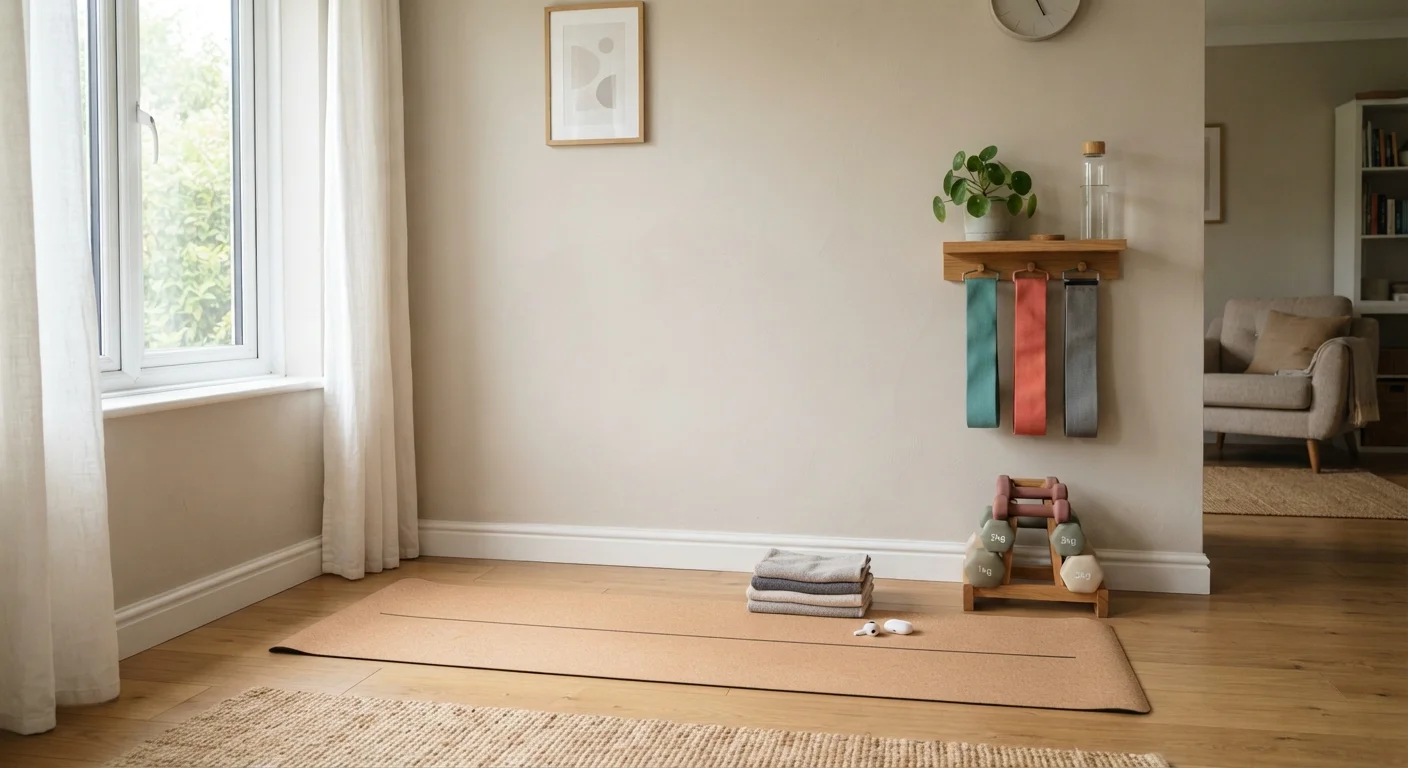
The first decision is spatial, not financial. Walk through your home and look for a rectangle of open floor at least 6 feet long and 4 feet wide. A living room corner, a bedroom with the bed pushed aside, or a cleared section of a basement all work. The space does not need to be permanent; it just needs to be usable consistently.
Once you have a candidate area, check three things: overhead clearance for any jumping or overhead pressing (8 feet is comfortable for most adults), ventilation so the space does not become uncomfortably hot, and flooring. Hardwood or tile without any padding can cause joint discomfort and can be slippery. A single foam puzzle mat or an inexpensive yoga mat resolves both problems for most bodyweight work.
Good lighting is worth addressing before any equipment purchase. Dim or flickering light raises injury risk and makes a space feel uninviting, which erodes motivation over time. A bright LED bulb costs a few dollars and has an outsized effect on how often the space actually gets used.
What you will need
If you are uncertain how to fit regular exercise into a busy week, building a weekly exercise habit offers practical strategies for structuring time before you invest in equipment.
Starting with zero equipment
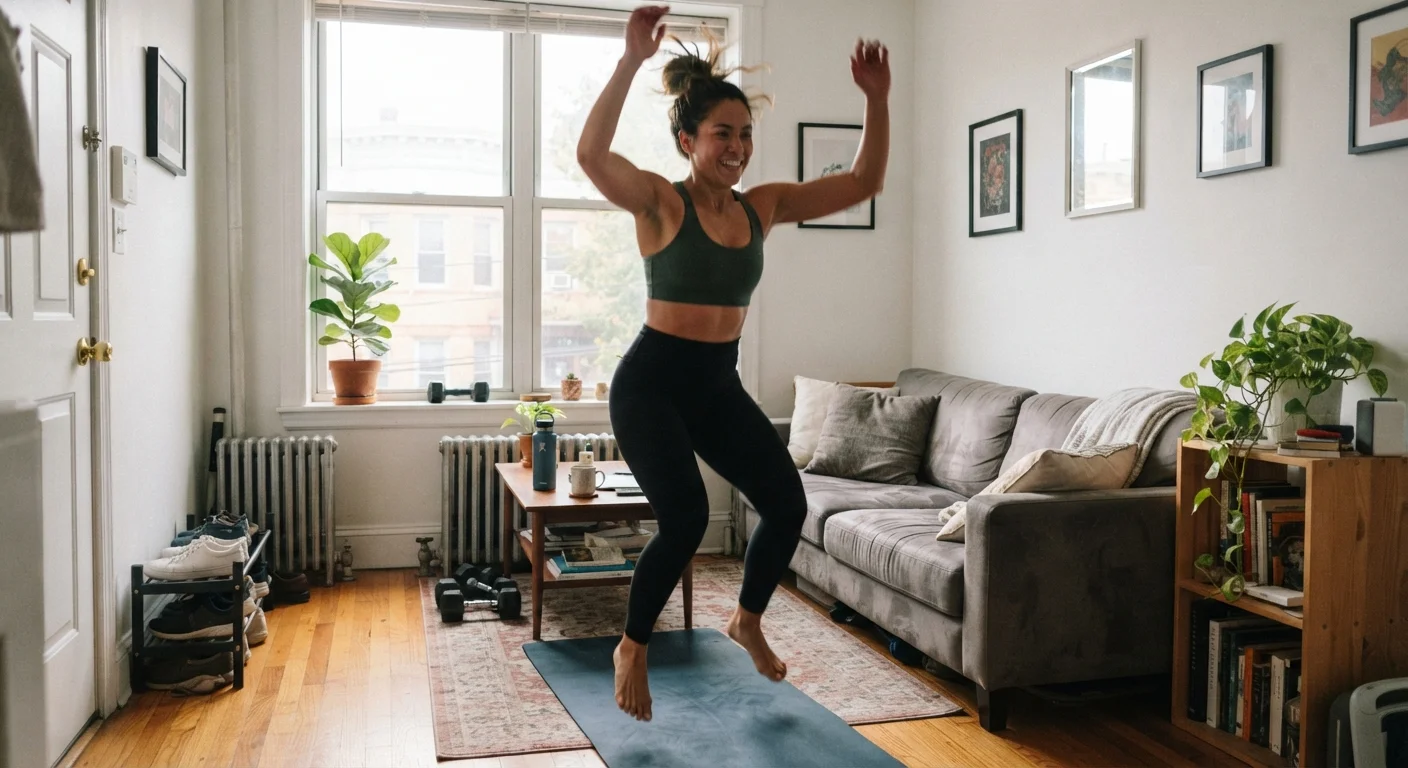
Bodyweight training is a genuine starting point, not a compromise. Push-ups, squats, lunges, glute bridges, planks, and mountain climbers address every major muscle group and require nothing beyond the floor space already identified. For a complete comparison of what bodyweight work can and cannot do relative to weights or bands, see body weight vs. free weights vs. resistance bands.
Before adding any equipment, spend two to four weeks with bodyweight movements only. This period builds movement patterns that make equipment use safer and more productive later. It also confirms that you will actually use the space, which matters before spending money on gear.
Getting started with strength training covers the form basics that apply whether you are working with bodyweight or adding load, and it is worth reading before progressing.
Form before load, always
Moving well with no resistance is harder than it looks for many beginners. Spend the first few sessions focusing only on the quality of each movement: hip position in a squat, spine alignment in a push-up, and core engagement in a plank. Equipment adds value only when the base movement is already solid.
Adding equipment on a tight budget
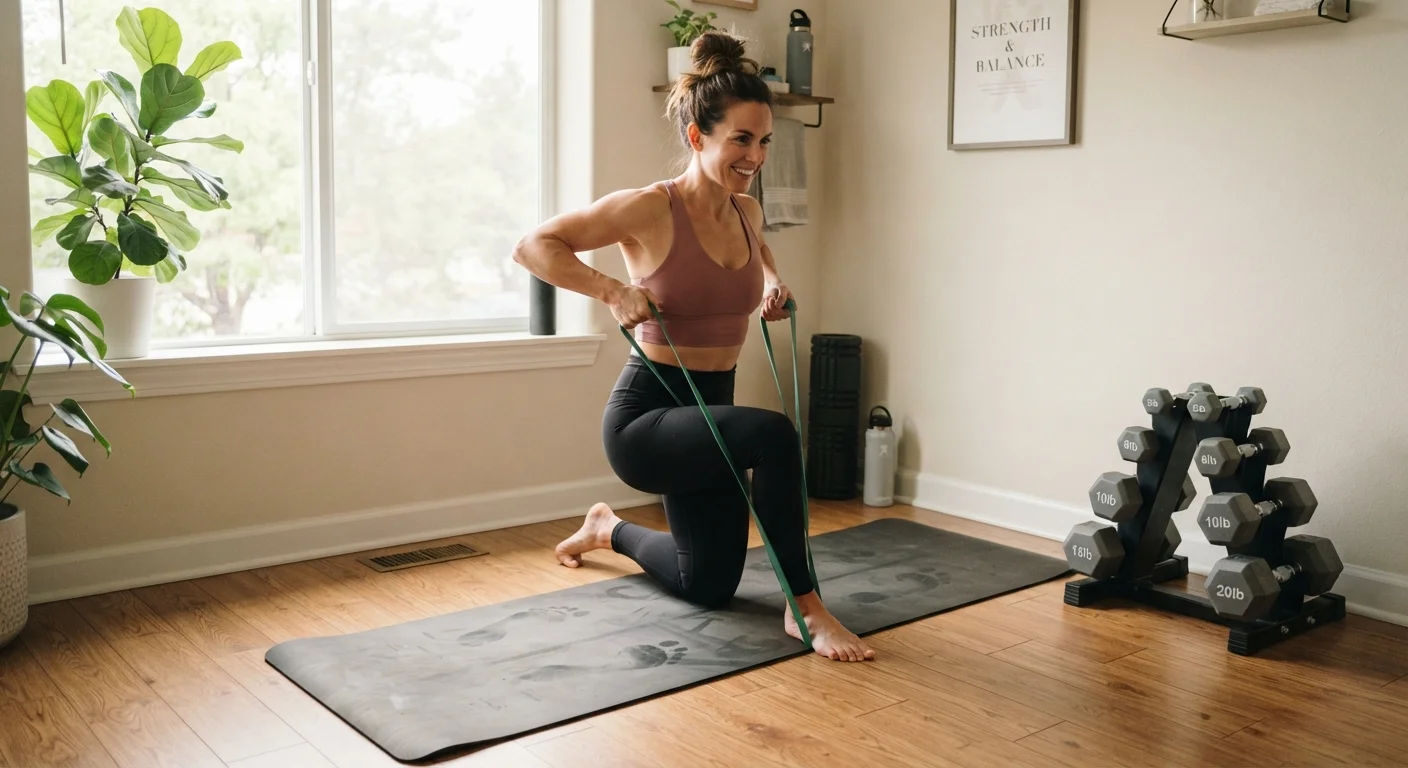
Resistance bands are the most practical first purchase. A set covering light, medium, and heavy resistance typically costs between $15 and $40 and fits in a drawer. Bands allow progressive overload (gradually increasing challenge over time), which is the core mechanism of strength improvement. They work for upper body pulls, leg work, and mobility exercises that bodyweight alone cannot easily replicate.
If budget allows a second purchase, a single adjustable dumbbell or a pair of fixed dumbbells in a moderate weight range adds more loading options. Secondhand sporting goods stores, online resale platforms, and community buy-sell groups regularly carry dumbbells at a fraction of retail cost. Weights do not wear out, so buying used is low-risk.
A jump rope is worth considering if cardiovascular conditioning is a goal. It costs under $20, stores easily, and delivers meaningful aerobic work in a small footprint.
Resist the pull to buy a full rack, a bench, and a cable machine before the habit is established. Budgeting realistically for fitness spending means matching purchases to actual use, not to aspirational use. Many people who buy large equipment early end up with an expensive clothes rack.
Protecting your floor and your body
Dropped weights damage hardwood and tile floors, and bare concrete is hard on joints during any extended session. Interlocking rubber or foam tiles, sold in packs, cover a 6-by-6-foot area for roughly $30 to $60 and handle most home gym demands. Thicker rubber tiles (at least 3/8 inch) are preferable if you plan to use any free weights.
If you rent, check your lease before making any permanent modifications. Freestanding mats and tiles require no installation and leave no damage, which keeps you in compliance with most rental agreements.
Injury prevention at home follows the same logic as in a commercial gym. Warm up before each session, progress load gradually, and pay attention to pain that is sharp or joint-specific rather than the normal muscular effort of exercise. Common workout injuries and the habits behind them covers the movement patterns that most often lead to problems and how to avoid them.
Know when to consult a professional
Sharp pain, joint pain, dizziness, or chest discomfort during exercise are signals to stop immediately and seek medical evaluation. General health information cannot account for individual conditions. If you have a known cardiovascular condition, musculoskeletal injury, or are new to exercise after a significant gap, speak with a healthcare provider before starting any program.
Scaling up over time
Once the habit is consistent and the budget allows, additions can be made selectively. A pull-up bar that mounts in a doorframe (no drilling required for tension-based models) adds a vertical pulling movement that bands alone do not fully replicate. An adjustable bench opens up pressing angles and step-up variations. A set of kettlebells or adjustable dumbbells consolidates multiple weight options into one compact piece.
Prioritize versatility over specialization. A single piece of equipment that supports ten movements is more valuable in a home setting than a machine designed for one. Before any large purchase, consider whether the space can physically accommodate it and whether it aligns with your actual training goals.
For context on managing home space improvements alongside other household costs, prioritizing home spending applies similar thinking to competing financial demands.
This article is for general informational purposes only and is not medical advice. Consult a qualified healthcare professional before beginning any new exercise program, particularly if you have an existing health condition, injury, or are returning to physical activity after a long break.