
Why time scarcity is a real barrier, not an excuse
Most adults in the United States report that lack of time is the primary reason they do not exercise regularly, and for many, the schedule pressure is genuine. Full-time work, caregiving, commuting, and household management leave narrow windows. The solution is not to find more time but to work more deliberately inside the time that exists.
Research published in journals covering exercise science has consistently found that shorter bouts of physical activity, spread across a week, produce measurable improvements in cardiovascular health, blood pressure, mood, and metabolic function. The format matters less than the consistency. That means a busy person who walks briskly for 15 minutes three times a week is building a real foundation, even without a gym.
Understanding how your body adapts to regular exercise can also help clarify why sticking with shorter, consistent sessions is worth the effort. Change accumulates gradually, and it begins earlier than most people expect.
Short sessions count more than you think
Federal physical activity guidelines recognize that activity accumulated in bouts as short as 10 minutes contributes to weekly totals. You do not need one uninterrupted hour to meet health recommendations. Three 10-minute walks spread through a busy day deliver real benefit, and that is a realistic target for most schedules.
How to structure your first four weeks
The steps below walk through a repeatable process for fitting exercise into a packed week. The approach works whether you have 10 minutes or 30, and whether you prefer walking, bodyweight training, or anything in between.
Audit your week for real available time
Before scheduling anything, look at a typical week and note every slot of 10 minutes or more that is genuinely unoccupied or flexible. Include commute time if you walk or take transit, lunch breaks, and the period just before or after you normally wake up or go to bed. Do not aim for ideal time; find actual time. Most people discover three to five usable pockets they were not counting.
Set a weekly movement target you will actually hit
Current public health guidance from the U.S. Department of Health and Human Services recommends at least 150 minutes of moderate-intensity activity per week for adults, but any consistent movement is better than none for someone starting from a low baseline. Choose a target that feels slightly too easy for the first two weeks. If you currently do nothing, three 15-minute sessions is a reasonable starting point. You can increase volume once the habit is stable.
Attach exercise to an existing anchor habit
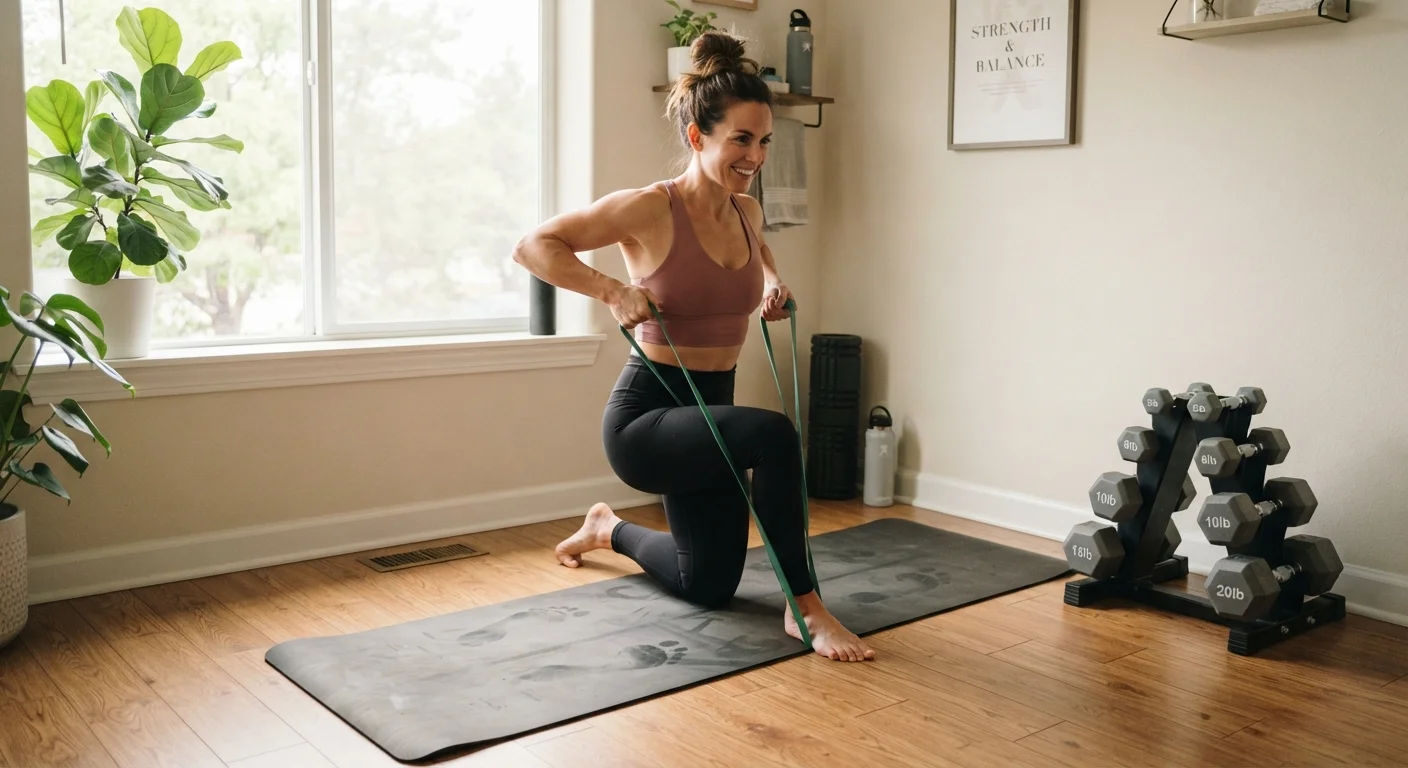
Habit stacking reduces friction by connecting a new behavior to something you already do automatically. Examples: a 10-minute walk immediately after dropping children at school, a bodyweight circuit while coffee brews in the morning, or a set of resistance band exercises before your evening shower. The anchor does not have to be perfect; it needs to be consistent. Pick one anchor for each session in your weekly plan.
Choose movement formats that match your available space and time
For sessions under 20 minutes, high-density formats work best. Bodyweight circuits, brisk walking, stair climbing, and resistance band work all require minimal setup and can be done at home or nearby. For sessions of 20 to 30 minutes, you have room for a brief warm-up, a main block, and a cool-down. See our comparison of common resistance training approaches for help choosing equipment that fits your space and budget. If you want to dedicate a corner of your home, our guide to setting up a home workout space covers low-cost options.
Block sessions on your calendar like appointments
Open your planner or calendar app and add each planned session for the coming week. Treat them as you would a work meeting: do not remove them unless genuinely necessary, and if you must skip one, reschedule it within the same week rather than simply dropping it. Seeing the sessions listed alongside other commitments shifts them from intentions into obligations.
Track completions, not performance
In the first four to six weeks, log whether you completed the session, not how fast you ran or how many reps you did. A simple checkmark in a notebook or a habit-tracking app is enough. Performance metrics can come later; right now the goal is proof that you showed up. Reviewing a streak of completed sessions is one of the most reliable motivators for continuing.
Build in rest and adjust as the habit takes hold
Planned rest days are not optional extras. Muscle repair and cardiovascular adaptation happen during recovery, not during the session itself. Schedule at least one full rest day between higher-intensity sessions. If you notice persistent soreness, disrupted sleep, or unusual fatigue, those are signals to reduce load before increasing it. Our article on recognizing when your body needs a rest day outlines what to watch for. After four to six weeks of consistent sessions, you can gradually increase duration or intensity by roughly 10 percent per week.
If you want a more detailed planning framework once the habit is stable, our weekly fitness planning checklist is a practical next step. For guidance on balancing different types of activity as your fitness grows, see our overview of cardio and strength training.
Moving more also means a slightly higher risk of minor injury, particularly when starting out. Our article on common workout injuries and the habits that cause them covers the patterns most likely to cause problems and how to avoid them.
This article is for general informational purposes only and is not a substitute for professional medical advice. Consult a qualified healthcare provider before beginning a new exercise program, particularly if you have an existing health condition or injury.