Why a weekly fitness plan matters
Most people do not struggle with motivation to start exercising. They struggle with staying consistent once life gets in the way. A weekly planning routine addresses this directly: it removes the daily decision about whether or when to work out, which is one of the main points where follow-through breaks down.
Research consistently links structured physical activity to lower risk of cardiovascular disease, type 2 diabetes, and several other chronic conditions. The physical activity guidelines for adults recommend at least 150 minutes of moderate-intensity aerobic activity per week, plus muscle-strengthening on two or more days. Without a plan, most people underestimate how far short they fall.
This checklist walks through every dimension of a well-structured fitness week: scheduling, movement variety, recovery, nutrition basics, and end-of-week review. Work through it once at the start of each week, and adjust as your schedule or energy levels change.
This article is for general informational purposes only and is not a substitute for personalized advice from a qualified healthcare or fitness professional. If you have a medical condition or have been inactive for an extended period, consult your doctor before beginning or significantly increasing physical activity.
Tools you will need
You do not need expensive equipment to use this checklist effectively. The items below cover the practical basics for planning, tracking, and executing a weekly fitness routine.
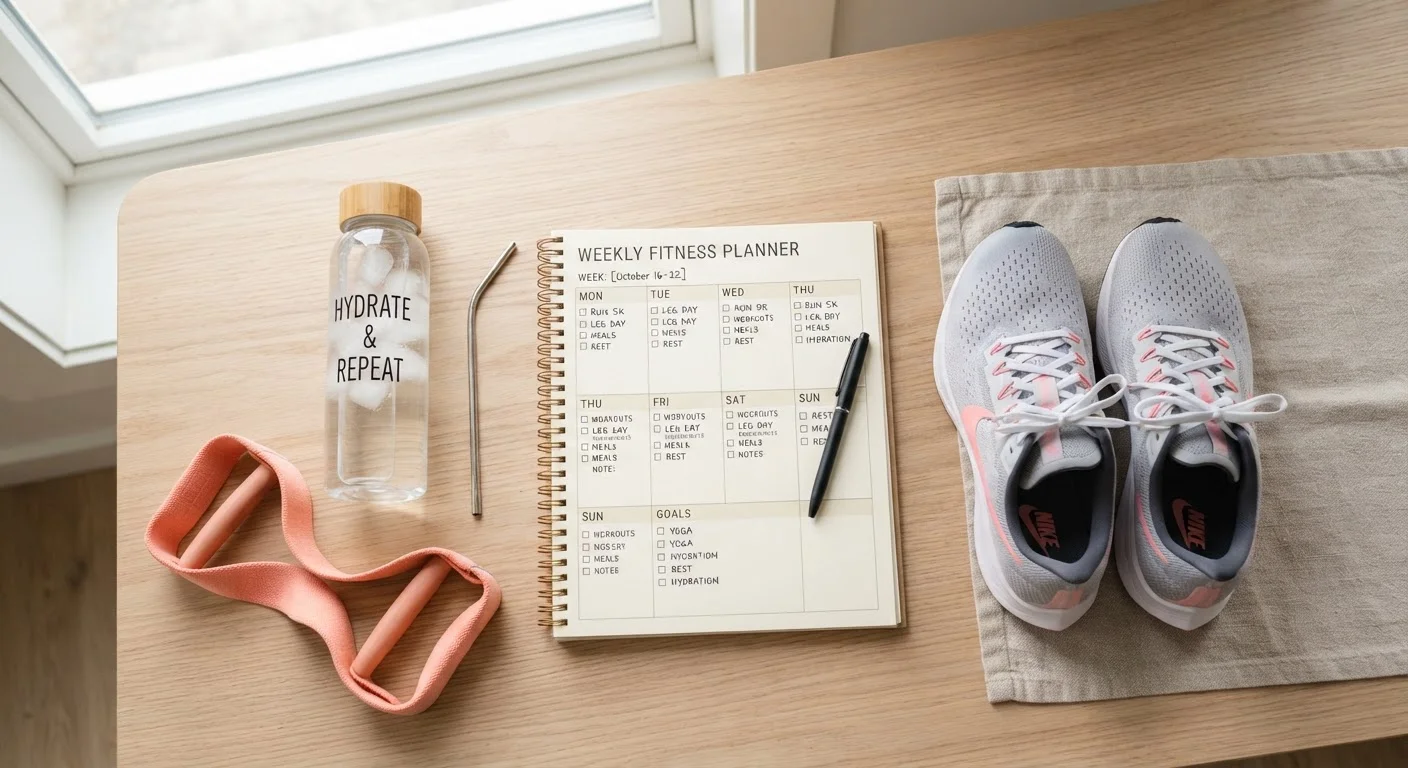
Weekly planner or calendar app
Schedule workout sessions as fixed blocks so they are not displaced by other commitments.
Activity log or fitness journal
Record completed sessions, perceived effort, and notes on how you felt for week-to-week review.
Reusable water bottle
Supports consistent hydration throughout the day and during workouts.
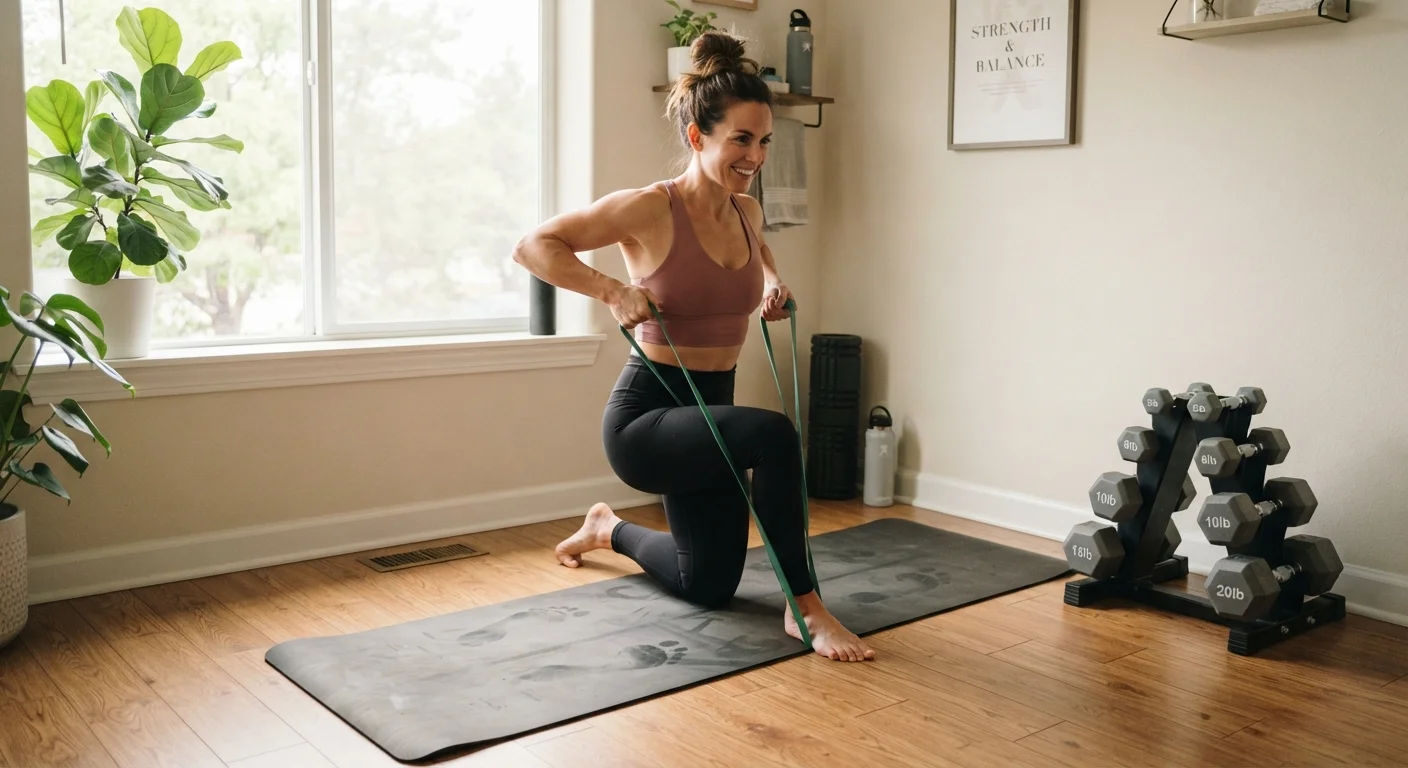
Resistance bands or free weights
Enable muscle-strengthening sessions at home without requiring a gym membership.
Foam roller
Assists with post-session muscle recovery and reducing localized tightness.
The weekly fitness planning checklist
Work through the groups below at the start of your week, ideally on Sunday evening or Monday morning. Each group targets a distinct part of a balanced fitness week.
Schedule and session planning
Movement variety and balance
Recovery and sleep
Nutrition and hydration basics
Progress tracking
If you are building a habit from scratch, the strategies for fitting exercise into a busy week can help you find realistic time slots even when your schedule feels full.
End-of-week review and adjustment
The checklist is only useful if you close the loop. A brief end-of-week review, five to ten minutes, helps you notice patterns before they harden into obstacles.
Look at what you completed versus what you planned. If you missed sessions consistently on the same day, that time slot probably does not work for your life right now. Shift it rather than repeating the same miss. If you finished every session with energy to spare, you may be ready to add a small amount of volume or intensity the following week.
Pay attention to how your body felt across the week. Persistent soreness, disrupted sleep, or a noticeable drop in mood can signal that you need more recovery time rather than more training. The habits that lead to common workout injuries are often rooted in insufficient recovery and poor planning, not lack of effort.
Over time, your weekly plan should also connect to broader health goals. Pairing fitness planning with a preventive care calendar gives you a fuller picture of how your physical habits support long-term wellness. Understanding how the body adapts to regular exercise can also help you stay patient during slower weeks, because physiological changes accumulate gradually and are not always visible in the short term.