
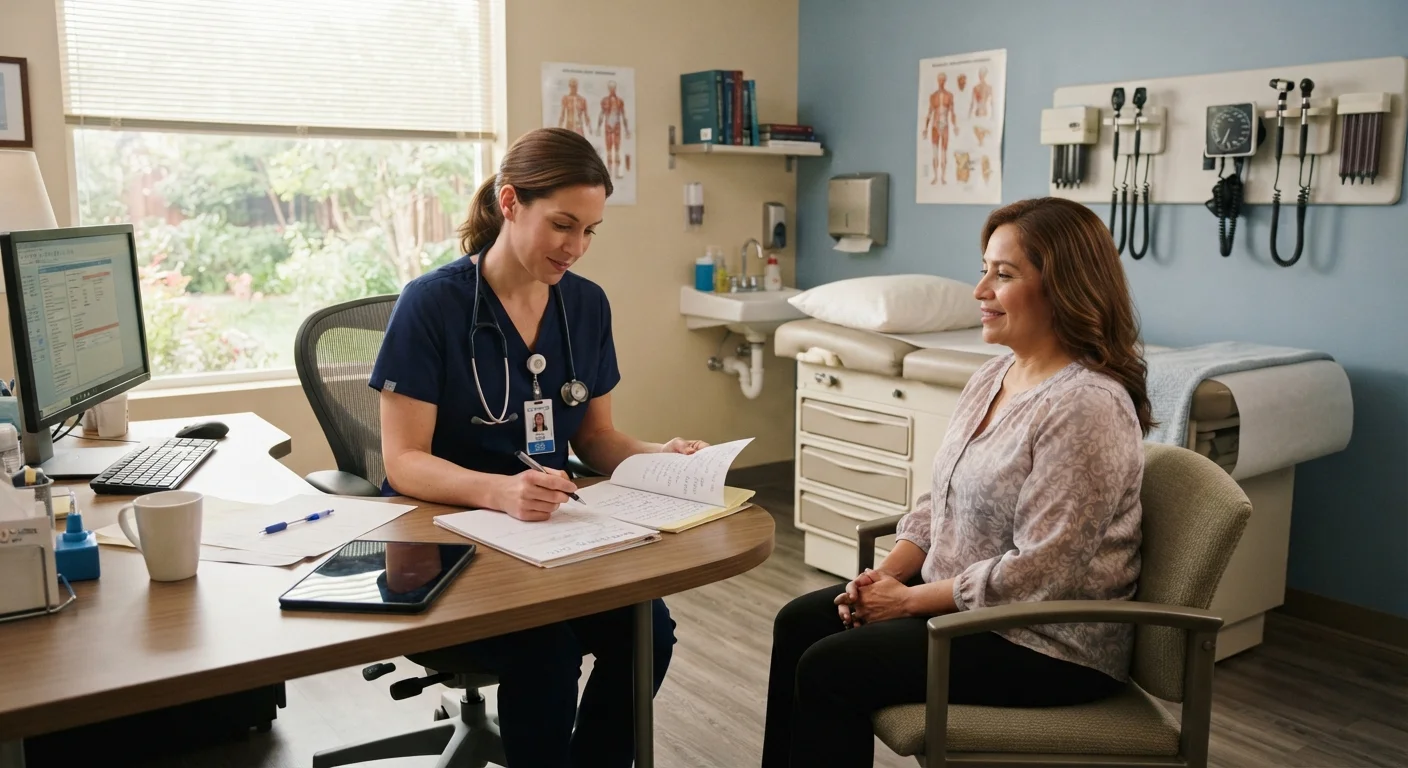
What the appointment typically covers
A well-woman visit is not a single fixed checklist. Providers use guidelines from organizations such as the U.S. Preventive Services Task Force (USPSTF), the American College of Obstetricians and Gynecologists (ACOG), and the CDC to decide which screenings and conversations apply to you specifically.
That said, most visits include several consistent elements:
- Vital signs and measurements: Blood pressure, heart rate, height, weight, and body mass index (BMI) are recorded at the start. These numbers establish a baseline and can reveal risk factors such as hypertension or obesity-related conditions before symptoms appear. For more on what cardiovascular numbers mean, see heart health checks you should not skip.
- Health history review: Your provider will ask about medications, family history, lifestyle habits, and any concerns since your last visit. Be direct about anything on your mind, including mental health, sleep, or relationship stress.
- Breast exam: A clinical breast exam may be performed, though practice varies by provider and patient age. Your provider can also review breast self-awareness techniques.
- Pelvic exam: A visual and manual pelvic exam checks the uterus, ovaries, and surrounding tissues. It may or may not include a Pap smear depending on your age and screening history.
This article provides general health information and is not a substitute for personalized medical advice. Always consult a qualified healthcare provider about screenings appropriate for your situation.
Screenings that may be ordered
Beyond the physical exam, your provider may order laboratory tests or schedule imaging based on your profile. Common screenings include:
- Cervical cancer screening (Pap smear and/or HPV test)
- Sexually transmitted infection (STI) testing, including chlamydia, gonorrhea, HIV, and syphilis
- Blood glucose or hemoglobin A1c for diabetes risk
- Cholesterol and lipid panel for cardiovascular risk
- Thyroid function tests if symptoms suggest a concern
- Bone density screening (DEXA scan) for women 65 and older, or younger women with risk factors
- Mammography referral based on age and risk (guidelines differ between USPSTF and ACOG; your provider can explain both)
47%
Women who skip recommended preventive visits annually
According to the Kaiser Family Foundation, nearly half of adult women in the U.S. report not having a routine checkup in the past year.
0 dollars
Out-of-pocket cost for ACA-covered preventive services
Under the Affordable Care Act, preventive services rated A or B by the USPSTF must be covered at no cost-sharing by most insurance plans when provided in-network.
3 years
Recommended Pap smear interval for ages 21 to 65
The U.S. Preventive Services Task Force recommends cervical cancer screening every three years with a Pap smear alone for women in this age range.
Vaccination updates are also part of the visit. Your provider will check whether you are current on influenza, Tdap (tetanus, diphtheria, pertussis), COVID-19, HPV (for eligible ages), and shingles vaccines.
Mental health and lifestyle conversations
A well-woman visit addresses more than physical measurements. Screening for depression and anxiety is a standard component. Providers may use a validated tool such as the PHQ-2 or PHQ-9 to screen for depression. If you are pregnant or recently postpartum, screening for perinatal mood disorders is also standard practice.
Conversations about reproductive intentions, contraception, sexual health, and any history of intimate partner violence are appropriate at this visit and are protected by confidentiality in most circumstances. Ask your provider if you have questions about what is shared and with whom.
Lifestyle topics covered often include alcohol and tobacco use, physical activity, nutrition, and sleep quality. These are not lectures; they are opportunities to get evidence-based guidance relevant to your health picture.
If you want to prepare questions in advance, see how to get the most out of a doctor's appointment.
How to prepare and what to expect
Scheduling the visit toward the middle of your menstrual cycle, away from your period, makes a pelvic exam and Pap smear more comfortable and accurate. Avoid douching, using vaginal products, or having vaginal intercourse 24 to 48 hours before the appointment if a Pap smear is expected.
Write down current medications (including supplements and over-the-counter drugs), any symptoms you have noticed, and questions you want answered. Providers appreciate specific, concrete concerns over vague ones. If you feel rushed, it is reasonable to say so and ask for clarification.
After the visit, you will typically receive results for any lab work ordered within a few days to two weeks, depending on the test. Ask your provider how and when results will be communicated, and through which patient portal or contact method.
A well-woman visit fits into a broader preventive care routine. For guidance on scheduling all your family members' checkups together, the preventive care calendar guide offers a practical framework. Oral and eye health are also part of complete preventive care; vision and dental exams can surface systemic health clues that a well-woman visit alone may not catch.