How each fixture type works
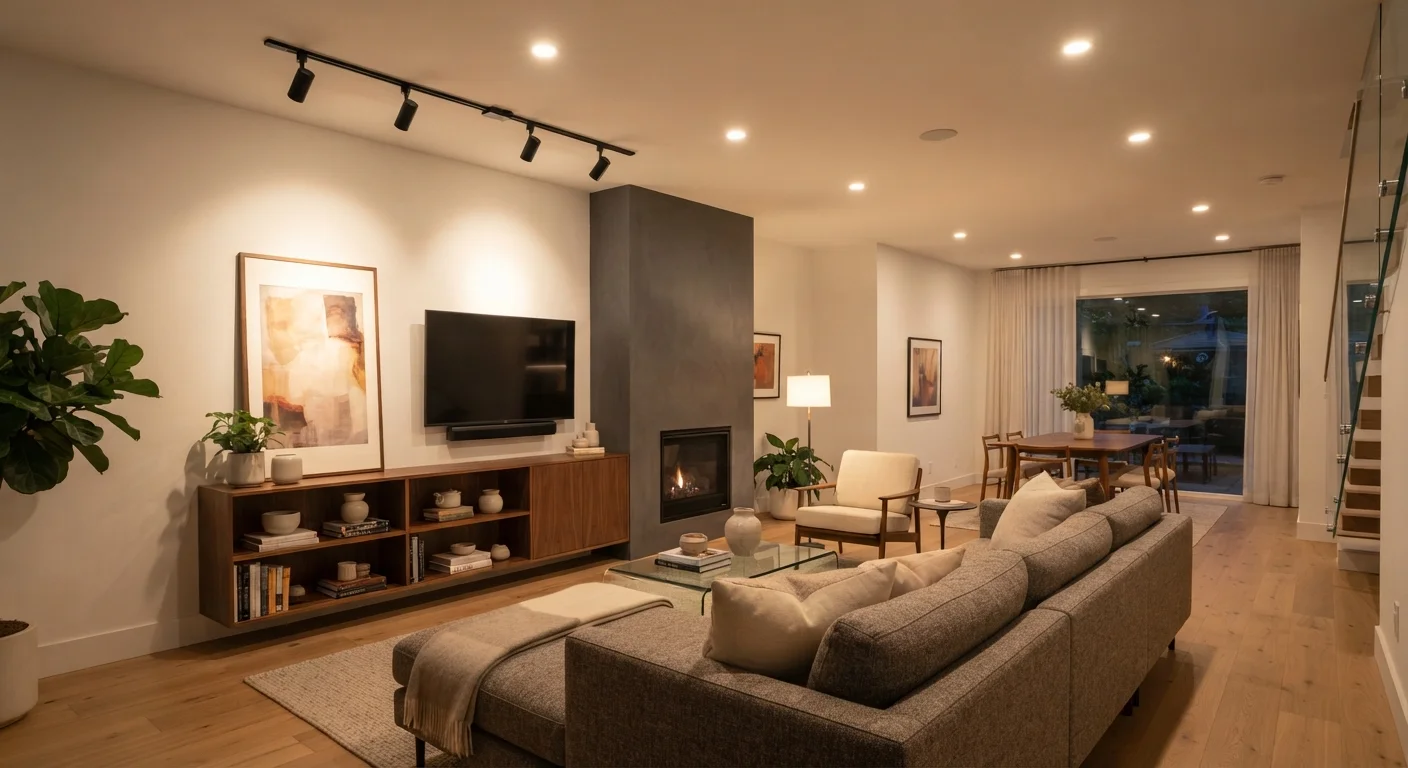
Recessed lighting (sometimes called can lights or downlights) sits flush inside the ceiling. The housing is hidden above the drywall, and only a trim ring and bulb are visible from below. This gives the ceiling a tidy, minimal appearance. Light projects downward in a cone, so each fixture illuminates a relatively contained area.
Track lighting mounts on the ceiling surface or hangs slightly below it on a rail. Individual heads attach to the track and can swivel, tilt, or slide along the rail. Because the hardware is visible, track fixtures have a more industrial or contemporary look. The trade-off is that you can aim each head independently, giving you far more control over where light falls.
Installation requirements
Both types require a licensed electrician for any new circuit work or if you are not confident working with household wiring. That said, replacing an existing ceiling fixture with a track light is often straightforward for someone with basic electrical experience. Track lighting connects to a single junction box, so one wiring point serves all heads on the rail.
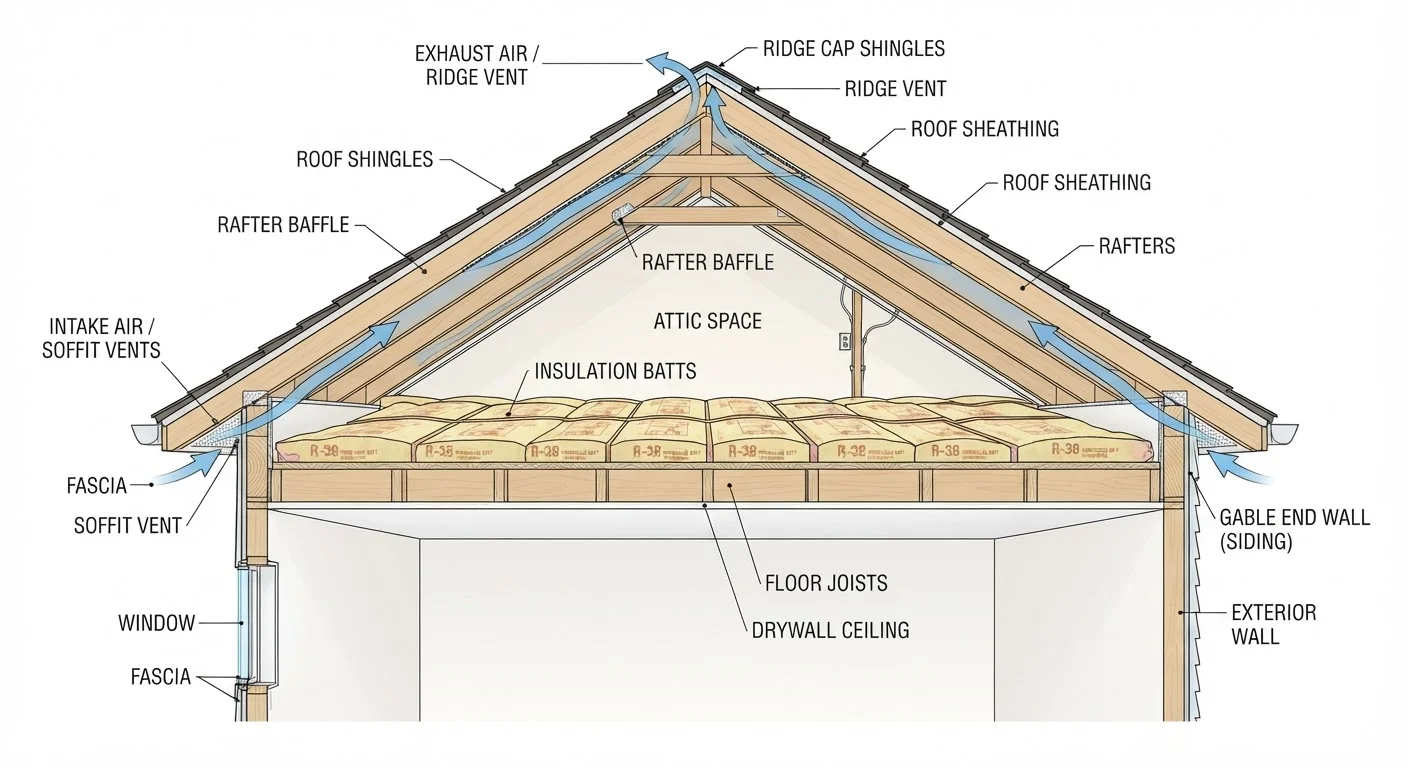
Recessed lighting is more involved. Each can needs its own housing cut into the ceiling, and wiring must run between cans. Retrofit recessed kits (designed for finished ceilings) reduce the difficulty, but you still need attic access or the ability to fish wire through insulation. If the ceiling is concrete or has minimal clearance above it, recessed installation may not be practical at all.
Know when to call an electrician
Any work that involves adding a new circuit, moving a junction box, or running wire through finished walls requires a permit in most jurisdictions and should be done by a licensed electrician. Working in a live panel or splicing wires without proper training carries a real risk of shock, fire, or failed inspection. Always turn off the breaker and confirm power is off with a non-contact voltage tester before touching any wiring.
Track lighting generally wins on installation ease, especially in retrofit situations. Recessed lighting is better handled during new construction or a full renovation when the ceiling is open.
Room-by-room guidance
Living rooms: Recessed lights work well for general ambient light, while a small track or pendant over a reading area adds targeted illumination. Using dimmable recessed fixtures gives you control over mood throughout the day.
Kitchens: Recessed cans spaced evenly provide broad task lighting over counters and islands. A track above a prep area lets you direct light precisely where cutting and cooking happen. Many kitchen layouts benefit from both.
Home offices: Track lighting is practical here because heads can point at a desk, a whiteboard, or shelving without requiring multiple separate fixtures. Recessed lighting alone can cause glare on monitors if placed directly overhead.
Hallways and bedrooms: Recessed lighting is common in hallways because it keeps a low-clearance ceiling feeling open. In bedrooms, recessed fixtures on a dimmer circuit handle general lighting, though a bedside lamp usually does more practical work.
Art and display spaces: Track lighting is the clear choice when you want to highlight paintings, shelving, or architectural features. Adjustable heads let you update the display without rewiring.
| Recessed lighting | Track lighting | |
|---|---|---|
| Ceiling appearance | Flush, minimal, hidden hardware | Visible rail and heads |
| Adjustability | Fixed direction (downward) | Heads tilt, swivel, and slide |
| Installation complexity | Higher; multiple holes and wiring runs | Lower; one junction box per track |
| Best retrofit situation | With attic access or open ceiling | Any finished ceiling with one box |
| Ideal room type | Bedrooms, hallways, kitchens | Offices, galleries, accent areas |
| Future flexibility | Limited without new work | High; heads reposition easily |
Cost and long-term considerations
Material costs vary by brand and fixture quality, but track systems typically cost less upfront per linear foot than installing an equivalent number of recessed cans. However, if you already have several junction boxes in the ceiling, adding recessed retrofit kits can be cost-competitive.
Energy use depends almost entirely on bulb choice, not fixture type. Both types accept LED bulbs, which draw significantly less power than older incandescent options. Recessed fixtures with poor insulation contact (IC) ratings can contribute to heat loss in winter; look for IC-rated housings if the ceiling borders an unconditioned space.
Recessed cans are harder to reposition later. If your room layout changes, you may be left with unwanted holes or lights aimed at the wrong areas. Track heads can be slid or swiveled without any new wiring, which makes track systems more adaptable to future changes.