What each method does and where it belongs
Caulking, weatherstripping, and sealants each stop air or water from moving through gaps in your home's envelope, but they work in different ways and belong in different locations. Using the wrong one for a given spot often means redoing the job within a season.
Caulk
A flexible compound used to seal narrow, stationary gaps between building materials. It is applied as a paste and cures into a solid or semi-flexible bead.
Weatherstripping
A compressible material attached to the edges of doors or operable windows to seal the gap when they close. It must flex repeatedly without tearing or losing shape.
Sealant
A broad category of materials used to block air, water, or gas from passing through gaps or joints. Caulk is one type of sealant; others include foam, mastic, and hydraulic cement.
Building envelope
The physical boundary between a home's conditioned interior and the outside, including walls, roof, windows, doors, and foundation. Sealing this boundary reduces air and moisture infiltration.
Backer rod
A cylindrical foam rod inserted into wide gaps before caulking. It limits how deep the caulk penetrates and gives it a proper shape for long-term flexibility.
Cure time
The period a sealant needs after application to reach its full strength and water resistance. Cure time differs from drying time and varies by product type and humidity level.
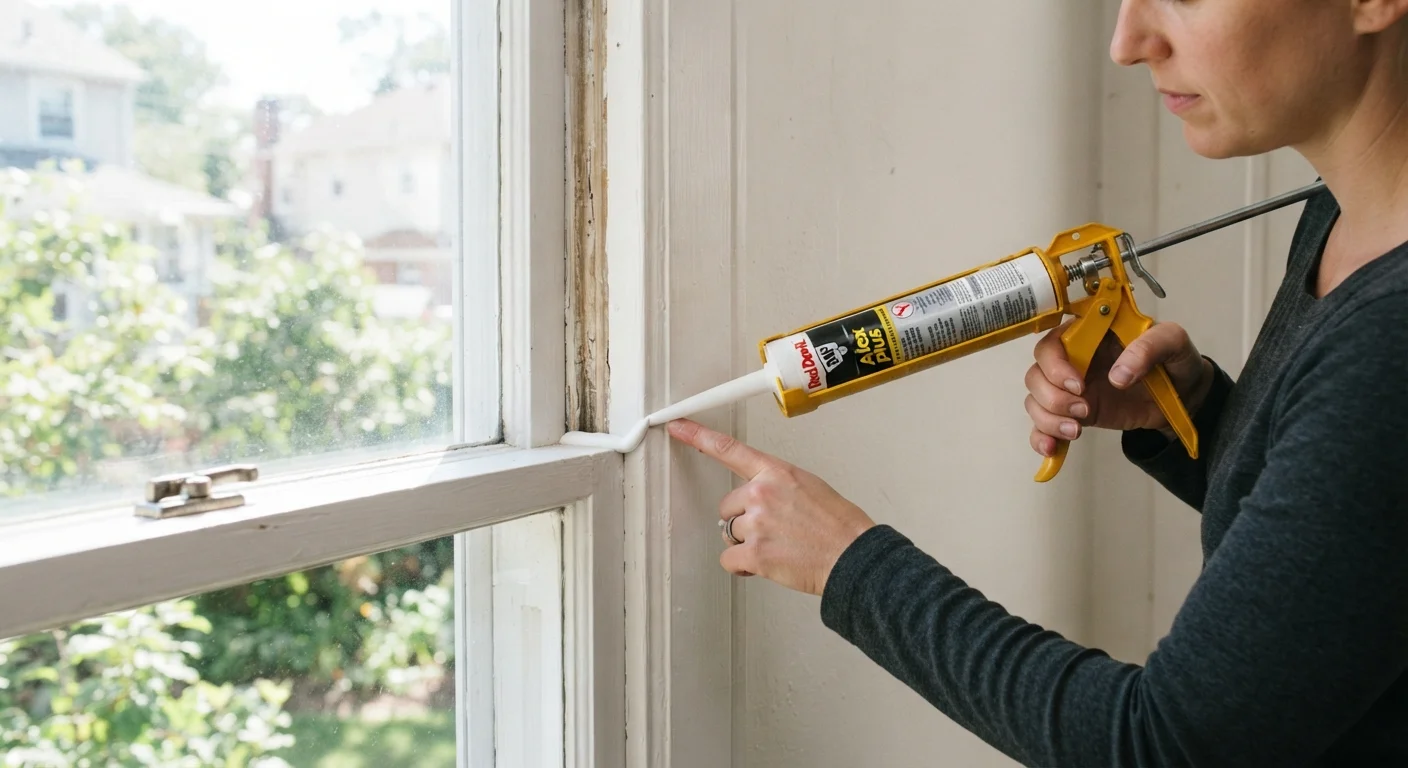
Caulk is a flexible compound applied with a caulk gun to fill narrow, stationary gaps, typically 1/4 inch wide or smaller. It cures into a semi-flexible or rigid bead that bonds to both surfaces. Common locations include the joint where a window frame meets exterior siding, the gap around a bathtub rim, and the seam between a wall and baseboard trim. See trim installation terms for where caulk fits into interior finish work.
Weatherstripping is a physical seal attached to moving parts, primarily doors and operable windows. Because those surfaces open and close repeatedly, weatherstripping must compress and rebound without tearing. Caulk would crack immediately in that role.
Sealants is a broader category. All caulks are sealants, but not all sealants are caulks. The term also covers foam sealants, hydraulic cement, and roof mastics, each designed for a specific substrate or level of movement.
Caulk types and where each one fits
Choosing the right caulk formula matters as much as applying it correctly.
- Latex (acrylic) caulk is water-based, easy to clean up, and paintable. It works well for interior gaps around trim, baseboards, and crown molding, but it does not hold up well in wet or exterior conditions.
- Siliconized latex caulk adds silicone for better flexibility and moisture resistance. It suits both interior and exterior trim joints and is still paintable on most formulations.
- 100% silicone caulk bonds to glass, metal, and tile without absorbing moisture. It cannot be painted and is harder to smooth, but it lasts longer in wet areas such as showers, sinks, and exterior window glazing. See tile and grout maintenance for how caulk works alongside grout in wet areas.
- Polyurethane caulk is tough and paintable, with strong adhesion to wood, masonry, and metal. It suits exterior joints that experience some movement, such as where a deck ledger meets a house wall.
- Foam sealant (expanding foam) fills larger voids, around pipes passing through walls or gaps behind outlets on exterior walls. It is not a surface product; it goes inside cavities. Attic air sealing depends heavily on foam sealant at penetrations before insulation is added.
Weatherstripping types and how to pick one
The right weatherstripping depends on where the door or window closes and how much wear that spot takes.
| Best caulk for wet interior areas | 100% silicone |
| Best caulk for paintable interior trim | Latex or siliconized latex |
| Best weatherstripping for exterior door sides | V-strip (tension seal) |
| Best seal for door bottom gaps | Door sweep |
| Typical latex caulk cure time | 24 hours before water exposure |
| Typical silicone caulk cure time | 24 to 48 hours |
| Maximum gap size for caulk alone | 1/4 inch (use backer rod for wider gaps) |
- V-strip (tension seal) is a folded strip of metal or plastic that springs open to fill the gap along the sides of a door or double-hung window sash. It is durable and nearly invisible when installed.
- Foam tape is the simplest option, an adhesive-backed strip of open- or closed-cell foam that compresses when the door closes. It suits low-traffic windows and cabinet doors but wears out faster on exterior doors used daily.
- Door sweeps seal the gap at the bottom of a door against the threshold. An automatic door sweep lifts when the door opens and drops when it closes, reducing floor drag.
- Bulb or tubular gaskets are rubber or vinyl profiles that compress against the door stop. They seal reliably when the door fits squarely in its frame.
For a deeper look at where weatherstripping failures are frequently missed, see overlooked home maintenance spots.
How to apply caulk correctly
Surface preparation determines whether caulk adheres or peels. Remove all old caulk with a plastic scraper or caulk-removal tool, then clean the joint with isopropyl alcohol and let it dry completely. Moisture under fresh caulk prevents bonding.
Cut the caulk tube tip at a 45-degree angle to match the joint width, and puncture the inner seal with the rod on the caulk gun. Hold the gun at a consistent angle and pull (do not push) along the joint in one steady stroke. Smooth the bead immediately with a wet finger or a caulk tool before a skin forms. Wipe away excess with a damp cloth.
Allow full cure time before exposing the joint to water. Latex caulk typically skins within an hour but needs 24 hours before it gets wet. Silicone caulk can take 24 to 48 hours to cure fully, depending on humidity.
Caulking and weatherstripping together address some of the most straightforward preventive maintenance a homeowner can do. The home maintenance budget guide explains how these low-cost tasks compare to larger repairs when you are deciding where to spend first. For hands-on technique and product guidance, the caulking and weatherstripping application guide walks through the process step by step.