Why spec sheets feel confusing
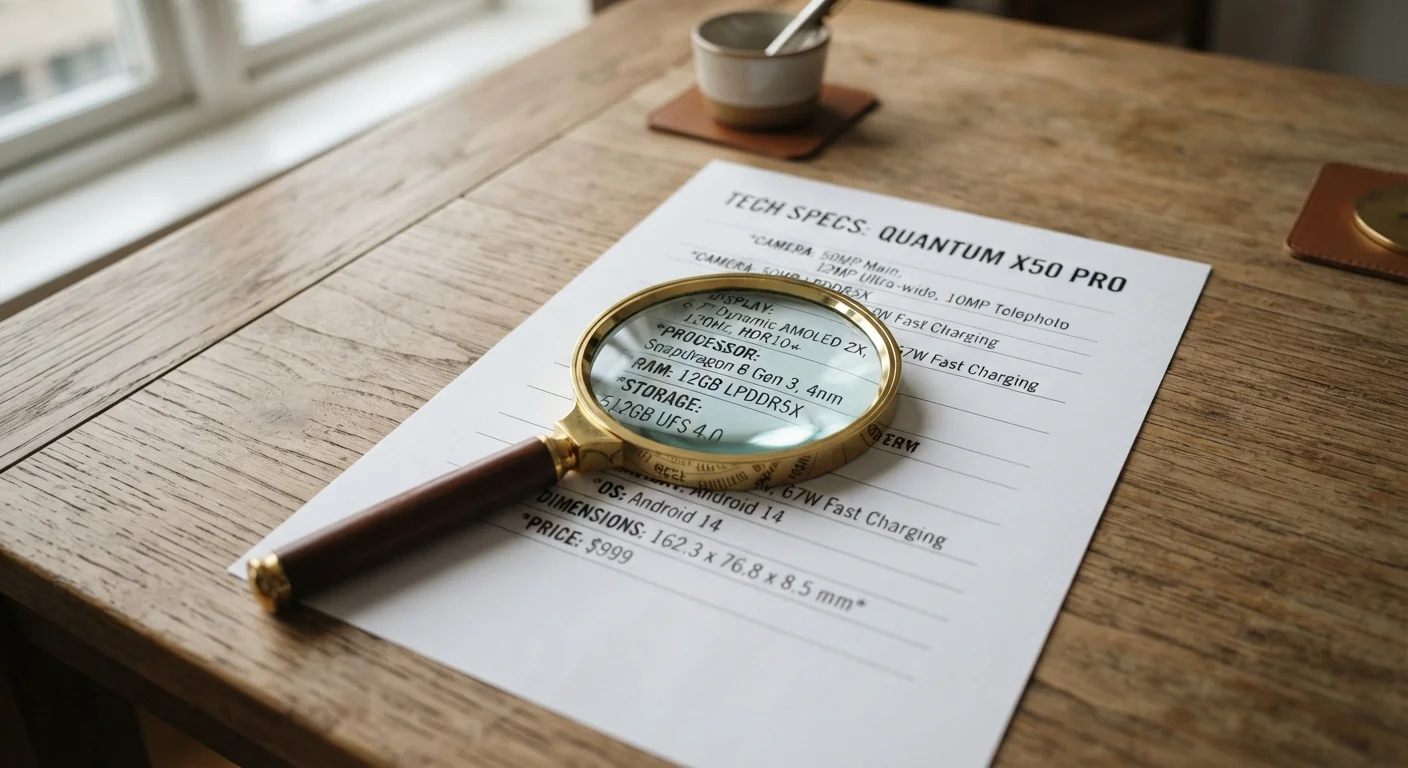
When you pick up a new phone, laptop, or tablet, the box or product listing shows a column of numbers and abbreviations that can feel like a foreign language. Manufacturers write spec sheets for buyers who already know the vocabulary. This reference breaks down the most common terms so you can decide whether a device suits your actual needs.
The specs that matter most depend on what you do with a device. A person who streams videos has different priorities than someone who edits photos or just checks email. Knowing what each number measures lets you match the device to the task rather than guessing from the price tag alone.
CPU (processor)
The main chip that executes software instructions. Speed and core count together determine how fast and how many tasks a device can handle simultaneously.
RAM
Random access memory. Temporary storage that holds active apps and data. More RAM lets you run or switch between more apps without slowdowns.
Storage
Permanent space for apps, photos, videos, and files. Measured in gigabytes (GB) or terabytes (TB); unlike RAM, its contents stay when the device is powered off.
Resolution
The number of pixels on a display, expressed as width by height. Higher resolution produces a sharper image, especially on larger screens.
Refresh rate
How many times per second a screen redraws its image, measured in hertz (Hz). Higher rates produce smoother motion during scrolling and video.
mAh (milliampere-hour)
A unit that measures battery capacity. A higher mAh value means more energy stored, though actual battery life also depends on software and screen use.
GHz (gigahertz)
A unit of processor clock speed. One GHz equals one billion cycles per second. Higher clock speeds generally mean faster processing of individual tasks.
Wi-Fi 6
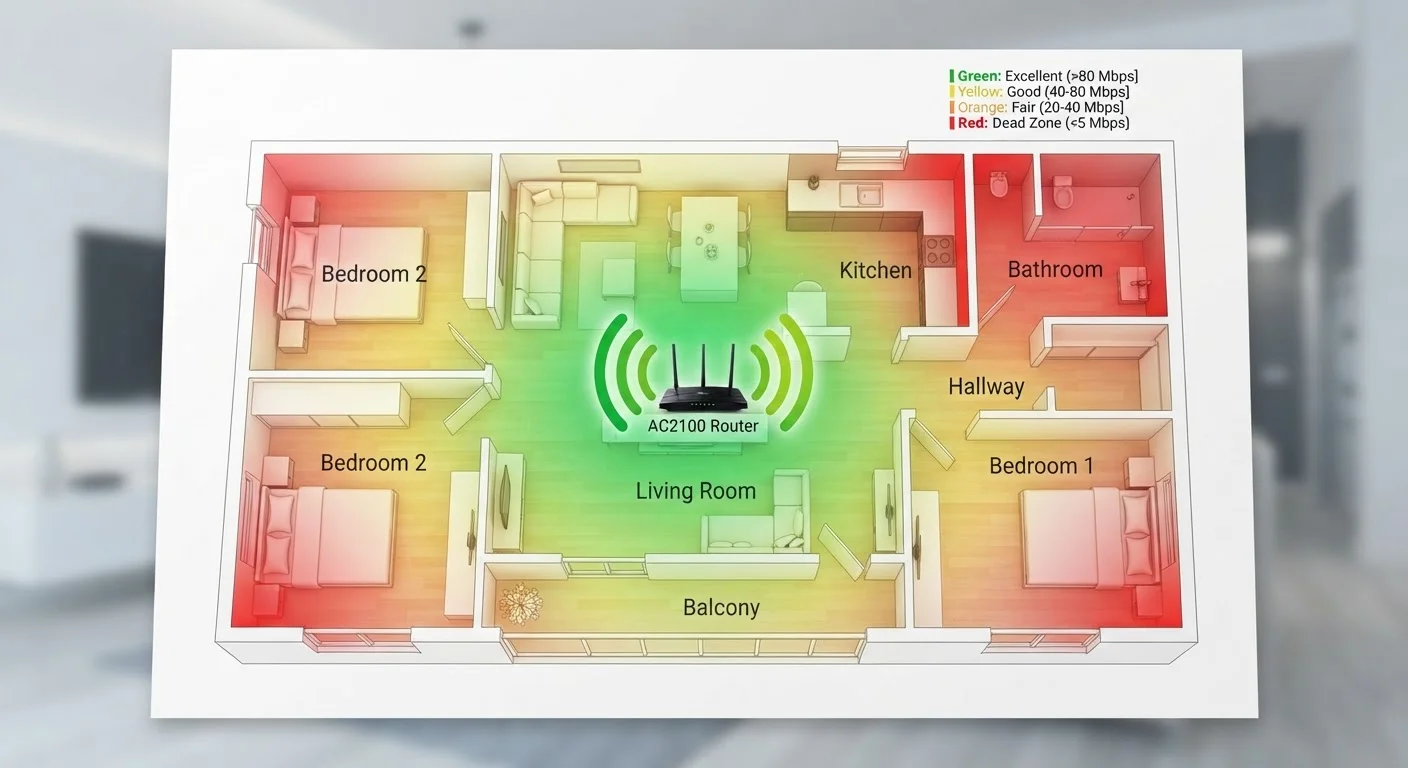
A wireless networking standard (also called 802.11ax) that provides faster speeds and handles more connected devices on one network than previous Wi-Fi generations.
The specs you will see on almost every device
Most spec sheets share a standard set of categories regardless of whether the device is a phone, tablet, or laptop.
Processor (CPU)
The processor is the chip that runs all software on the device. Spec sheets list it by name (such as a model number) and often by the number of cores. More cores allow the device to handle several tasks at the same time without slowing down. Clock speed, measured in gigahertz (GHz), describes how fast each core runs. A higher GHz number generally means faster individual tasks, but core count and chip architecture also affect real-world speed.
RAM
RAM (random access memory) is the device's short-term workspace. It holds apps and data that are currently in use. More RAM means you can switch between more apps without the device having to reload them. For most everyday phone use, 6 to 8 GB is comfortable. Laptops for general tasks typically work well with 8 to 16 GB.
Storage
Storage is where your photos, apps, music, and files live permanently. It is measured in gigabytes (GB) or terabytes (TB). One TB equals 1,000 GB. A single photo from a modern smartphone is roughly 3 to 5 MB, so 128 GB holds thousands of photos. Check whether the device allows expandable storage via a memory card slot, because some do not.
Display resolution
Resolution describes how many pixels fit on the screen, written as width by height (for example, 1920 x 1080). More pixels produce a sharper image. You may also see shorthand labels: 1080p (Full HD), 1440p (Quad HD), and 4K (roughly 3840 x 2160). On a small phone screen the difference between 1080p and 1440p is subtle; on a large monitor or TV it is more noticeable. For more on display specs in the context of televisions, see our guide to smart TVs.
Battery capacity
Battery size is listed in milliampere-hours (mAh). A larger number means more stored energy, but actual battery life depends on the processor, screen brightness, and how you use the device. A 5,000 mAh phone used mainly for calls and browsing can outlast a 4,500 mAh phone that runs heavy apps all day.
| Typical phone RAM for everyday use | 6 to 8 GB |
| Typical laptop RAM for general tasks | 8 to 16 GB |
| Approximate photo file size (modern smartphone) | 3 to 5 MB |
| Storage equal to 1 TB | 1,000 GB |
| Standard smooth scrolling refresh rate | 120 Hz |
| Full HD resolution shorthand | 1080p (1920 x 1080 pixels) |
Specs that need a little more context
Some numbers on spec sheets only make sense when you know what they are measuring against.
Refresh rate
Refresh rate, measured in hertz (Hz), describes how many times per second the screen redraws its image. A 60 Hz display redraws 60 times per second. A 120 Hz display feels noticeably smoother when scrolling or playing games. Higher refresh rates also use more battery power.
Camera megapixels
Megapixels count the number of pixels in a photo. More megapixels can produce larger, more detailed images, but sensor size, aperture, and software processing affect photo quality as much as raw megapixel count. A 12-megapixel camera with a large sensor often outperforms a 50-megapixel camera with a tiny sensor in low light.
Connectivity standards
Spec sheets list wireless standards such as Wi-Fi 6 (802.11ax) or Bluetooth 5.x. Wi-Fi 6 is faster and handles more devices on one network than older versions. Bluetooth 5 has a longer range and uses less power than Bluetooth 4. These numbers matter if you plan to use the device on a modern router or connect several wireless accessories.
Once you understand the specs, you can apply them before travel too. Knowing your device's storage and battery capacity is a good starting point when following a device prep checklist before you travel. And if app update notes list changes to storage use or performance, the guide to reading app changelogs can help you interpret what changed.