A coastline worth exploring town by town
The Gulf of Mexico coastline covers more than 1,600 miles of US shoreline across five states: Florida, Alabama, Mississippi, Louisiana, and Texas. Most travelers default to a handful of familiar resort destinations, but the towns outside those corridors reward curiosity. The water stays warm well into fall, the seafood is genuinely good, and the local culture shifts noticeably as you move west.
Each entry below covers what a destination actually is, who tends to go there, what it costs in broad strokes, and what practical considerations matter before you book. Prices for lodging and food vary by season, so treat any ranges here as orientation, not guarantees. Always verify current entry requirements, road conditions, and weather advisories through official sources before you travel.
Apalachicola, Florida
Apalachicola sits on Florida's Forgotten Coast, about 80 miles southwest of Tallahassee. The town has roughly 2,300 residents and a historic downtown with Victorian commercial buildings along Water Street. It is best known for oyster harvesting in Apalachicola Bay, though bay oyster populations have fluctuated in recent years due to freshwater flow disputes upstream.
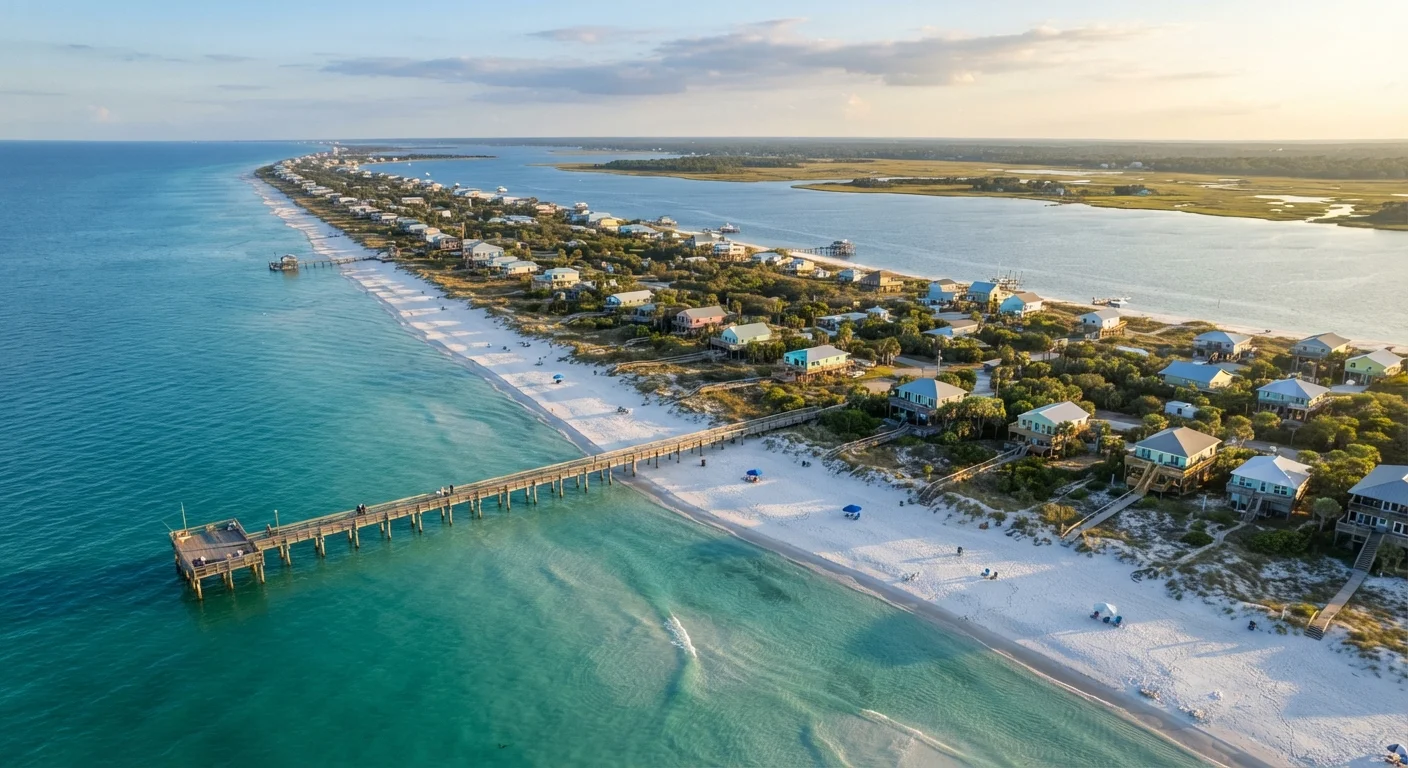
Visitors find a quieter alternative to the Emerald Coast resorts. Accommodation runs from small inns to vacation rentals, generally at lower nightly rates than Panama City Beach or Destin. The surrounding St. George Island State Park has nine miles of undeveloped beach. The park charges a per-vehicle entrance fee; check current rates through the Florida State Parks website before visiting.
Apalachicola's Victorian waterfront and undeveloped barrier island beaches sit well outside the resort-strip circuit.
Dauphin Island, Alabama
Dauphin Island is a barrier island off Alabama's southern coast, reached by a bridge from the mainland near Mobile. At about six miles long, it has a year-round population under 1,400. The Audubon Bird Sanctuary on the western end of the island is a significant stopover point during spring migration, drawing birders from across the country.
The island also has Fort Gaines, a Civil War-era masonry fort that is open to visitors most of the year. Lodging options are limited; most visitors rent houses or stay at the campground run by the county. Dauphin Island is a reasonable day trip from Mobile if you prefer not to stay overnight.
Dauphin Island's bird sanctuary sees thousands of migrating species in spring, making it a draw well beyond the beach.
Bay St. Louis, Mississippi
Bay St. Louis, about 60 miles east of New Orleans, rebuilt substantially after Hurricane Katrina in 2005 and has a functioning arts and dining scene along its Old Town corridor. The town has a walkable main street with independent galleries, cafes, and a weekly market. The beach along the bay is calm and shallow, which makes it suitable for families with young children.
Accommodation in Bay St. Louis includes bed-and-breakfasts, vacation rentals, and a casino resort on the outskirts of town. The proximity to New Orleans means some visitors use it as a quieter base and drive into the city for a day. Amtrak's Sunset Limited stops here three times per week in each direction, which is a rare public transit option on this part of the coast.
Bay St. Louis has a functioning arts corridor and a rare Amtrak stop, two features uncommon on the Mississippi Gulf Coast.
Grand Isle, Louisiana
Grand Isle is Louisiana's only inhabited barrier island accessible by road, sitting about 50 miles south of Lafourche Parish. The community is small, around 1,500 full-time residents, and the island has long been central to Louisiana's sportfishing culture. The waters around Grand Isle see speckled trout, redfish, and offshore species, and fishing camps and charters are the primary draw for visitors.
The island took significant damage in Hurricane Ida in 2021 and recovery has been gradual. Before planning a trip, check current road and accommodation conditions through the Louisiana Office of Tourism or local government sources. The state park at the eastern end of the island has camping facilities when open.
Grand Isle's sportfishing heritage is genuine and long-established, though travelers should verify current conditions before booking.
Rockport, Texas
Rockport sits on Aransas Bay in South Texas, about 35 miles north of Corpus Christi. The town has a working shrimping fleet and a modest arts community. Aransas National Wildlife Refuge, a short drive away, is the primary wintering ground for whooping cranes, one of North America's most endangered bird species. Guided boat tours to the refuge run from Rockport during the late fall and winter months.
The downtown area has restaurants, a small harbor, and galleries. Hurricane Harvey caused major damage in 2017, and reconstruction changed parts of the townscape. Accommodation ranges from small motels and vacation rentals to RV parks along the bay. The area is warm enough for fishing and kayaking most of the year.
Rockport's proximity to whooping crane habitat makes it one of the few places in the US to reliably see the species in winter.
Port Aransas, Texas
Port Aransas occupies the northern tip of Mustang Island, accessible by ferry from Aransas Pass or by road through Corpus Christi. The town has a longer tourist infrastructure than Rockport, with surf shops, fishing piers, beach rentals, and a range of restaurants. The beach is wide and flat, and driving on the sand is permitted in designated areas.
The University of Texas Marine Science Institute operates a facility here, and a small aquarium and nature center is open to the public. Port Aransas draws large crowds during spring break weeks in March, which significantly affects accommodation prices and availability. Visiting in fall or early winter gives you the beach with far smaller crowds and cooler but still pleasant temperatures.
Port Aransas has a university marine science presence and a public aquarium, adding educational options beyond the beach.
Making the most of your Gulf Coast trip
A few logistics apply across the whole coastline. Car travel is the norm here: public transit between towns is sparse, and having a vehicle opens up the barrier islands, fishing piers, and seafood shacks that make Gulf travel worthwhile. If you are flying in, airports in Pensacola, Mobile, Gulfport-Biloxi, New Orleans, Houston, and Corpus Christi all sit within reasonable distance of multiple destinations on this list.
Timing your Gulf Coast trip
The Gulf Coast's hurricane season runs from June through November, with August and September carrying the highest historical risk. Most Gulf towns are pleasant from October through May, when crowds thin and temperatures are cooler. Spring break weeks in March bring significant congestion to beach towns in Florida and Texas; booking those weeks early or avoiding them entirely will affect your experience considerably.
If the Gulf's warm, shallow water appeals to you but you want a comparison point for a very different beach trip, see our guide to traveling the Caribbean's island chains for a breakdown of what each island group offers.