What each option actually involves
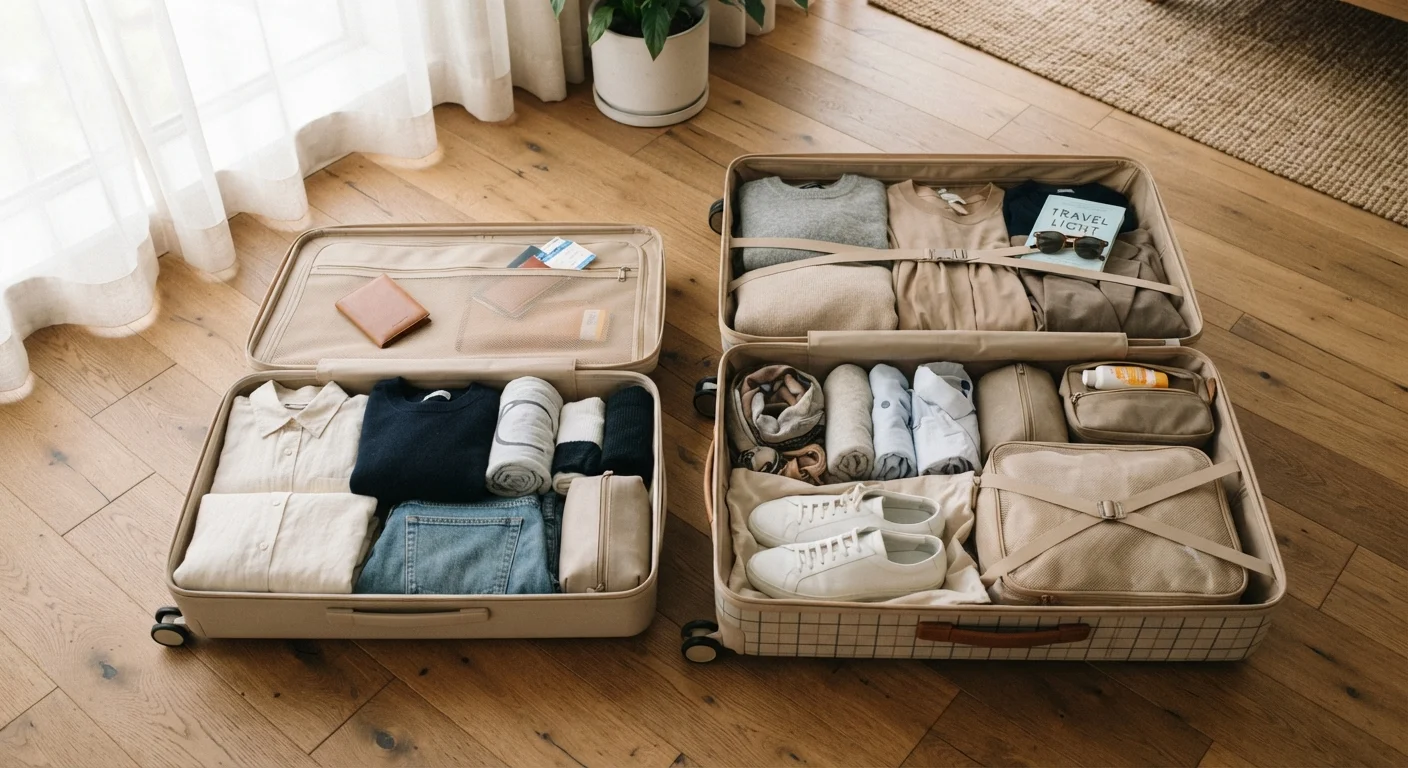
Choosing carry-on only means fitting everything into a bag small enough to go in the overhead bin or under the seat in front of you. Most U.S. carriers cap carry-on dimensions around 22 x 14 x 9 inches, though budget airlines sometimes set tighter limits. You also get one personal item, typically a backpack or tote. The TSA restricts liquids to containers of 3.4 ounces or less, packed in a single quart-sized bag, and prohibits certain sharp or pressurized items entirely.
Checked luggage goes into the plane's cargo hold. Standard checked bags on most U.S. airlines can weigh up to 50 pounds, with larger allowances available for an added fee. You pay a per-bag fee on most domestic carriers, though some airline fare classes or credit card benefits waive that cost. The bag travels separately from you, which introduces a small but real chance of a delay or misdirection. Always verify current fee structures and size rules directly with your airline before you pack.
For a broader look at pre-trip logistics, see the packing checklist that covers clothing, documents, and commonly forgotten items.
Speed, cost, and convenience
| Criterion | Carry-On Only | Checked Luggage |
|---|---|---|
| Typical fee (U.S. domestic) | Usually free (first bag) | Roughly $35 per bag, per flight |
| Time at airport | Faster, no claim wait | 15 to 45 min at baggage claim |
| Liquid restrictions | 3.4 oz containers only | Full-size containers allowed |
| Risk of loss or delay | Near zero (stays with you) | Small but real risk |
| Capacity | Limited to ~22 x 14 x 9 in. | Up to 50 lbs, larger volume |
| Sharp tools and gear | Many items prohibited | Most items permitted |
| Best trip length | Up to 5 days (generally) | 1 week or longer |
Carry-on travel cuts airport time at both ends. You go straight to security on arrival and walk directly to ground transport after landing. On a round trip, that can save an hour or more of waiting. Checked bags cost money (commonly $35 per bag each way on major U.S. carriers, though prices change), and those fees add up quickly on a multi-leg itinerary.
That said, checked luggage removes the overhead bin scramble. On full flights, airlines sometimes gate-check carry-ons anyway, meaning your bag ends up in the hold whether you planned for it or not. If that happens, you lose the time advantage without gaining the packing space. Travelers on connecting flights face another variable: understanding how your bags transfer between flights matters as much as the packing decision. The explanation of layovers, connections, and stopovers is worth reading before any multi-leg trip.
Packing limits and what they rule out
The TSA liquid rule is the most common carry-on frustration. Full-size shampoo, sunscreen, and similar toiletries have to be purchased at the destination or transferred into small containers. Medications in liquid form follow the same rules unless you have a documented medical need; confirm current TSA guidance before you fly. Certain items, including sharp tools, multi-tools, and some sporting goods, must go in a checked bag regardless of size.
Checked baggage opens the door to items that simply cannot fly in a cabin bag: full-size toiletry bottles, wine or spirits within regulated limits, wrapped gifts, ski boots, and similar gear. The trade-off is weight. A 50-pound limit sounds generous until you factor in a week of clothes plus shoes, toiletries, and souvenirs on the return leg. Overweight bags incur additional fees that can exceed the base checked bag cost.
Trip planning details like offline maps and charging gear also affect how much space you need. The device prep checklist helps you decide which tech to bring without overpacking your bag.
When your trip type tips the decision
Trip length is the most reliable guide. Three to five days is manageable carry-on only for most people who pack efficiently. Beyond a week, the math shifts: laundry access at the destination can extend carry-on viability, but not everyone has that option or wants to spend vacation time doing laundry.
Destination and activities matter just as much. A beach trip requires bulky items like flip-flops, a beach bag, and perhaps snorkeling gear. A ski trip means boots and layers. A city break or a business trip, where you mostly need clothes and a laptop, is the natural home of carry-on travel.
Group dynamics change things too. Solo travelers and group travelers face different packing pressures. A group can sometimes consolidate into shared checked bags to split fees, while a solo traveler moving quickly through multiple cities benefits most from carry-on speed and simplicity.
Whatever you decide, build your packing list around the travel tips that match your destination, pace, and personal travel style.