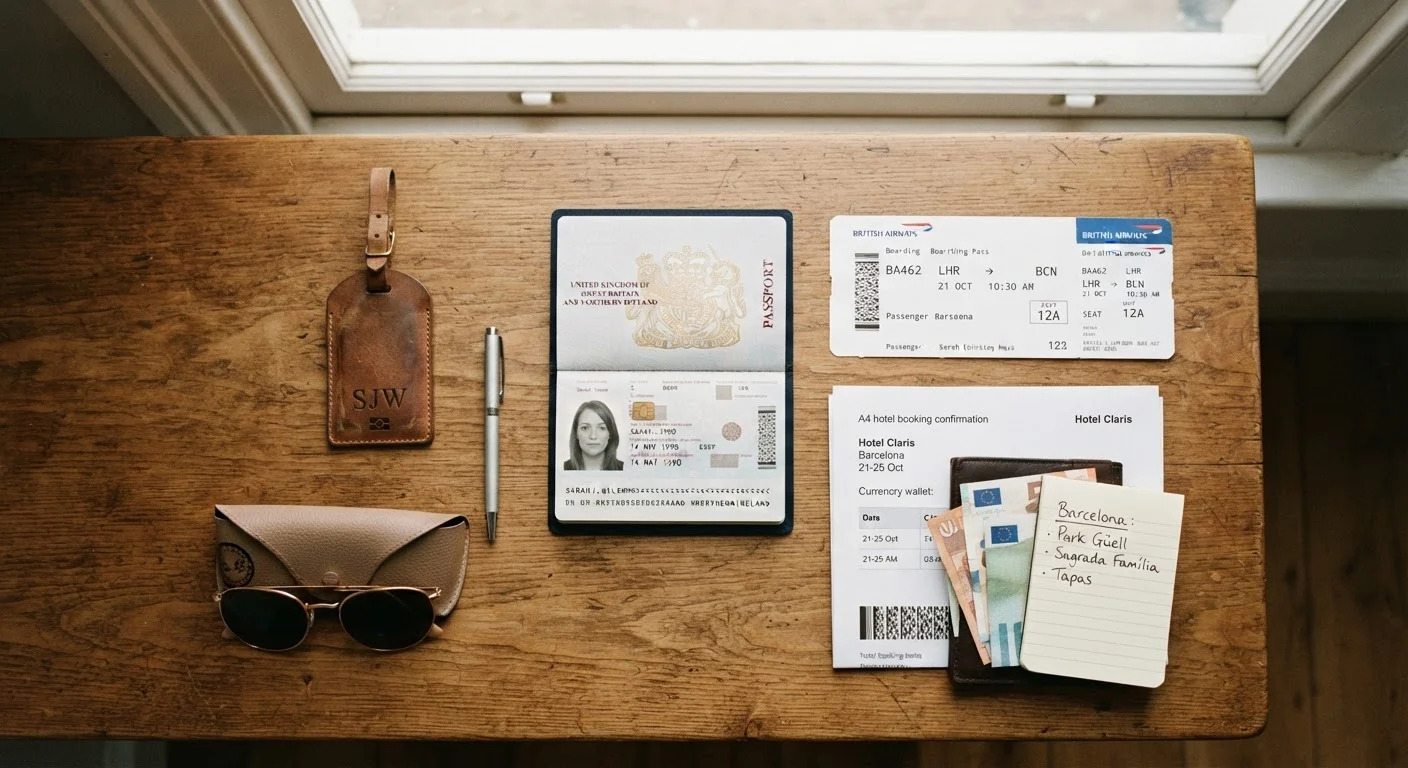
The spending patterns that drain travel budgets
Overspending abroad rarely happens because a traveler is careless. It happens because airports are engineered for impulse decisions, foreign currency feels abstract, and the social permission to splurge on vacation is real. The result is that even well-prepared travelers find themselves back home with a credit card bill that does not match the budget they planned.
Understanding where the money actually goes is the first step. Most budget overruns trace back to a handful of predictable moments: the currency exchange booth before baggage claim, the payment terminal that asks whether you want dollars, and the untracked afternoon of spontaneous purchases. For a broader look at which costs travelers routinely forget to plan for, see this breakdown of overlooked travel expenses.
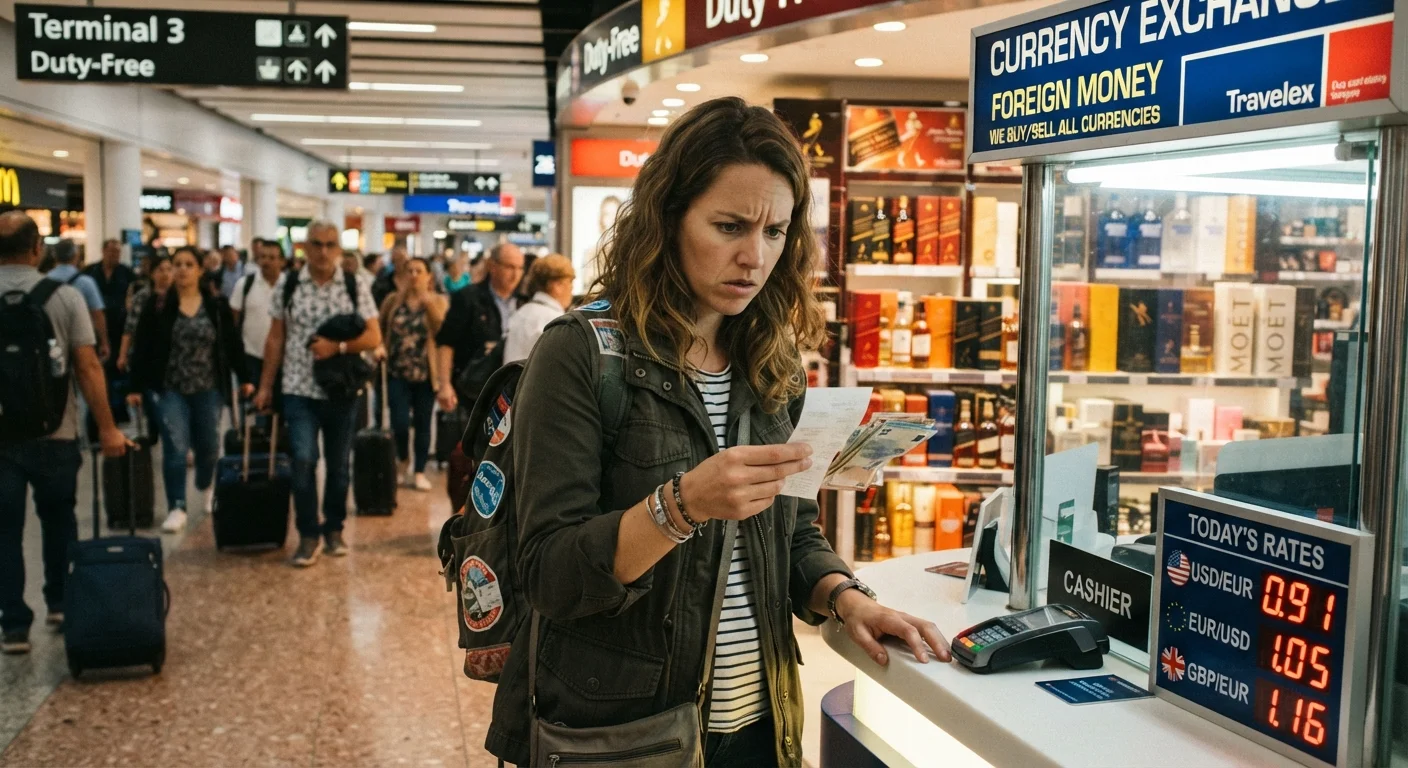
Exchanging money at airport currency booths before or after a flight.
Why it happens: Airports feel like the logical place to get local cash since travelers are already there and feel pressed for time.
Accepting dynamic currency conversion at payment terminals.
Why it happens: The prompt appears at checkout and sounds helpful, making it easy to click "yes" without realizing what it costs.
Skipping a daily spending check-in during the trip.
Why it happens: Vacation-mode thinking treats each purchase as isolated, so cumulative totals stay invisible until the credit card bill arrives.
Booking tours, entry tickets, and activities on arrival rather than in advance.
Why it happens: Travelers assume on-the-ground flexibility will save money or fear plans will change, so they delay purchasing.
Ignoring foreign transaction fees on credit and debit cards.
Why it happens: Many travelers do not read card terms and assume all cards work the same way internationally.
Buying travel insurance, adapters, and packing supplies at the airport.
Why it happens: Stress and time pressure at departure make travelers willing to pay whatever is on the shelf.
How to reset your spending habits before the next trip
The mistakes above share a common thread: they all happen when a traveler is either uninformed about a fee or relies on in-the-moment judgment under time pressure. Both conditions are fixable before departure.
Dynamic currency conversion costs real money
When a card terminal abroad asks whether you want to pay in U.S. dollars or the local currency, always choose the local currency. Selecting dollars hands the merchant's bank control over the exchange rate, and that rate is typically far less favorable than your own card's rate. The option looks convenient, but it reliably costs more.
Start with your cards. Call your bank or log into your account to confirm foreign transaction fees and international ATM withdrawal policies. If your card charges 3 percent on every overseas purchase, that adds $60 to every $2,000 you spend, before you factor in any exchange rate markup.
Next, build a simple daily budget in the local currency, not in dollars. Converting every price mentally is exhausting and prone to rounding errors that always seem to go in the wrong direction. Write down your per-day allowance once, then track against that number each evening.
For more guidance on avoiding the broader pattern of budget drift, this article on how small overages compound applies just as well to travel spending as it does to everyday household finances. And if this is your first international trip, the practical realities of crossing borders covers money logistics alongside the other details first-timers tend to miss.
Planning your destination activities before you leave home also removes one of the most common budget surprises. Browsing destination guides ahead of time lets you price out entry fees, transportation, and tours at home rates, rather than at the premium charged to walk-up visitors. A little research from your couch often pays for itself on day one of the trip.