How a spark plug actually works
Every time a gasoline engine fires a cylinder, an electrical current travels from the ignition coil down to the spark plug. That current jumps a small gap between two metal electrodes at the tip of the plug, creating a spark. That spark ignites the compressed air-fuel mixture in the cylinder, which expands rapidly and pushes the piston down. That motion is what ultimately moves the vehicle.
This happens thousands of times per minute across all cylinders. A four-cylinder engine running at 2,000 RPM fires each cylinder 1,000 times per minute, so each plug must produce a reliable spark on every cycle. The gap between the plug's electrodes must be precise: too wide and the spark won't jump consistently; too narrow and combustion is incomplete.
The plug also transfers heat away from the combustion chamber. Its heat range (how quickly it dissipates that heat) is matched to the engine's design. Installing a plug with the wrong heat range can cause fouling or pre-ignition, both of which damage engine performance.
Types of spark plugs and what they mean for your car
Spark plugs come in four main electrode materials, each with different longevity and performance characteristics.
- Copper (conventional): The oldest type, with a copper core and nickel alloy tip. These conduct electricity well but wear faster, typically requiring replacement around 30,000 miles.
- Platinum: A harder electrode material that resists wear better than nickel. Single-platinum plugs are common in distributor-based ignition systems; double-platinum plugs are used in waste-spark systems where both electrodes erode.
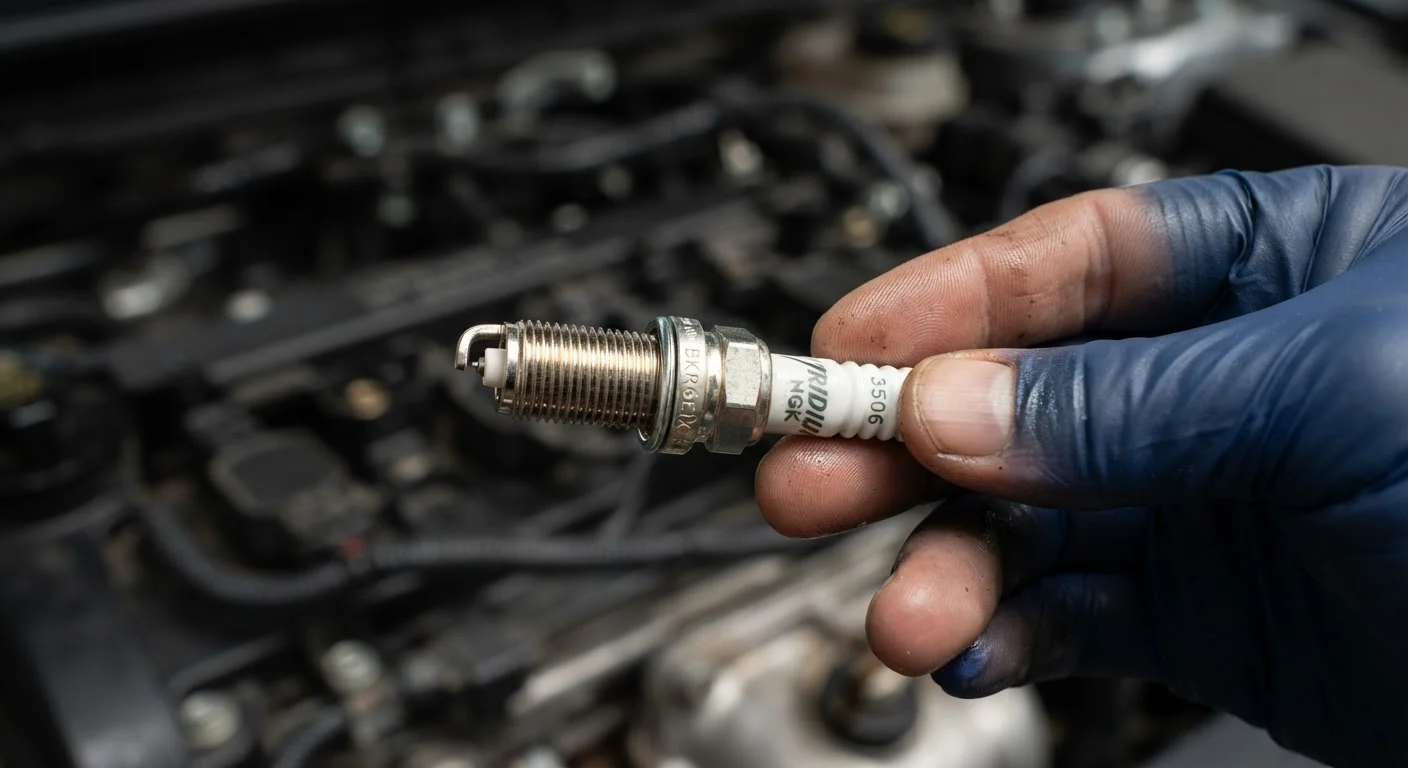
- Iridium: Harder than platinum and able to maintain a finer electrode tip over time, which promotes a more consistent spark. Many modern vehicles specify iridium plugs with intervals of 60,000 to 100,000 miles.
- Silver: Less common in the U.S. market, used in some European performance applications for their thermal conductivity.
The correct plug for your vehicle is specified in the owner's manual by part number and gap measurement. Using a different type without consulting a mechanic can shorten plug life or cause running problems.
Match the plug to your vehicle
Never assume that a longer-life or premium plug is automatically better for your car. Use the part number specified in your owner's manual or confirmed by a mechanic using your vehicle's VIN. Installing a plug with the wrong heat range or gap can cause problems even if the plug is new.
Warning signs that plugs need attention
Spark plug wear is gradual, so symptoms often creep in before a driver notices them as a pattern. The most common indicators are:
- Rough idle: The engine shakes or stutters at a stop. A misfiring cylinder disrupts the smooth rhythm of combustion.
- Hard starting: The engine cranks longer than usual, especially in cold weather when a weak spark has less margin for error.
- Sluggish acceleration: Power feels flat when merging or climbing grades, because misfires reduce the effective output of the engine.
- Reduced fuel economy: Incomplete combustion wastes fuel on every misfire cycle.
- Check engine light: Modern engine control units detect misfires and log fault codes such as P0300 (random misfire) or P0301-P0308 (misfire in a specific cylinder).
If these symptoms appear together, spark plug condition is a logical first place to look. A mechanic can inspect the plugs visually: a healthy plug has a light tan or gray deposit on the tip; an oily, black, or eroded plug tells a story about combustion problems or wear.
Neglecting the ignition system can compound into larger issues. The consequences of deferred maintenance on an engine often start with small components like plugs being overlooked.
Replacement intervals and what to expect
The safest guide for replacement timing is your vehicle's owner's manual. Manufacturers set intervals based on the plug type installed at the factory and the specific demands of that engine.
As a general reference:
- Copper/conventional plugs: 20,000 to 30,000 miles
- Platinum plugs: 60,000 miles
- Iridium plugs: 60,000 to 100,000 miles or more
These are averages. Stop-and-go driving, towing, and extended idling can accelerate wear. If your vehicle spends most of its time in city traffic, inspect plugs on the earlier end of the recommended window.
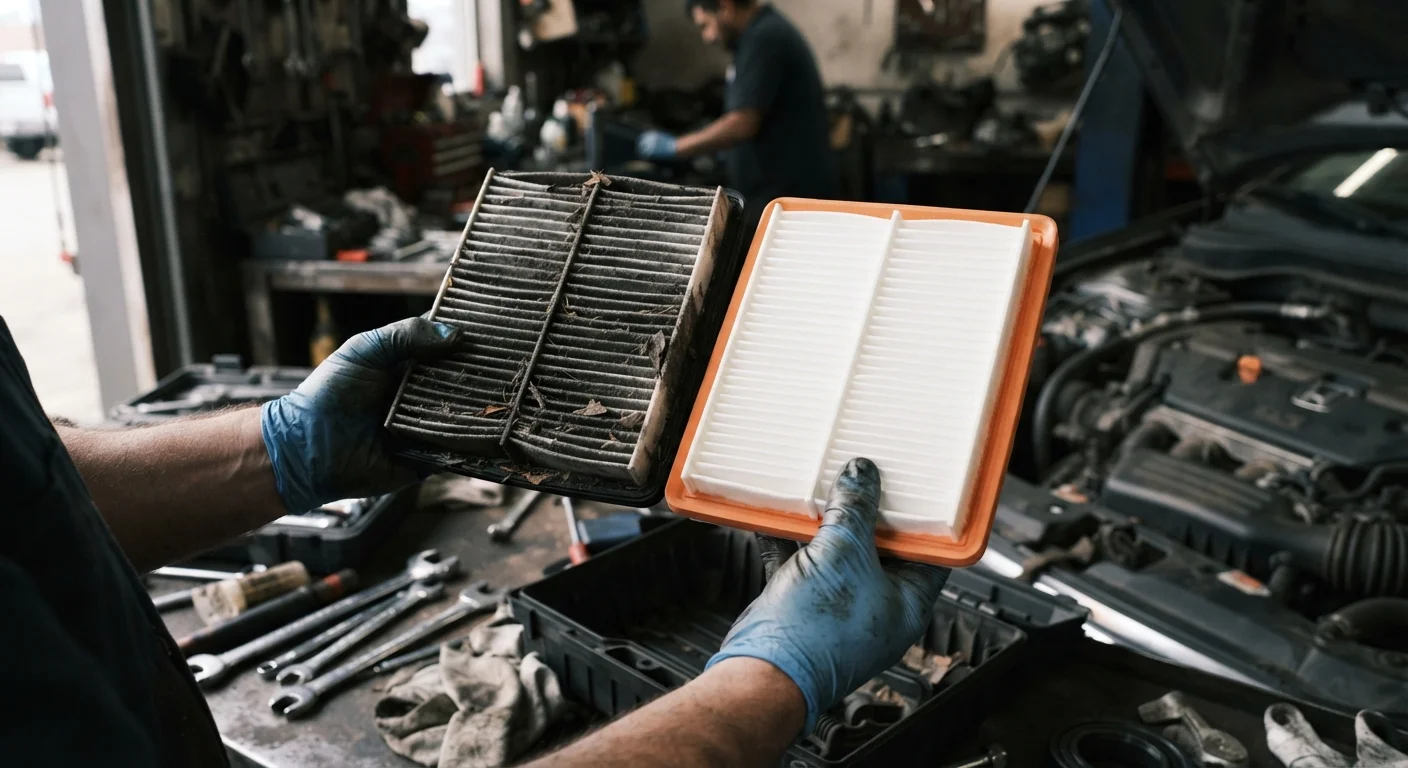
When a mechanic replaces plugs, they should also inspect the ignition wires or coil-on-plug boots, the spark plug threads in the head (for damage or carbon buildup), and the plug gap on any non-pre-gapped replacement. This is also a good time to check the engine air filter, since a restricted air supply affects the same combustion process that the plugs ignite.
Replacement cost depends on the vehicle's accessibility and the plug type, but the labor and part cost of a spark plug service is considerably lower than replacing an ignition coil or a damaged catalytic converter caused by persistent misfires.
30,000
Miles before conventional plugs need replacement
Conventional copper spark plugs typically reach the end of their service life around 30,000 miles under normal driving conditions.
100,000
Miles some iridium plugs can last
Many vehicle manufacturers specify iridium spark plugs with service intervals reaching 100,000 miles, depending on engine design and driving conditions.
4-8
Spark plugs in a typical passenger car engine
Most four- to eight-cylinder passenger car engines have one spark plug per cylinder, though some performance engines use two per cylinder.