How oil degradation starts the chain
Engine oil does two things: it lubricates metal surfaces that move against each other, and it carries heat and contaminants away from those surfaces. When oil ages past its useful life, its viscosity drops and its additive package depletes. The oil thins under heat, forms sludge as combustion byproducts accumulate, and loses the film strength that prevents metal-to-metal contact.
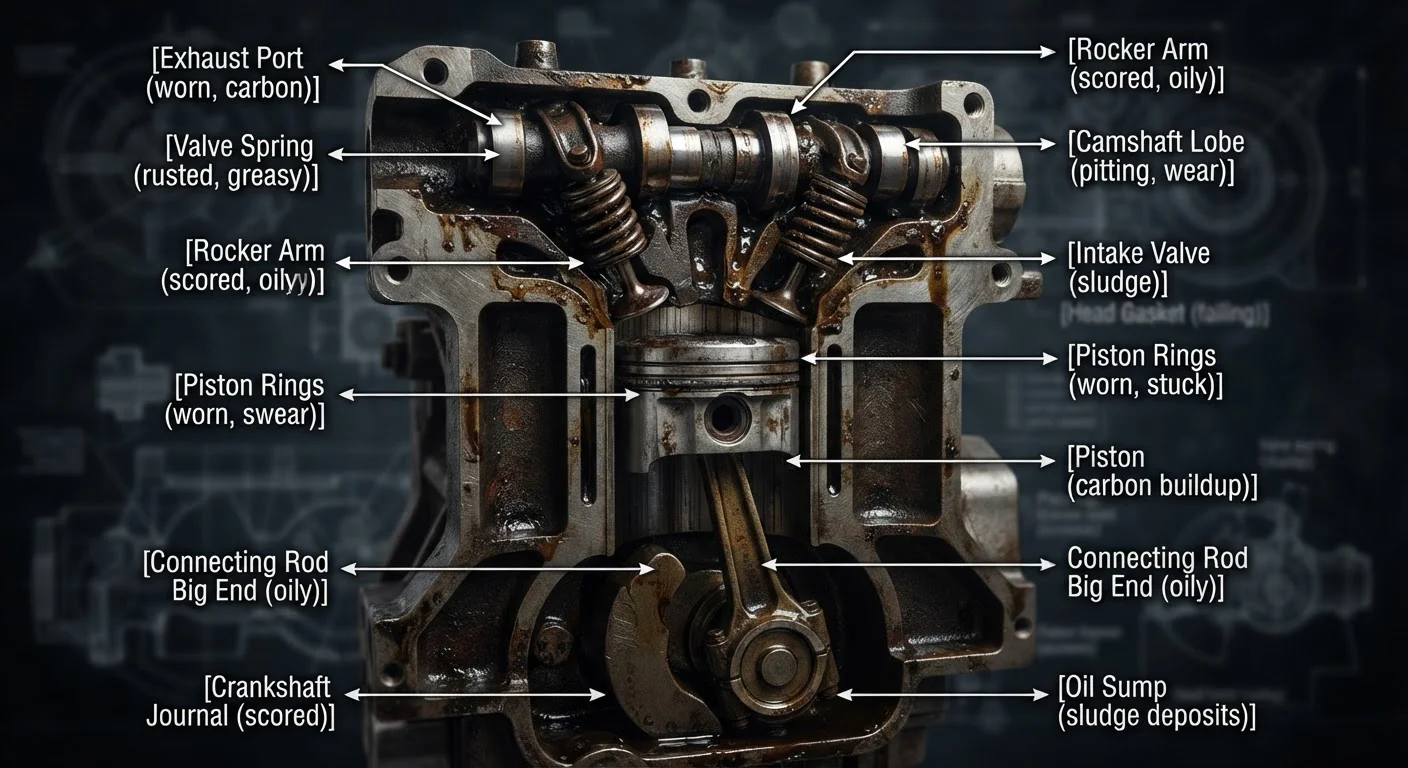
The first components to feel this are the crankshaft bearings and camshaft lobes. These parts rely on a thin oil film maintained under pressure. When that film breaks down, the bearing surfaces begin to score. At this stage, the engine may still start and run without obvious symptoms, which is why many drivers underestimate the damage already in progress.
Sludge is the visible outcome of severely degraded oil. It collects in oil passages and restricts flow to upper engine components, particularly the valve train. A partially blocked oil passage can starve a rocker arm or cam bearing of lubrication entirely. See our reference guide to maintenance intervals for an overview of how oil change frequency varies by vehicle type and driving conditions.
Check your dipstick between service intervals
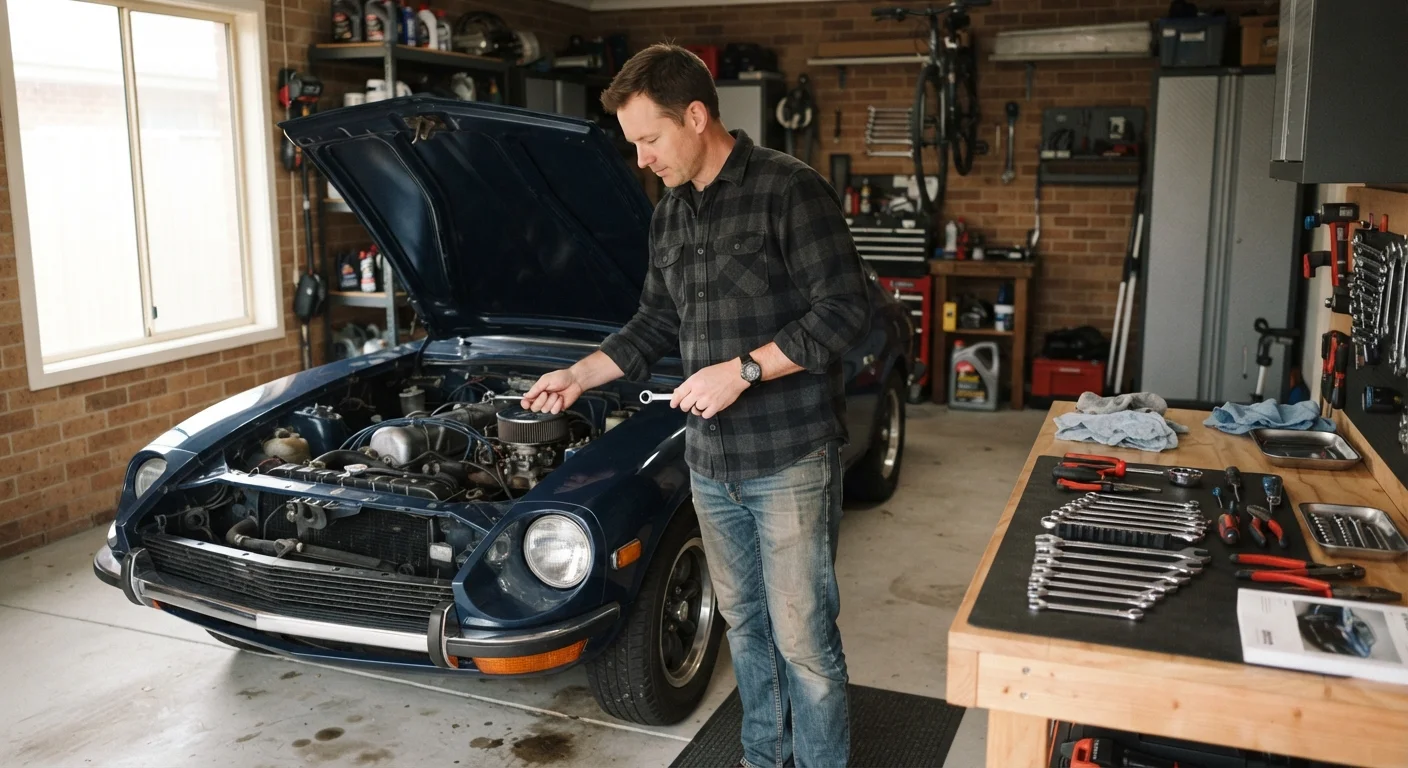
Oil level and condition are not the same thing. An engine can hold the correct amount of oil while that oil is already too degraded to protect adequately. Pull the dipstick, wipe it clean, reinsert it, and look at both the level and the color. Dark brown or black oil with a gritty texture is a sign the change is overdue, regardless of the mileage counter.
What happens in the cooling and fuel systems
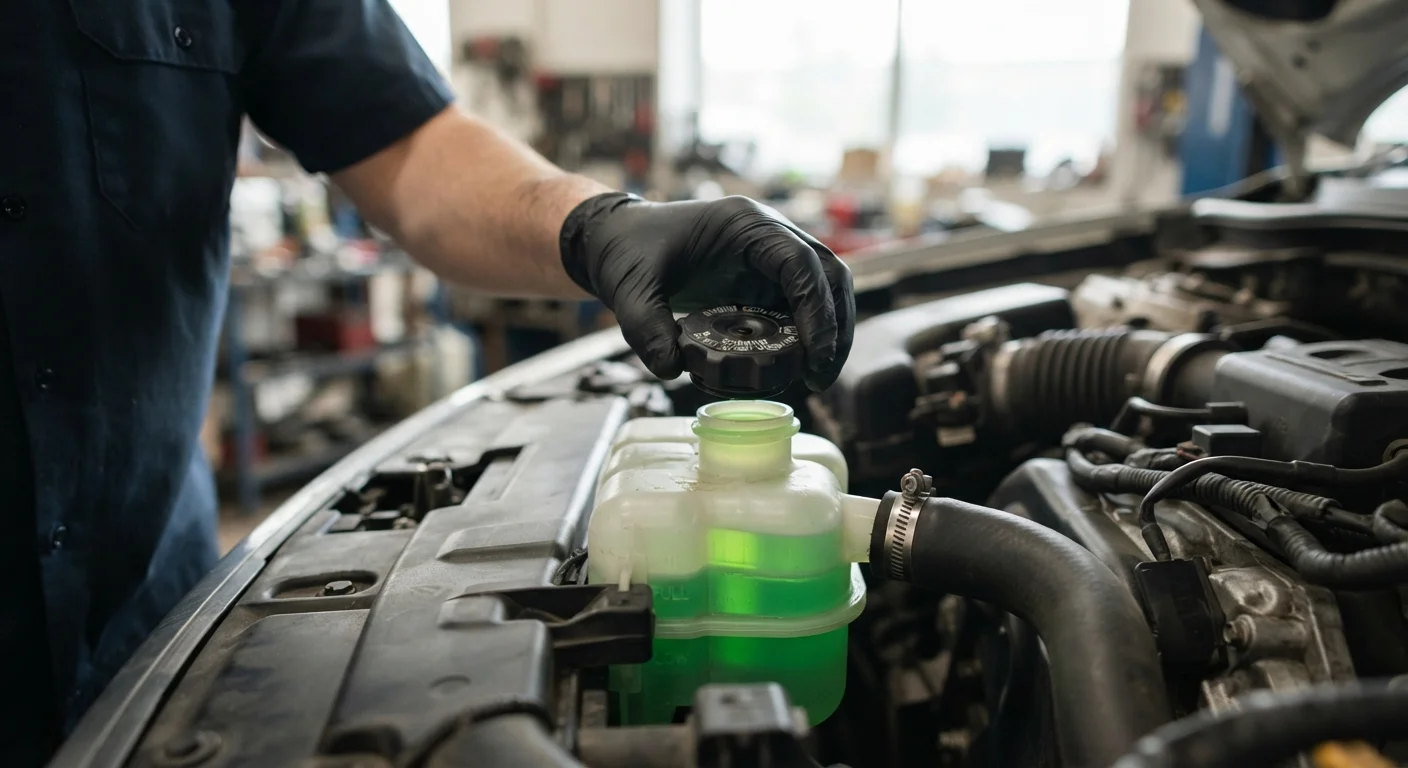
Engine coolant degrades chemically over time. The inhibitors that prevent corrosion inside the radiator, water pump, and heater core break down after several years, regardless of mileage. Once those inhibitors are depleted, the coolant becomes slightly acidic and begins attacking aluminum components. Water pump seals fail earlier, and the interior of the radiator develops pitting that restricts flow and reduces cooling capacity.
A clogged fuel filter or dirty fuel injectors create a different problem: the engine runs lean or with uneven fuel distribution across cylinders. This forces the engine to work harder for the same power output. Sustained lean operation raises combustion temperatures, which accelerates wear on piston rings and exhaust valves.
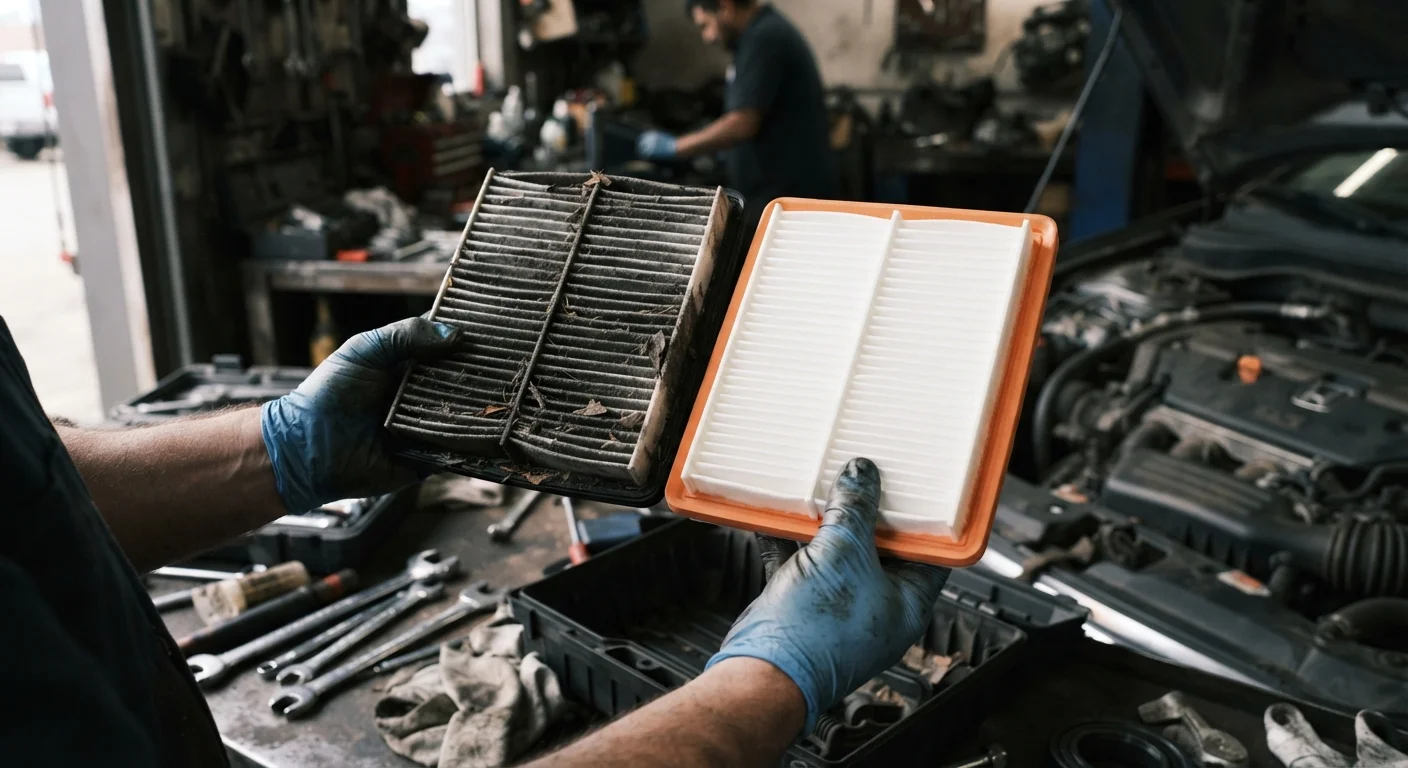
Air filters that are never replaced reduce airflow to the engine, affecting both fuel economy and combustion quality. A severely restricted air filter can also allow fine debris to bypass the filter media and enter the intake, where abrasive particles accelerate cylinder wall wear. Your owner's manual service schedule specifies replacement intervals for all of these items based on your specific engine.
Transmission and brake fluid: overlooked until failure
Automatic transmission fluid degrades through heat cycles. Fresh fluid is red and has a faint sweet smell. Overdue fluid turns dark brown, smells burnt, and loses its ability to lubricate clutch packs and protect the torque converter. Drivers often notice slipping between gears or hesitation during shifts before a complete failure, though some transmissions fail with little warning.
Brake fluid absorbs moisture from the air over time, which lowers its boiling point. Old, moisture-saturated brake fluid can vaporize under hard braking, producing a spongy pedal or a temporary loss of braking effectiveness. This is sometimes called brake fade, and it occurs at lower temperatures as the fluid ages. Most manufacturers recommend replacing brake fluid every two years regardless of mileage.
Transmission fluid change intervals vary widely
Some manufacturers specify transmission fluid changes every 30,000 miles under severe driving conditions; others list 60,000 to 100,000 miles for normal use. A small number of vehicles are marketed as having 'lifetime' transmission fluid, though many mechanics caution that this designation does not mean the fluid never degrades. Consult the owner's manual and a trusted mechanic before assuming no service is needed.
The maintenance habits of high-mileage car owners consistently include disciplined fluid replacement schedules, not just oil changes.
How cumulative neglect ends
Most deferred-maintenance failures do not arrive as a single dramatic breakdown. They develop along a progression: increased wear raises operating temperatures, which accelerates fluid degradation, which increases wear further. A vehicle in this cycle consumes oil faster, runs hotter, and requires noticeably more fuel to maintain normal performance.
The terminal outcomes vary by what fails first. A spun rod bearing typically seizes the engine immediately and without further warning. Overheating from coolant system neglect can warp cylinder heads, crack head gaskets, or score cylinder walls. Transmission failure from degraded fluid often means a complete replacement rather than a rebuild.
Driving habits that reduce mechanical stress can slow wear between service intervals, but they do not substitute for the services themselves. The most practical protection is staying current with the schedule the manufacturer designed for the vehicle.