The depreciation problem gap insurance solves
The moment a new car leaves the dealership lot, its market value drops. A vehicle that cost $35,000 to purchase may be worth considerably less within a year, while the loan balance decreases much more slowly because early payments go mostly toward interest. That gap between what the car is worth and what you owe is where drivers get caught off guard.
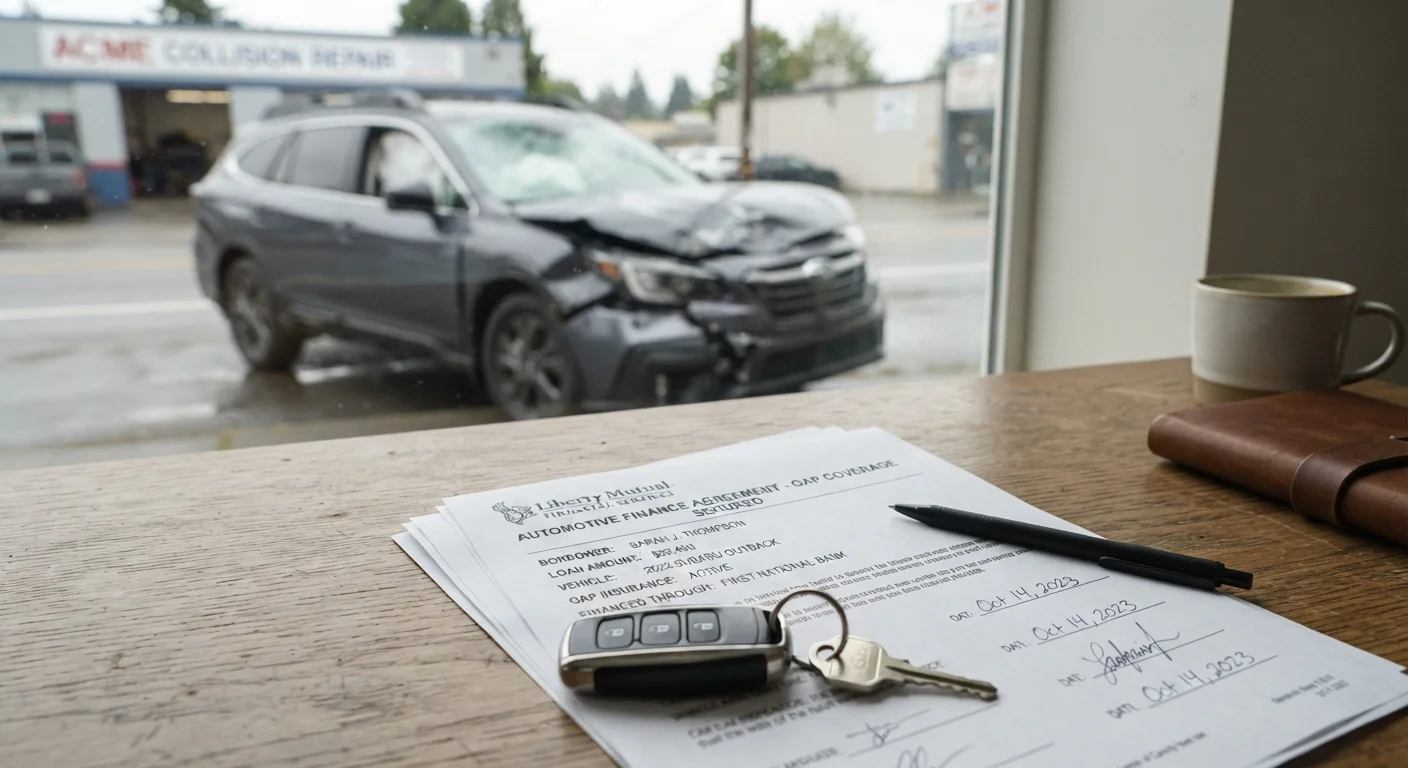
When a lender or insurer declares a vehicle a total loss, a standard comprehensive or collision policy pays out the actual cash value (ACV) of the car at that moment, not the original purchase price and not the remaining loan balance. If your ACV is $22,000 but you owe $27,000, you are responsible for the $5,000 difference out of pocket, regardless of who caused the accident.
Gap insurance exists to cover exactly that shortfall. It sits on top of your standard policy and pays the lender the amount your primary insurer does not cover.
~20%
First-year depreciation for new vehicles
A commonly cited industry estimate holds that new cars lose roughly 15% to 20% of their value in the first year of ownership.
~$5,000+
Typical loan-to-value gap on new car total loss
Drivers with minimal down payments on longer loans can face thousands of dollars in uncovered loan balance after an insurer pays actual cash value.
69 months
Average new car loan term in the U.S.
Federal Reserve data has shown average new vehicle loan terms exceeding five years, increasing the period during which negative equity is likely.
Who typically needs gap coverage
Not every driver needs gap insurance. Its value depends on how much negative equity you carry, which in turn depends on how you financed the vehicle.
Drivers most likely to benefit include:
- Those who made a down payment of less than 20% on a new vehicle.
- Those with loan terms of 60 months or longer, which slows principal paydown in the early years.
- Lessees, because lease agreements typically require gap coverage and the math of leasing often creates a persistent balance-to-value gap.
- Buyers of vehicles with faster-than-average depreciation rates.
- Those who rolled negative equity from a previous loan into a new one.
If you paid cash, made a large down payment, or are several years into a shorter loan, the gap between your balance and your car's value has likely closed or reversed. In that case, gap coverage adds cost without adding protection.
For a broader look at what car ownership actually costs, see the full breakdown of vehicle ownership costs, which includes insurance, depreciation, and financing expenses.
Where to buy gap insurance and what to watch for
Gap coverage is sold through three main channels: your auto insurer, the dealership finance office, and the lender directly. The product functions similarly in each case, but the price and terms can differ significantly.
Insurer-provided gap coverage is often priced as a percentage of your existing comprehensive and collision premium, making it one of the more affordable options. Dealership gap products are sometimes bundled into the loan, which means you pay interest on the gap premium itself over the life of the loan.
Before purchasing, confirm these details in writing:
- Whether your deductible is covered or excluded.
- The maximum payout cap, since some policies limit coverage to a percentage of ACV rather than the full loan difference.
- Cancellation and refund terms if you sell, trade, or pay off the vehicle early.
- Whether the policy covers both theft and accident-related total loss.
Your auto insurance policy is a good starting point for understanding what gap coverage you may already have or can add. Reading your car insurance policy explains how to find coverage details, exclusions, and limits in your declarations pages.
When gap insurance is no longer necessary
Gap insurance is not a permanent fixture of car ownership. Its usefulness fades as your loan balance drops toward or below the car's market value.
A straightforward way to track this: request a loan payoff statement from your lender and compare it to the current market value of your vehicle using a recognized valuation resource. Once the payoff amount is at or below market value, you have positive equity and gap coverage no longer provides a benefit.
At that point, canceling the policy and requesting any prorated refund is worth doing. If gap was rolled into a dealership loan, contact the lender about adjusting the loan terms or receiving a refund credit toward your principal.
For first-time car owners navigating all of this for the first time, the first-time buyer's guide to car ownership covers financing, insurance decisions, and ongoing cost planning in one place.