Why nighttime driving is genuinely more dangerous
Nighttime driving is not simply daytime driving with the lights on. The visual system loses access to peripheral detail, depth perception weakens, and color differentiation drops substantially after dark. These are physiological limits, not matters of attention or experience.
Fatal crash data consistently shows the disparity. Despite carrying less than 25 percent of total vehicle miles traveled, nighttime hours account for a disproportionate share of road deaths. The combination of reduced visibility, higher impairment prevalence, and driver fatigue creates conditions that differ fundamentally from daytime risk.
The risks below are not theoretical. Each one appears repeatedly in crash data and reflects a hazard that drivers routinely underestimate because daylight driving provides no direct experience of it.
Fatal crash rates spike after dark
According to the National Safety Council, roughly half of all traffic fatalities in the United States occur at night, even though nighttime accounts for far less total driving. The reasons compound: reduced visibility, higher rates of impaired driving, and less traffic that creates a false sense of freedom at speed. Rural roads see a disproportionate share of nighttime fatalities because road lighting is sparse and animals frequently cross.
Drivers often equate low traffic with low risk. Fewer vehicles on the road does reduce some collision types, but it also removes the visual cues that help drivers judge speed and distance. Speed management after dark is more demanding, not less.
Half of all U.S. traffic fatalities occur at night despite far less total driving volume.
Headlight glare impairs vision more than most drivers realize
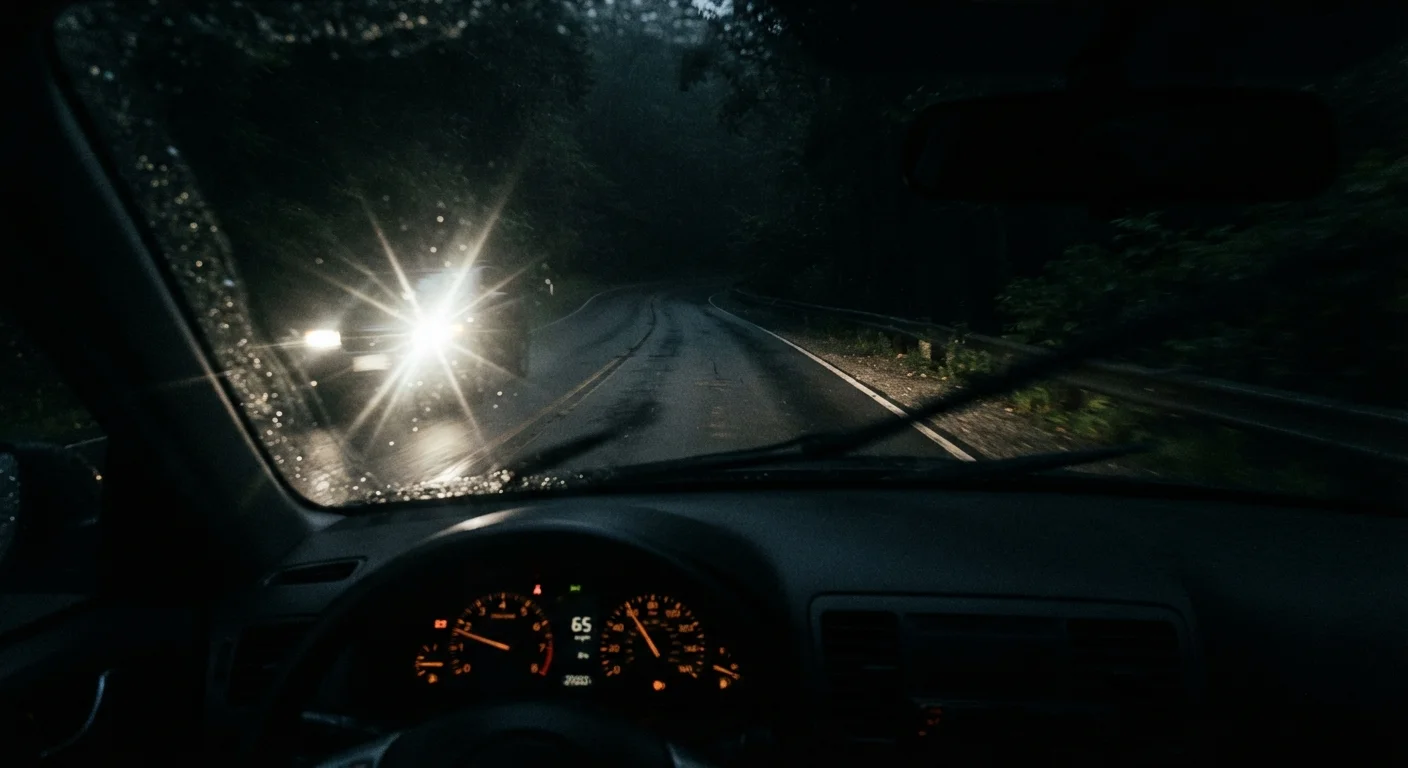
When an oncoming vehicle's high beams hit your eyes, the pupils constrict instantly. Regaining comfortable vision can take several seconds, during which the road ahead is largely invisible. This recovery period is longer for drivers over 50 because the eye's adaptation speed slows with age.
Practical habit: look toward the right edge line rather than directly at oncoming headlights. This keeps a usable lane reference while reducing direct glare. If another driver fails to dim their high beams, do not retaliate by switching yours on. Two blinded drivers on the same road doubles the hazard.
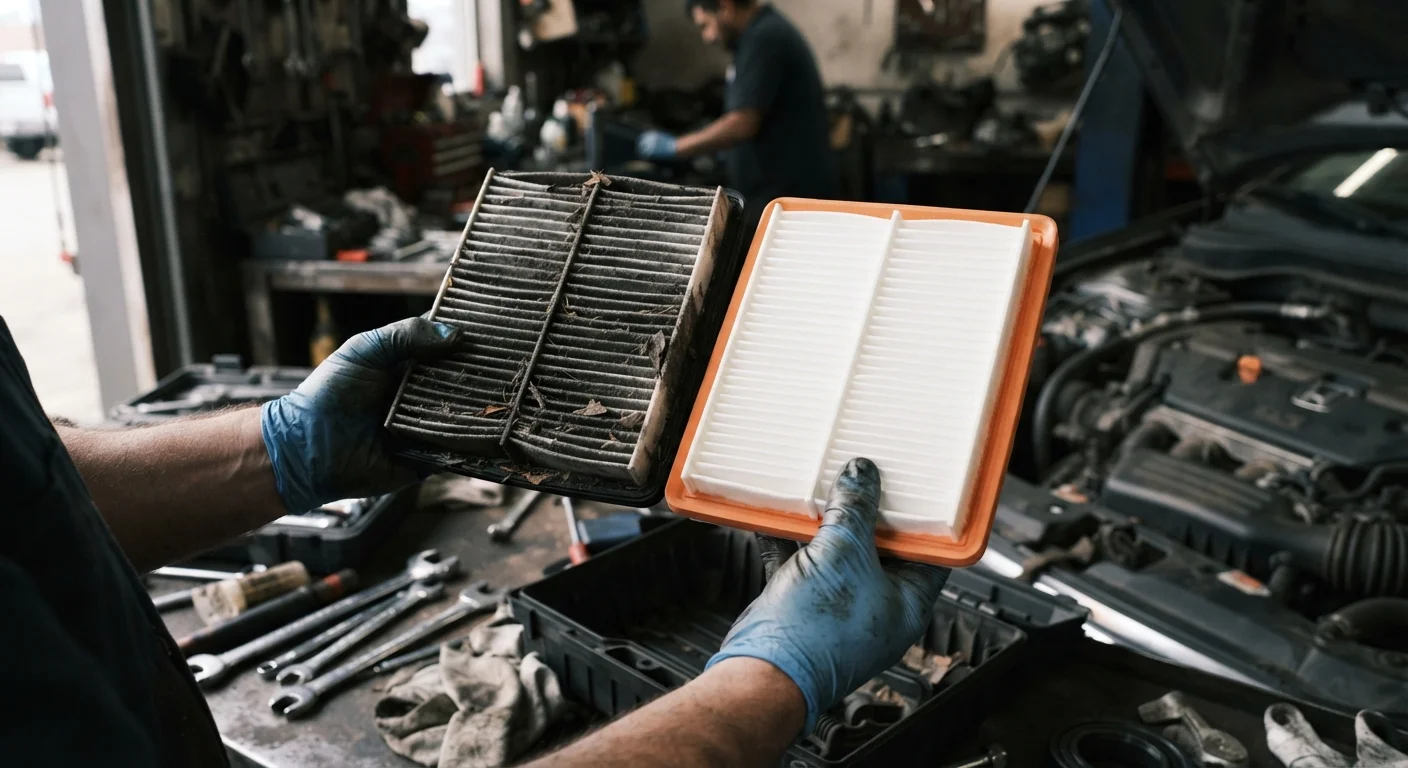
Headlight condition also matters on your own vehicle. Clouded or yellowed plastic lenses scatter light instead of projecting it forward. Inspecting and restoring headlight clarity is a maintenance step many drivers skip until they notice a problem.
After a high-beam hit, vision recovery can take several seconds, during which the road ahead is largely invisible.
Drowsy driving is most dangerous between midnight and 6 a.m.
The body's circadian rhythm causes alertness to fall sharply in the early morning hours regardless of how much sleep a person had the night before. Drowsy driving at this window produces reaction-time delays, microsleeps (brief involuntary sleep episodes lasting a few seconds), and reduced lane-keeping ability. The National Highway Traffic Safety Administration has linked drowsy driving to tens of thousands of reported crashes annually, with the true number likely higher because drowsiness is underreported in crash investigations.
Warning signs that indicate dangerous fatigue include frequent yawning, difficulty maintaining a consistent following distance, and missing exits or turns. If those appear, pulling off at a rest area or safe parking lot is the appropriate response. Caffeine provides a short window of alertness but does not substitute for sleep.
Microsleep episodes last only a few seconds, but at highway speed a vehicle can travel the length of a football field.
Pedestrians and cyclists are far less visible than drivers expect
A pedestrian wearing dark clothing at the roadside may not appear in a standard headlight beam until the vehicle is 50 to 60 feet away. At 45 mph, stopping distance from that point can exceed 100 feet, leaving no safe margin. Cyclists present a similar problem: many ride without rear lights or reflective gear, and they travel in the same zone as parked cars and road debris.
Drivers should slow below posted speed limits in residential areas and near pedestrian crossings after dark, treating them as potential conflict zones even when no one is visible. Blind spot checks become especially important when passing parked cars or turning at intersections where a cyclist may be approaching from outside the headlight sweep.
A pedestrian in dark clothing may not appear in a headlight beam until the vehicle is only 50 feet away.
Reduced contrast makes road markings and hazards harder to read
Daytime driving uses ambient light to build a full picture of the road: lane markings, road edges, dips, curves, and debris. At night, drivers rely almost entirely on headlight projection, which is narrow, directional, and easily overwhelmed by curves or crests. Faded lane markings, which appear adequate in daylight, can become nearly invisible under low-beam headlights.
Weather compounds this further. Rain creates glare off wet pavement, and fog scatters headlight beams back toward the driver rather than illuminating the road. Black ice is invisible in any light, but at night there is no ambient light that might otherwise catch a sheen on the surface.
Drivers should increase following distance at night to at least four seconds to compensate for the narrower information window and the additional reaction time that reduced contrast demands.
Faded lane markings that look adequate in daylight can become nearly invisible under low-beam headlights.
Impaired driving concentrates heavily in nighttime hours
Alcohol-impaired driving does occur at all hours, but the proportion of fatal crashes involving impairment rises sharply between 9 p.m. and 3 a.m. The National Highway Traffic Safety Administration reports that a large share of alcohol-related traffic fatalities occur during weekend nights. This pattern means that even drivers who are fully alert and sober face a higher probability of encountering an impaired driver during those windows.
Maintaining wider spacing from erratic or slow-moving vehicles, avoiding the left lane on open highways where high-speed impaired drivers tend to travel, and being especially attentive near bar districts and entertainment venues reduces exposure. Distraction compounds vulnerability: phone use while driving slows reaction time by comparable margins to moderate alcohol impairment, making the combination particularly dangerous at night.
Even alert, sober drivers face a higher chance of encountering an impaired driver during late weekend nights.
Managing nighttime risk as a daily habit
Adjust your speed to your headlight range
A useful rule: drive at a speed that allows you to stop within the distance your headlights illuminate. On low beams, that distance is roughly 160 feet. At 60 mph, stopping distance from that point can exceed 200 feet, meaning you are effectively driving beyond your sight line. Reducing speed by 10 to 15 mph on unlit roads closes that gap meaningfully.
Most nighttime driving hazards respond to a handful of consistent habits: slower speeds, longer following distances, maintained headlight equipment, and honest fatigue assessment before getting behind the wheel. None of these require special equipment or training.
Vehicle maintenance is part of the equation. Clean headlight lenses, properly aimed beams, and functioning high-beam switches all affect how much road your lights actually cover. Regular visibility checks are a practical step that translates directly into safer nighttime driving.
Teen drivers face compounded nighttime risk
Inexperience behind the wheel interacts badly with low-visibility conditions. Teen drivers are still developing hazard-perception skills that experienced drivers apply automatically. Teen crash risk is disproportionately high at night, and many states restrict unsupervised nighttime driving for new license holders for this reason. Graduated licensing rules vary by state, so it is worth verifying local restrictions.