
What the guidelines actually say
The physical activity guidelines most commonly referenced in the United States, published by the U.S. Department of Health and Human Services, recommend that adults get at least 150 minutes of moderate-intensity aerobic activity each week, or 75 minutes of vigorous-intensity aerobic activity, or an equivalent combination of both. Guidelines also call for muscle-strengthening activities on two or more days per week, targeting all major muscle groups.
These figures are not arbitrary. They reflect decades of population research linking those activity levels to reduced risk of cardiovascular disease, type 2 diabetes, certain cancers, and depression. The guidelines also note that any movement is better than none, and that benefits begin accumulating well before the 150-minute threshold is reached.
One widely misunderstood point: the 150 minutes does not need to happen in long, uninterrupted sessions. Activity can be accumulated throughout the day in bouts as short as 10 minutes, or even shorter, without meaningfully reducing the health benefit.
Moderate vs. vigorous intensity: how to tell the difference
Intensity is the piece most people find confusing. A practical rule of thumb is the "talk test." At moderate intensity, you can speak in full sentences but not sing comfortably. Brisk walking, casual cycling on flat terrain, and water aerobics typically fall here. At vigorous intensity, you can manage only a few words at a time. Running, swimming laps, and uphill cycling are common examples.
Neither level is inherently superior. Vigorous activity reaches the weekly target in roughly half the time, which is useful for people with packed schedules. Moderate activity is generally safer for those new to exercise or managing chronic conditions. A mix of both is specifically endorsed by the guidelines.
If you are new to structured exercise or have an existing health condition, consult a qualified healthcare provider before significantly increasing your activity level. This is especially relevant for adults with heart disease, joint problems, or other conditions that affect how safely they can exercise.
Muscle-strengthening: the overlooked half of the guidelines
Aerobic activity gets most of the attention, but the strength component of the guidelines is equally supported by research. Resistance training two or more days per week is associated with better metabolic health, reduced injury risk, improved bone density, and preserved muscle mass as people age.
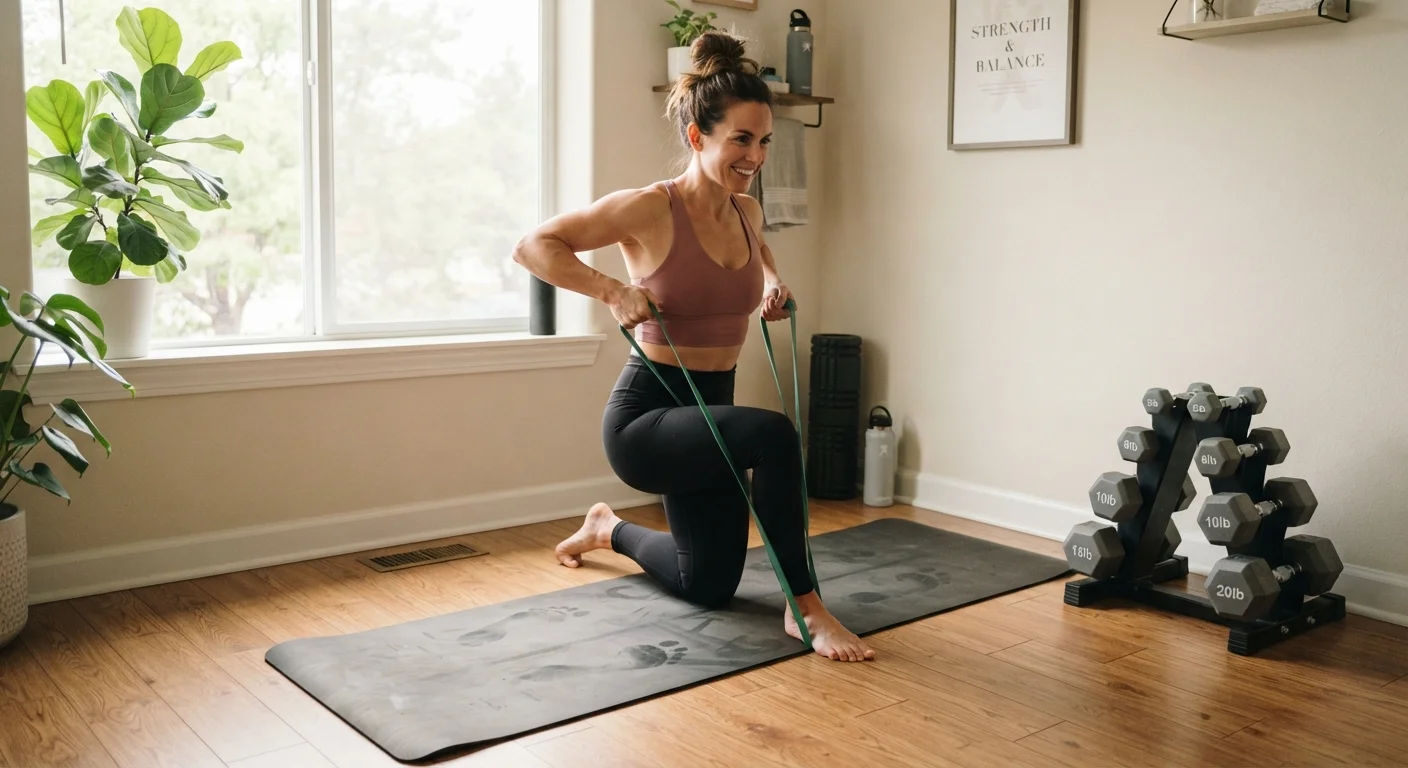
"Muscle-strengthening" includes a wider range of activities than many people assume. Bodyweight exercises, resistance bands, free weights, weight machines, and activities like yoga or heavy gardening can all qualify, provided they work muscles against meaningful resistance. The guidelines do not specify a particular method, number of sets, or equipment type.
For adults who want to go further, the guidelines note that 300 minutes or more of moderate-intensity activity weekly is associated with additional health benefits, though returns diminish at very high volumes.
For practical ways to structure these elements into a realistic week, see the weekly fitness planning checklist for adults building consistent habits.
Making the numbers work in real life
The 150-minute target breaks down to about 22 minutes a day, or 30 minutes on five days. For people with demanding jobs, caregiving responsibilities, or limited access to gyms, even that can feel unrealistic. Research supports a flexible approach: three 10-minute walks spread through the day count, as does a single 45-minute session on the weekend combined with shorter weekday activity.
Walking remains one of the most accessible forms of moderate-intensity movement. It requires no equipment, no membership, and minimal injury risk. Swapping a short car trip for a brisk walk, taking stairs, or adding a lunchtime loop around the block are all legitimate contributions to the weekly total.
If time is your main barrier, building a weekly exercise habit on a busy schedule covers strategies for fitting consistent activity into a packed week without a gym or large blocks of free time.
Physical activity also intersects with broader preventive health. The preventive health screenings every adult should know about covers other evidence-based steps adults can take alongside regular movement.
This article is for general informational purposes only and is not medical advice. Talk with a qualified healthcare provider before starting or significantly changing an exercise program, especially if you have an existing health condition.