Why your HVAC filter matters
Your HVAC system pulls air from every room through return vents, conditions it, and pushes it back out. The filter sits at the entry point of that cycle and catches airborne debris before it reaches the blower, heat exchanger, and coils. Without a functioning filter, dust accumulates on those components and gradually degrades their ability to transfer heat or cool air efficiently.
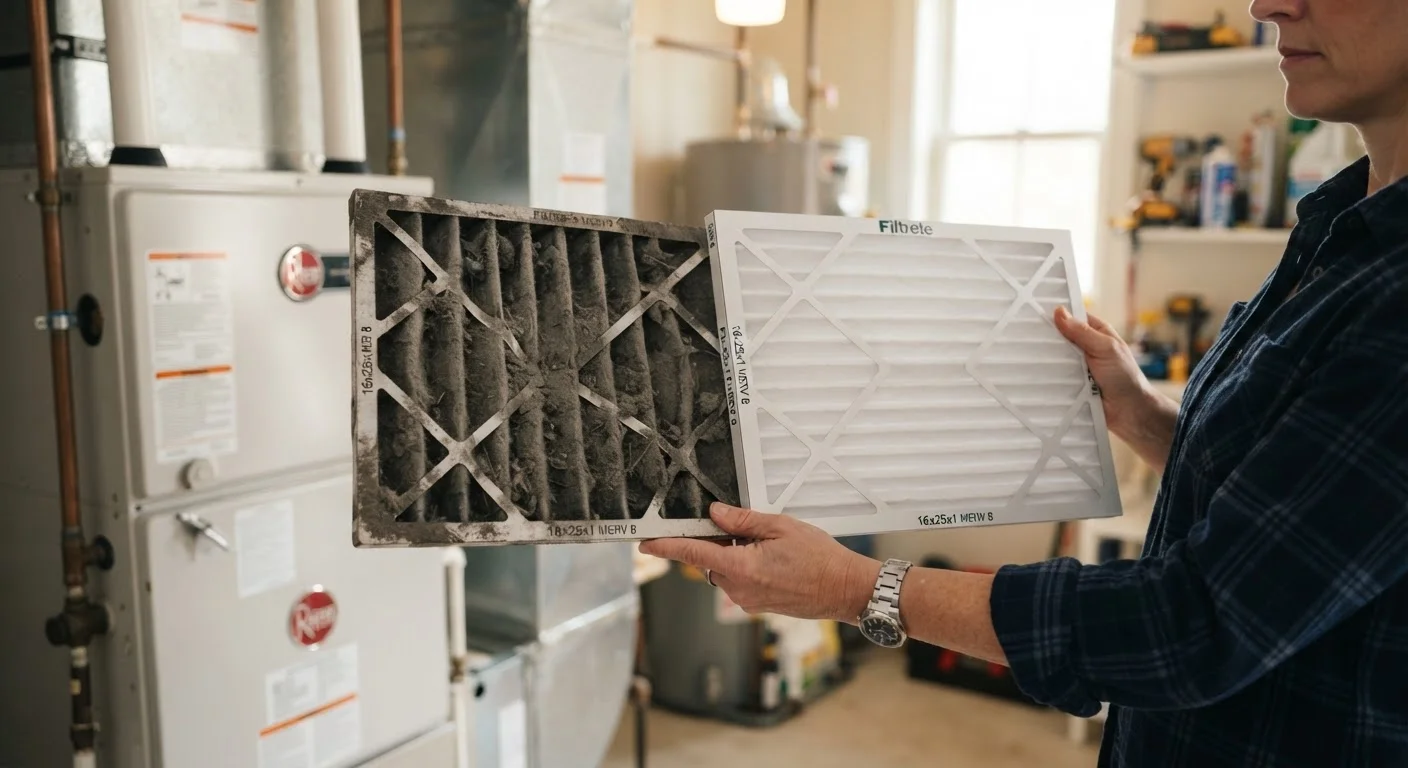
The filter also directly affects what your household breathes. A clean filter traps pollen, pet dander, mold spores, and fine dust. A saturated filter can no longer capture new particles, and in some cases, a filter that is clogged and wet from condensation can become a surface where mold takes hold.
Replacing a filter costs a few dollars and takes about five minutes. Repairs from neglected filters, such as a frozen evaporator coil or a failed blower motor, can run into hundreds or thousands of dollars. For context, filter replacement is one of the lowest-cost tasks covered in home maintenance on a budget.
How often to change your filter
The right schedule depends on filter thickness and your household's specific conditions.
1-inch filters are the most common and should generally be replaced every 30 to 90 days. Use the shorter end of that range if any of these apply to your home:
- One or more pets, especially shedding breeds
- A household member with asthma or seasonal allergies
- Someone in the home who smokes indoors
- A dusty occupation that brings debris home on clothing
- High daily system use, such as running heat or air conditioning around the clock
4- to 5-inch filters are thicker and hold more debris before airflow is affected. These can last 6 to 12 months, but they require a compatible filter cabinet. Do not force a thicker filter into a housing built for a 1-inch filter.
Vacation or low-occupancy homes can stretch filter changes further since less foot traffic, cooking, and activity means less airborne debris. A 1-inch filter in an unoccupied home might last 6 months.
Set a reminder so you never forget
Buy filters in a multi-pack and store them near your air handler so they are always on hand when needed. Set a recurring calendar reminder on your phone for whatever interval suits your household. When you replace the filter, write the date on the new filter's frame with a marker so you can see at a glance how old it is next time you check.
The easiest way to stay on schedule is to buy filters in a multi-pack and set a recurring phone reminder at whatever interval suits your household. Pulling the filter out to inspect it once a month takes about 30 seconds and tells you immediately whether it needs replacement.
Reading filter ratings and choosing the right one
MERV ratings tell you how fine a particle a filter can catch. Here is a simple breakdown:
| MERV range | What it captures | Typical use |
|---|---|---|
| 1 to 4 | Large dust, lint, pollen | Basic window AC units |
| 5 to 8 | Mold spores, dust mite debris, pet dander | Residential HVAC, adequate for most homes |
| 9 to 12 | Fine particles, legionella, auto-emissions particles | Homes with allergy sufferers |
| 13 to 16 | Bacteria, smoke, very fine particles | Hospitals and clean rooms |
For most homes, a filter rated MERV 8 to 11 balances particle capture with adequate airflow. Going above MERV 13 without confirming your system can handle the added restriction may reduce airflow enough to strain the blower motor. If you have concerns about which rating fits your equipment, a licensed HVAC technician can check your system's specifications.
Signs your filter needs to change now
You do not always need to wait for a scheduled date. Change your filter immediately if you notice any of these:
- The filter surface looks gray or brown instead of white or light beige
- Visible dust accumulation on supply vent grilles throughout the house
- Reduced airflow from vents even when the system is running at full capacity
- The system runs longer than usual to reach the set temperature
- A musty odor coming from the vents
A clogged filter can also cause the evaporator coil to freeze. If you notice ice on your indoor unit or refrigerant lines, turn the system off and check the filter first before calling for service. A clean filter and a few hours with the system off to thaw may resolve the problem. If ice returns after the filter is replaced, contact a licensed HVAC technician, since the issue may be refrigerant-related.
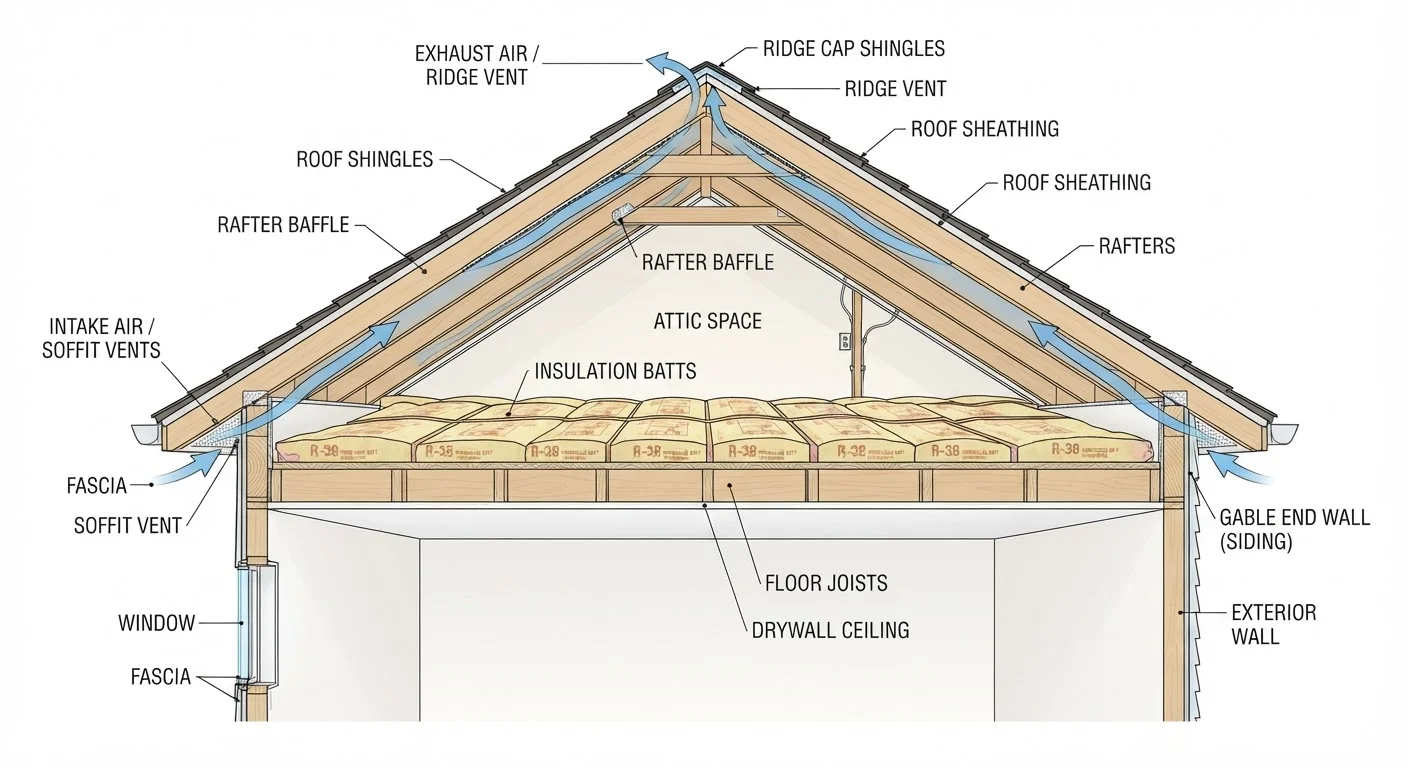
Good filter habits connect to broader system health in the same way that attic insulation and ventilation work together to keep conditioned air from being wasted before it even reaches your living spaces.
5 to 15%
Potential energy savings from a clean filter
The U.S. Department of Energy notes that replacing a clogged filter can lower an air conditioner's energy consumption by 5 to 15 percent.
$5 to $30
Typical cost of a replacement filter
Standard 1-inch residential filters generally range from around $5 to $30 depending on size and MERV rating.
90 days
Maximum interval for most 1-inch filters
Filter manufacturers typically recommend replacing standard 1-inch filters no less than once every 90 days in average conditions.
How to change your HVAC filter
Changing a filter requires no tools and no technical knowledge. Follow these steps:
- Turn off your HVAC system at the thermostat before pulling the filter. This prevents the system from drawing unfiltered air through the open slot while you work.
- Locate the filter slot (usually at the return air vent or the air handler cabinet) and slide out the old filter.
- Note the size printed on the filter frame, typically expressed as dimensions in inches such as 16x25x1. Buy an exact replacement in the same size and your chosen MERV rating.
- Check the arrow printed on the new filter frame. That arrow indicates airflow direction and must point toward the blower (into the unit), not toward the return duct.
- Slide the new filter in, close any access panel, and restore power at the thermostat.
Seal the old filter in a plastic bag before carrying it through the house to avoid shaking trapped debris back into the air.