
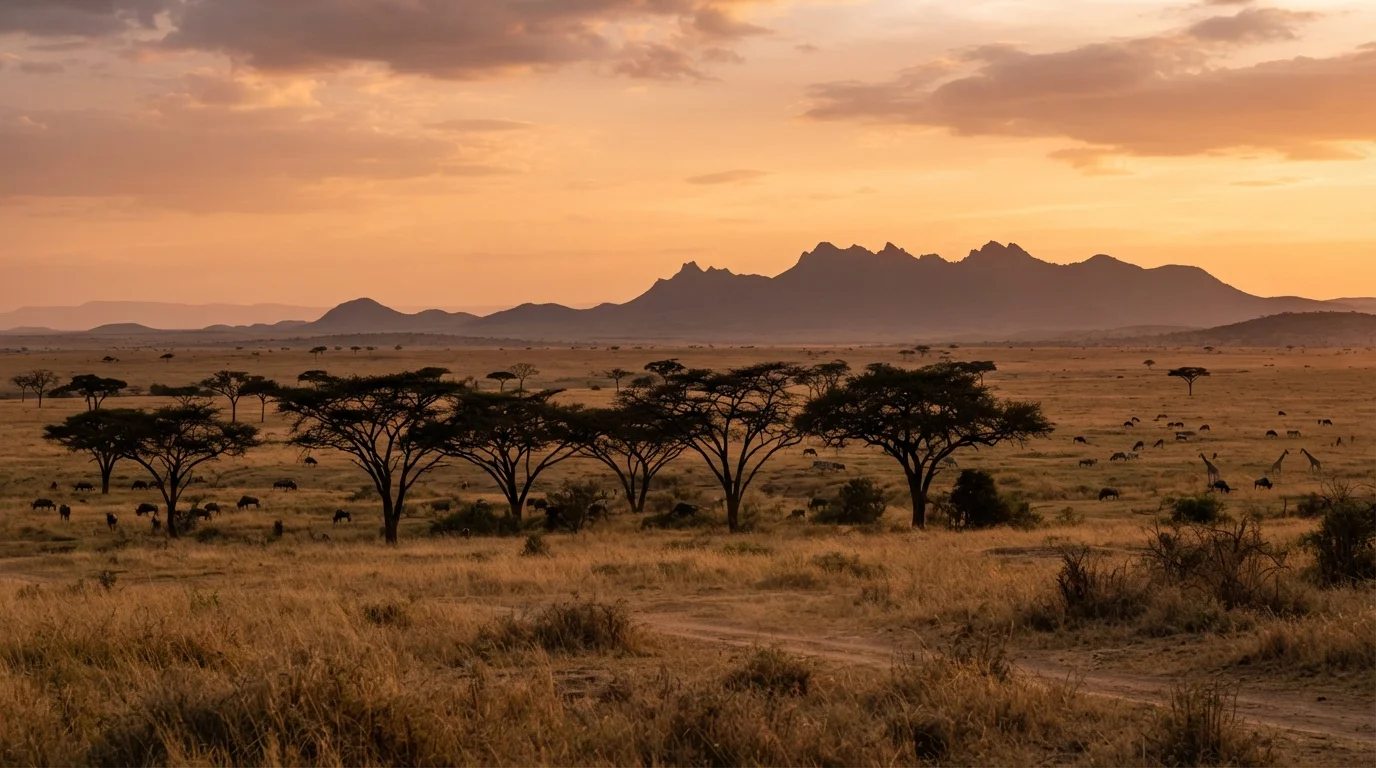
What 'East Africa' actually covers
When Americans picture East Africa, the mental image usually locks onto one thing: lions on a savanna. The reality is much wider. The region generally refers to a cluster of countries that includes Kenya, Tanzania, Uganda, Rwanda, Ethiopia, and sometimes Mozambique and Madagascar, depending on who is drawing the map. Each country has its own entry requirements, currency, primary languages, and travel infrastructure.
Tanzania alone contains the Serengeti, Zanzibar's Indian Ocean beaches, and Mount Kilimanjaro, the highest peak on the continent. Rwanda is a densely forested highland nation where mountain gorilla trekking draws visitors from around the world. Ethiopia has ancient cities, dramatic highland scenery, and one of the busiest international airports on the continent. Treating these as a single undifferentiated destination causes planning problems, so the first step is deciding which countries actually belong in your itinerary.
For context on how this kind of international trip differs from planning a domestic one, see the overview at International Trip Planning from Start to Finish, which covers passports, visas, and on-the-ground prep in detail. Readers curious about how East Africa compares with another long-haul destination might also find What Traveling to Southeast Asia Actually Involves for American Visitors useful as a frame of reference.
E-visa
An electronic visa you apply for and receive online before you travel, without visiting an embassy. You typically print it out or show it on a phone at the border.
East Africa Tourist Visa
A multi-country visa that can cover Kenya, Uganda, and Tanzania under a single document, issued when all three countries are part of your planned itinerary.
Yellow card
The informal name for the International Certificate of Vaccination or Prophylaxis, the official document that records your yellow fever vaccination and may be checked at border crossings.
Conservation fee
A charge set by a national park's governing authority that all visitors pay to enter. These fees go toward park management and wildlife protection and are separate from any tour operator charges.
Travel medicine clinic
A medical facility that specializes in preparing travelers for health risks specific to their destination, including vaccinations, malaria prevention, and advice on food and water safety.
Entry requirements and visas for US passport holders
US passport holders need a visa for most East African countries. Kenya operates an e-visa system through its government immigration portal, where you apply and pay before arriving. Tanzania offers the East Africa Tourist Visa, which can cover Kenya, Uganda, and Tanzania in one document, though all three countries must be enrolled for a given trip for the visa to function as intended. Uganda and Rwanda each have their own visa processes, some available on arrival and others requiring advance applications.
Visa fees change, and processing times vary. Apply early. Some border crossings between East African countries are well-established for tourists, while others involve significant delays or restricted access. Confirm your planned route against current border conditions using official sources.
Your US passport must typically be valid for at least six months beyond your intended departure date. Some countries also require blank visa pages. Check the US State Department's country information pages at travel.state.gov and the official immigration websites of each country you plan to visit. These are the authoritative sources; third-party travel forums may have outdated information.
Health considerations before you go
Health prep for East Africa requires more lead time than most other international trips. Start with a travel medicine clinic or your primary care physician at least four to six weeks before departure, and ideally earlier.
Yellow fever vaccination is required for entry to several countries in the region, and proof of vaccination (the International Certificate of Vaccination or Prophylaxis, sometimes called the yellow card) may be checked at borders, especially if you are arriving from another country where yellow fever is present. Hepatitis A and typhoid are widely recommended for travelers to the region. Routine vaccines, including measles-mumps-rubella and tetanus, should be current.
Malaria is present in most lowland areas across East Africa, though risk varies by country and elevation. A healthcare provider can help determine which malaria prevention approach, if any, fits your itinerary and health history. This is a clinical decision, not a general recommendation anyone outside a clinical setting should make for you.
This section is general travel health information, not medical advice. Consult a qualified healthcare professional for guidance tailored to your health history and itinerary.
Regional differences that shape your trip
The terrain across East Africa shifts dramatically within short distances. Kenya's Maasai Mara sits at roughly 5,000 feet elevation, while the coast at Mombasa is at sea level with a hot, humid climate year-round. Tanzania's southern highlands feel cooler and greener than the Serengeti plains. Rwanda's capital, Kigali, is a compact highland city with noticeably cooler evenings than you might expect from a country this close to the equator.
Safari costs vary widely depending on the park, the season, and whether you book through a large operator or a smaller outfit. Conservation fees charged by national parks are set by government bodies and apply to all visitors; these are separate from any tour operator fees. Budget travelers can find affordable options in some parts of the region, particularly urban areas and some coastal towns, but traditional game-drive safaris in major parks involve real operational costs that are reflected in pricing.
Island destinations like Zanzibar add a beach-and-culture dimension that many travelers pair with a mainland safari. The architecture, food, and history of Zanzibar's Stone Town reflect centuries of Swahili, Arab, Indian, and European influence. For travelers who want contrast within a single trip, the combination of savanna and coast is logistically manageable because the domestic aviation network in Tanzania and Kenya is reasonably developed.
Pair your countries strategically
Combining countries with shared land borders or good domestic flight connections saves both time and money. Kenya and Tanzania work well together because Nairobi and several major parks are close to the Tanzanian border, and domestic air routes between Nairobi, Kilimanjaro, and Zanzibar are well-established. Adding Rwanda or Uganda for gorilla trekking is feasible as an extension, since both have international airports with connections through Nairobi.
Practical logistics on the ground
Most East African countries use their own currencies: the Kenyan shilling, Tanzanian shilling, Ugandan shilling, and Rwandan franc are not interchangeable. US dollars are widely accepted at national parks and larger tourist operations in Kenya and Tanzania, and some accommodations quote prices in dollars, but you will need local currency for markets, local restaurants, and smaller towns. ATMs exist in major cities; availability drops significantly in rural areas.
Mobile phone coverage varies. SIM cards from local providers are inexpensive and easy to obtain in airports and city centers. Data connectivity through local SIMs can be solid in urban areas and around major parks, less reliable in remote wildlife areas. Download offline maps and any documents you might need before leaving cellular range.
Flight connections to East Africa typically route through European hubs, the Middle East, or Addis Ababa. Ethiopian Airlines has built an extensive intra-Africa network from its Addis Ababa hub. Nairobi's Jomo Kenyatta International Airport is the other major regional hub. Expect total travel times of 16 to 20 hours from most US cities, including connections.
For broader practical travel advice that applies across destinations, the Travel Tips hub covers safety, packing, and money-saving strategies that transfer well to East Africa trips.