Why medication preparation matters before any trip
Carrying medications across an international border without the right paperwork can mean confiscation, delays, or worse. Even domestic travel has its friction points: a bag check that scatters unlabeled pills, or a connection so tight there is no time to explain a medical device to a TSA officer. Getting organized before you leave removes most of that friction.
This checklist covers documentation, packing, storage, and border considerations. It works for prescription drugs, controlled substances, over-the-counter medications, and injectables. For a broader pre-trip framework, see the pre-trip packing checklist that covers documents and medications together.
This is not medical or legal advice
The information in this article is general guidance for travel preparation. It does not replace advice from your doctor, pharmacist, or a licensed legal professional. Medication regulations vary by country and change frequently. Always verify requirements with official government and embassy sources before you depart.
This article is general travel information and is not medical advice. Consult your doctor or pharmacist about your specific medications, and verify entry requirements with official embassy or government health authority sources before you travel.
Tools and resources you will need
Before working through the checklist, gather the items below. Having everything in one place makes the process faster and reduces the chance of missing a step.
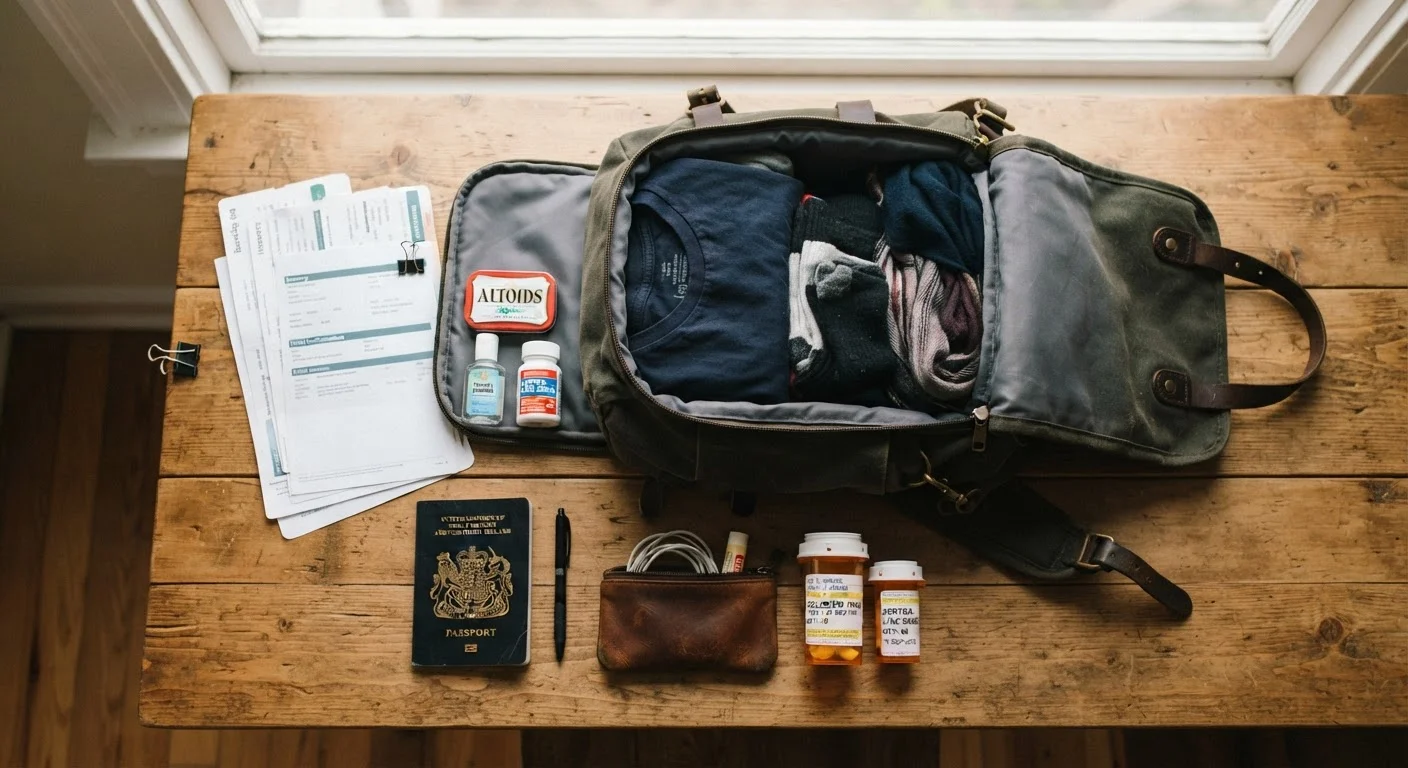
Original pharmacy containers
The labeled container is your primary proof that a prescription drug belongs to you; it is required at most international borders.
Physician's letter
Provides official confirmation of medical necessity for controlled substances, injectables, and unusual medications.
Insulated medication pouch with cool pack
Protects temperature-sensitive medications from heat during flights and ground transit.
Printed medication list
A typed reference with generic names, brand names, and dosages that border officers and foreign pharmacists can read quickly.
Destination embassy or health ministry contact details
Lets you verify import rules and obtain official documentation requirements before departure.
Travel insurance documentation
Confirms coverage for emergency prescriptions or medical care abroad if your medication is lost, confiscated, or runs out.
The full medication travel checklist
Work through each group in order. The documentation group should be completed first because some items, such as an official letter from your doctor, can take a few days to obtain.
Documentation
Quantities and refills
Packing and storage
At the border and security checkpoint
For anything related to vaccination requirements or destination health advisories at your destination, the complete guide to travel vaccinations and health prep covers that territory in detail.
Border rules and country-specific restrictions
No single global standard governs which medications are permitted across borders. A drug that is legal and unrestricted in the United States may be a controlled substance, or outright prohibited, in another country. Japan, for example, has strict rules around certain stimulants and some common cold medications. The United Arab Emirates restricts a range of opioids and psychotropics even when prescribed. Always check the destination country's embassy website or its official health ministry guidance well before departure.
Country restrictions can be strict and unexpected
Some medications that are standard prescriptions in the United States are classified as controlled or prohibited substances in other countries. Carrying them without prior authorization can result in confiscation or detention. Check the official embassy website of every country on your itinerary, not just your final destination, if you have layovers.
Do not rely on generic names alone at foreign pharmacies
If you need an emergency refill abroad, brand names differ by country and a pharmacist may not recognize what you are asking for. Your printed medication list should include both the generic (international nonproprietary) name and the U.S. brand name so a foreign pharmacist can identify the correct drug.
For international entry requirements more broadly, the entry documents quick reference is a useful companion. Pair your medication documentation with your other travel paperwork so everything is together at the border.
Storage and handling during transit
Temperature swings in cargo holds can degrade medications. Insulin, biologics, and some liquid antibiotics require refrigeration or at minimum protection from heat. Carry temperature-sensitive drugs in your carry-on bag inside an insulated, soft-sided pouch with a cool pack rated for the duration of your flight. Checked baggage is not a reliable environment for any medication you cannot afford to lose or have damaged.
Keep liquids within TSA volume rules (3.4 oz or 100 ml per container) unless they are medically necessary, in which case declare them separately at the checkpoint. Syringes and auto-injectors need to be capped and accompanied by the prescription label or a doctor's note. Organizing your medications alongside your device essentials, as described in the device prep checklist, keeps your carry-on audit-ready at every security lane.
This article is for general informational purposes only and is not medical or legal advice. Always consult a licensed healthcare provider regarding your medications, and verify all border entry requirements with official government sources before you travel.