Why a packing checklist actually works
Packing anxiety comes from the same place every time: the nagging suspicion that something critical is sitting on the bathroom counter while you are already at the airport. A checklist does not just organize your bag; it quiets that nagging feeling because you have physical proof each category is covered.
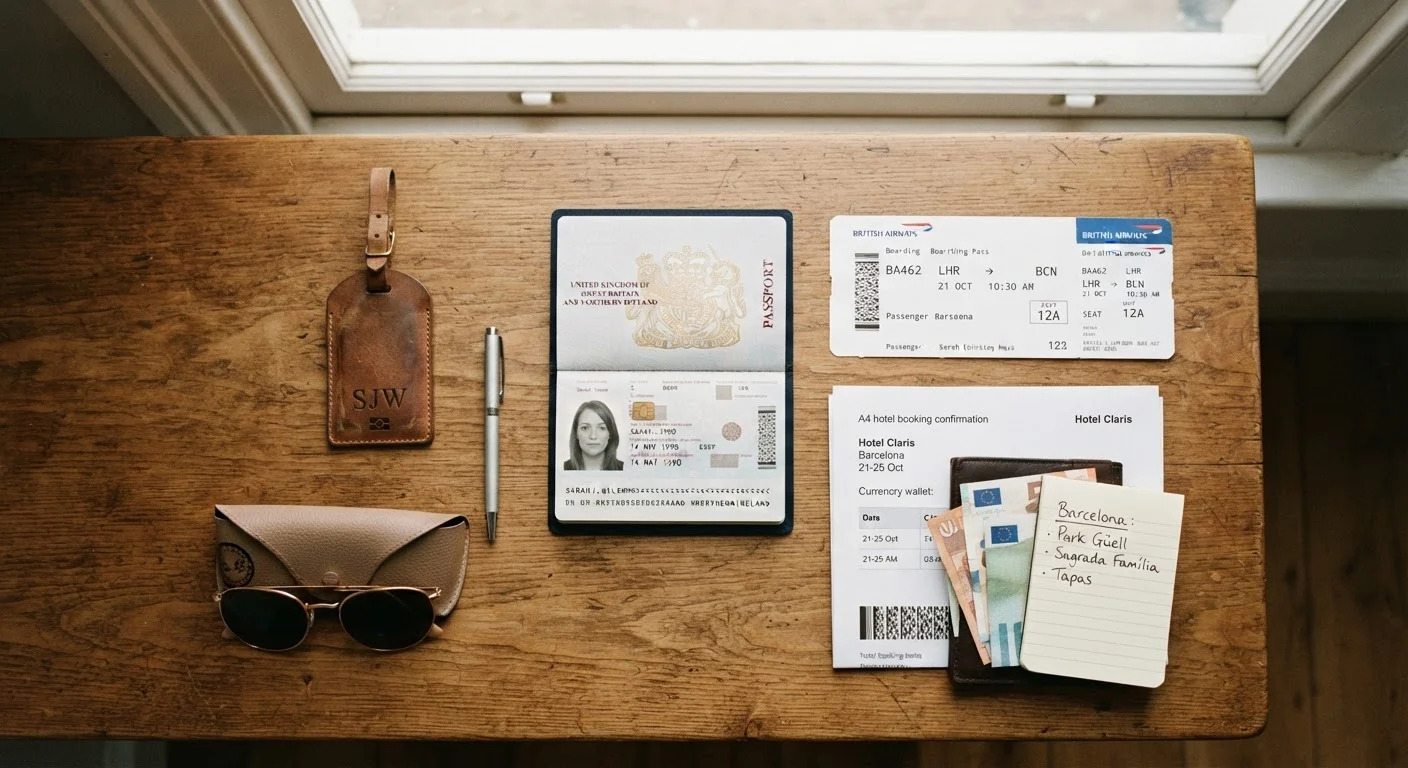
The key is building the list before your adrenaline is running. Two days before departure is the practical window. You have time to find the power adapter buried in a drawer, notice your prescriptions need a refill, or check whether your passport expires within six months of your travel dates, since many countries require that margin. For a full breakdown of entry documents by trip type, see this entry document reference guide.
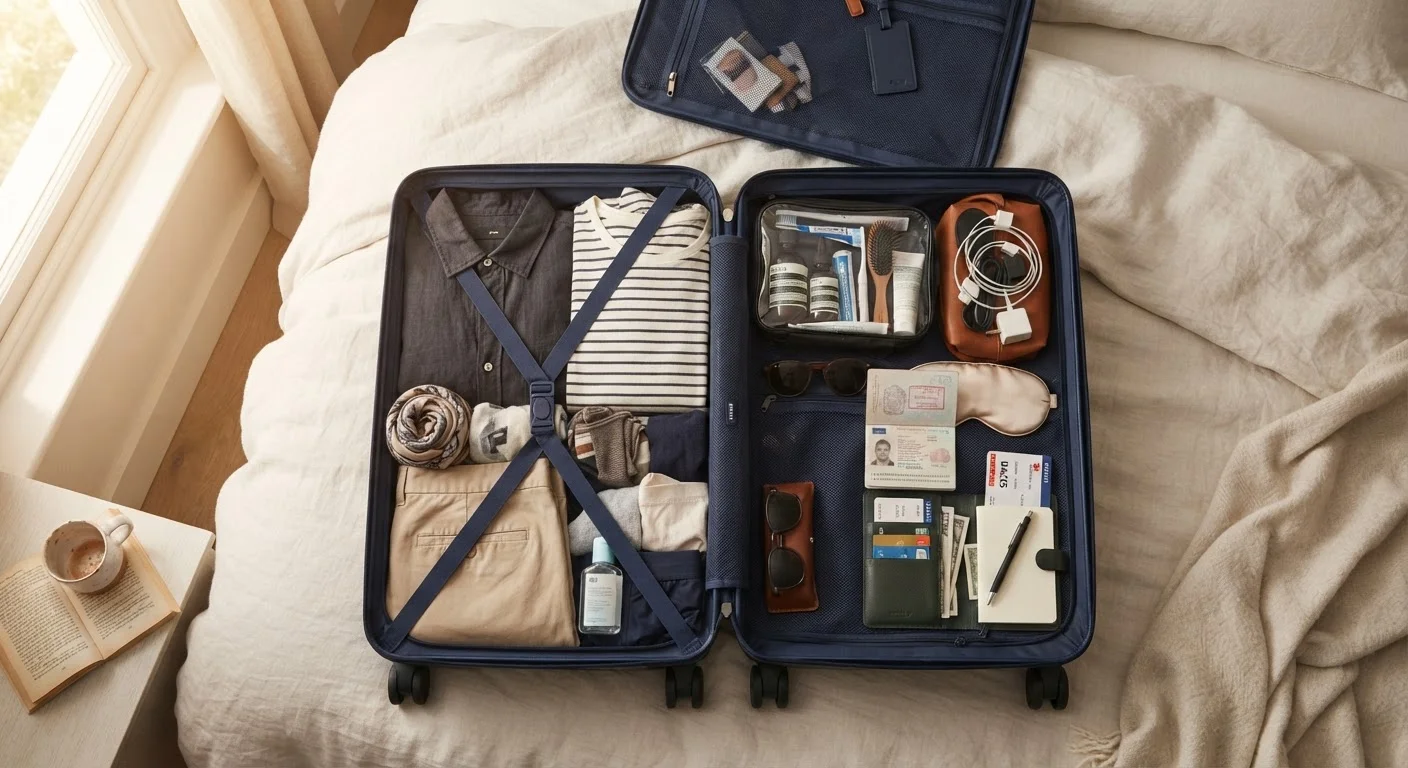
The checklist below is split into logical groups so you can work through one category at a time rather than bouncing between bag and bathroom indefinitely. Work through each group, check every item, and you are done.
Documents and financial items
Clothing and footwear
Medications and health items
Toiletries and personal care
Electronics and charging
Carry-on bag essentials
Home and security before you leave
Tools that make the process easier
You do not need specialized gear to pack well, but a few basics cut the time and stress considerably.
Packing cubes
Compress and organize clothing by category so you can locate items without unpacking the whole bag.
Document organizer pouch
Keeps passport, boarding passes, insurance cards, and currency in one accessible place throughout the trip.
Portable power bank
Provides emergency phone charging during long travel days when outlets are unavailable.
International plug adapter
Converts your home plug type to the outlet standards used at your destination.
Travel-size luggage scale
Lets you weigh your bag at home to avoid overweight baggage fees at check-in.
TSA-approved toiletry bag
A clear, quart-size bag that meets carry-on liquid screening requirements at U.S. airports.
One often-overlooked category is device prep. Downloading offline maps, setting international roaming, and confirming cloud backups are all packing tasks, even if they happen on a phone rather than inside a bag. The device prep checklist covers exactly what to sort out before you leave home.
If you are driving to the airport or making a road trip of it, consider running a quick vehicle check before you go. The pre-trip vehicle safety checklist walks through tire pressure, fluid levels, and lights in about 15 minutes.
The items most travelers actually forget
Every experienced traveler has a personal hall of shame: the phone charger left on the nightstand, the printed hotel confirmation still sitting in the printer tray, the travel-size toiletries that exceeded the 3.4-ounce carry-on limit and got confiscated at security.
Liquids, gels, and carry-on rules
U.S. Transportation Security Administration rules limit carry-on liquids to containers of 3.4 ounces (100 ml) or less, all fitting in one clear quart-size bag. This applies to toiletries, food spreads, snow globes, and even some gel-based items. Check the TSA website for the current prohibited items list before you pack, since rules change and vary by airline. Oversized containers will be confiscated at the security checkpoint with no exceptions.
A few categories deserve extra attention because they are easy to assume are handled when they are not. Prescription medications need to travel in their original labeled bottles when crossing borders; a pill organizer alone can create complications at customs. Travel insurance confirmation numbers and emergency contact cards belong in your carry-on, not your checked bag, in case luggage is delayed. And physical copies of your itinerary matter more than most travelers expect: hotel addresses printed out are far easier to hand a taxi driver than fumbling with a phone in an unfamiliar city.
If you want to go deeper on deciding what to bring versus what to leave behind, this guide on packing without overstuffing covers the decision-making process in detail. For carry-on versus checked bag trade-offs, this breakdown lays out the real advantages and limitations of each approach based on trip length and destination.
More trip planning guides are available if you want to work through other parts of your pre-departure prep.