What each document actually does
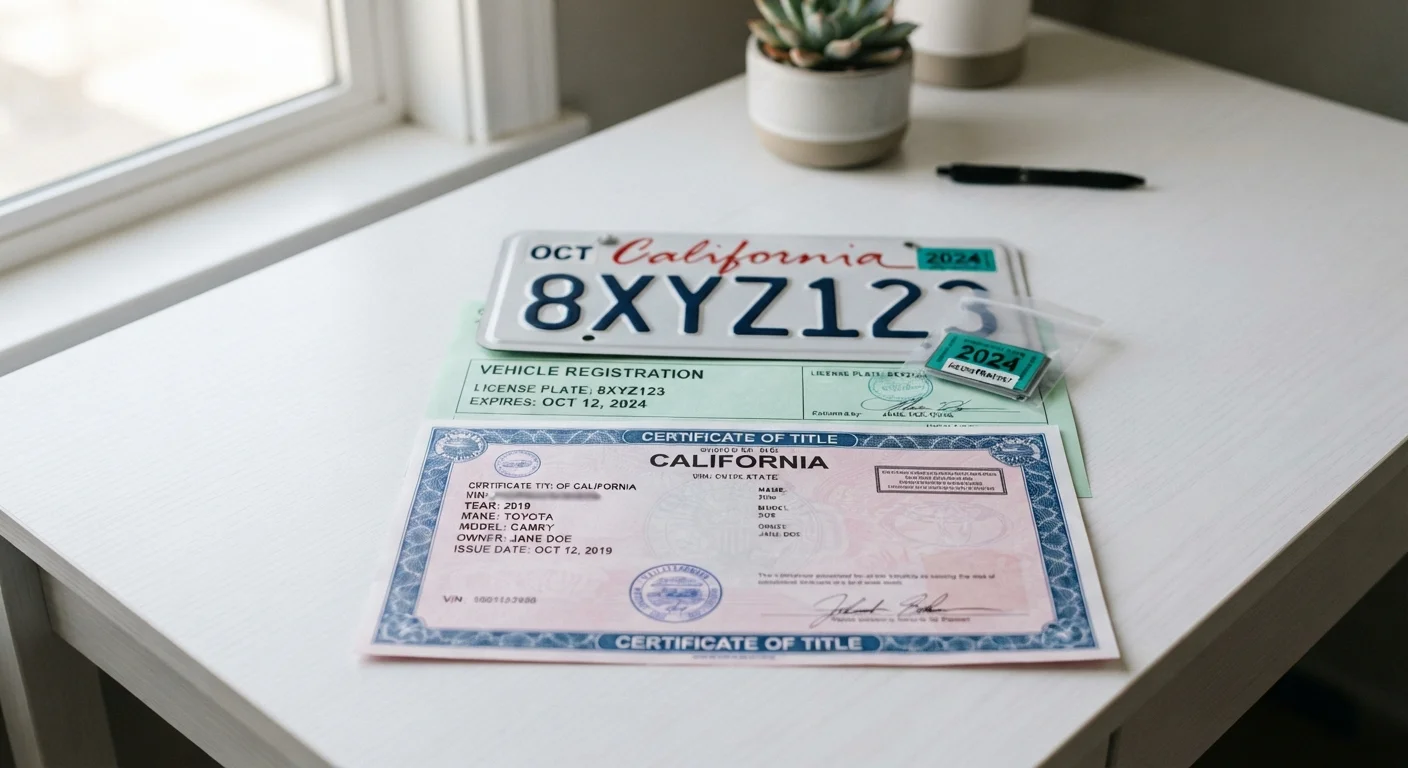
After buying a vehicle, three separate documents come into play: the title, the registration, and the license plate tags. They are related but not interchangeable, and confusing them leads to real problems at the DMV or during a future sale.
The title is the legal proof of ownership. It names the owner of record and, if a lender financed the purchase, lists that lender as a lienholder. A title follows the vehicle, not the driver. When you sell or transfer the car, you sign the title over to the new owner.
The registration is the state's record that a specific vehicle is authorized to operate on public roads. It ties the vehicle identification number (VIN) to an owner name and address in the state's database. Registration must be renewed periodically, usually annually, and generates a fee paid to the state.
The tags (also called plates or tabs) are the physical proof that registration is current. The plate itself is issued once; in most states a small sticker or decal is mailed at each renewal to show the expiration year. Driving with expired tags is a moving violation in every state.
Certificate of title
The official state-issued document that identifies the legal owner of a vehicle and records any liens against it. It must be transferred whenever ownership changes.
Lienholder
A lender or creditor with a legal claim against a vehicle used as collateral for a loan. The lienholder is listed on the title and must release the lien when the loan is paid in full.
Vehicle registration
The state record authorizing a specific vehicle to be operated on public roads. Registration is renewed periodically and tied to both the vehicle and the registered owner's address.
Salvage title
A title brand assigned when an insurance company declares a vehicle a total loss due to damage or theft. It signals significant prior damage and can affect insurability and resale value.
VIN (vehicle identification number)
A unique 17-character code assigned to every vehicle at manufacture. It appears on the title, registration, dashboard, and door jamb, and is used to track ownership, recalls, and history.
Title washing
A fraudulent practice where a vehicle with a branded title is registered across multiple states to obtain a clean title, hiding prior damage or total-loss history from buyers.
How the process works when you buy
The paperwork path differs slightly between dealerships and private-party sales, and between new and used vehicles. See how new and used ownership costs compare for a broader financial picture.
Buying from a dealership
Dealerships handle the title transfer and initial registration on behalf of buyers in most states. The dealer collects the fees and applicable taxes at signing, submits the paperwork to the state DMV or equivalent agency, and mails the title (or a lien-free title once the loan is paid) when it arrives from the state. Temporary operating permits, sometimes called dealer tags or paper plates, let you drive legally while the state processes the documents.
Buying from a private seller
In a private sale, both parties must complete the title transfer themselves. The seller signs the back of the existing title, filling in the buyer's name, the sale price, and the odometer reading. The buyer then takes that signed title to the DMV, pays transfer fees and any applicable taxes, and applies for a new title in their name. Most states require this within 10 to 30 days of the purchase date; missing the window can result in late fees.
If you are financing a private-party purchase, the lender's name goes on the new title as a lienholder. The lender holds the title until the loan is paid in full. For more on how loan terms affect that process, see auto loans explained.
First-time owners will find a full walkthrough of these steps in the car ownership guide for first-time buyers.
Fees, taxes, and state variation
Title and registration costs vary significantly by state and, in many cases, by county. Common charges include a title application fee, a registration fee based on vehicle weight or value, a plate issuance fee, and state or local sales tax on the purchase price. Some states also assess a personal property tax on vehicles annually.
Sales tax is generally calculated on the purchase price you report on the title application. Private-party sales occasionally trigger an audit if the declared price is well below market value; some states apply a minimum taxable value based on book price instead.
Registration renewal fees are a recurring ownership cost. The total cost of vehicle ownership article breaks down how registration and taxes fit into the full annual budget.
A few specifics worth knowing:
- Personalized or vanity plates carry an additional fee in every state that offers them.
- Some states offer multi-year registration to reduce trips to the DMV.
- Military members and residents living out of state may qualify for registration exemptions or extensions; check your state DMV directly.
What to do if a title has problems
Title issues are one of the most common headaches in used-vehicle transactions. The most frequent problems:
- Salvage title: Issued after an insurer declares the vehicle a total loss. The car can often be repaired and retitled as rebuilt, but financing, insurance, and resale are all harder.
- Missing title: A seller who cannot produce the title may still owe money on the vehicle, or the title may be lost. Most states allow a duplicate title application, but it takes time.
- Title washing: A fraudulent practice where a vehicle moves through multiple states to obscure a branded title (salvage, flood, lemon law buyback). A VIN history report from a recognized database service can surface prior title brands.
- Open lien: If the seller still owes a lender money, that lender holds the title. The debt must be paid off before a clean title can transfer to the buyer.
Before signing any purchase agreement, confirm the title is clean and the name on the title matches the seller's government-issued ID. Before signing a loan contract, the car loan agreement checklist covers what to verify on the financing side as well.