What each approach actually gives you
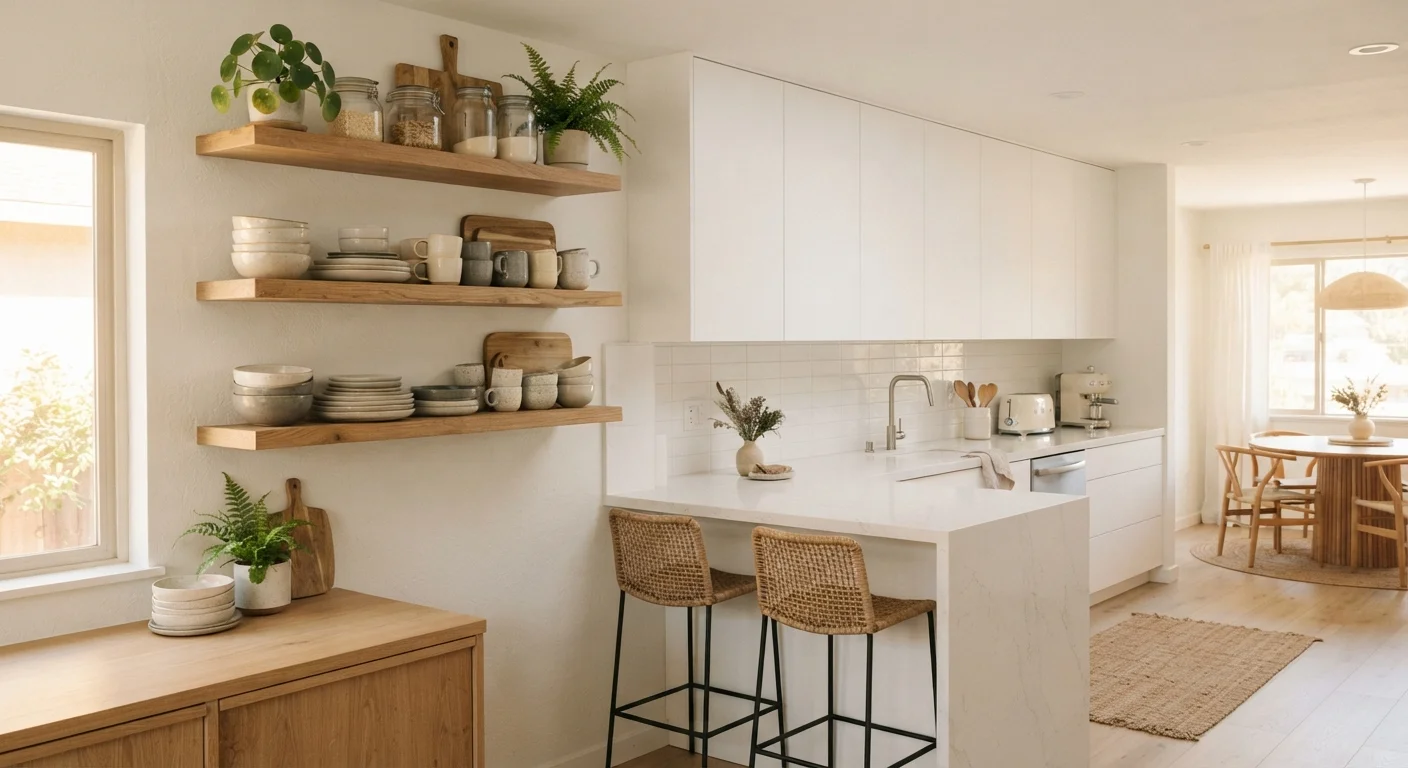
Open shelving replaces enclosed cabinet boxes with fixed or floating shelves mounted directly to the wall. Everything stored on them stays visible at all times. Upper cabinets use framed boxes with hinged doors to enclose storage, which is the configuration found in most American kitchens built over the past several decades.
The core difference is containment. Upper cabinets hide what is stored inside; open shelves put it on display. That single distinction drives most of the practical trade-offs around dust, access speed, aesthetics, and resale appeal.
If you are working through a broader renovation, the kitchen remodel planning guide covers how storage decisions fit into the full scope of a kitchen project.
| Criterion | Open shelving | Upper cabinets |
|---|---|---|
| Installation cost | Lower (brackets and boards) | Higher (cabinet boxes and hardware) |
| Dust and grease protection | None; items exposed | Good; contents enclosed |
| Access speed | Immediate; no doors | Slight delay; door required |
| Storage volume | Lower per linear foot | Higher per linear foot |
| Visual weight in room | Light; room feels open | Heavier; more enclosed feel |
| Resale appeal | Mixed; buyer-dependent | Broadly expected by buyers |
| Maintenance effort | Higher; frequent wiping needed | Lower; exterior wipe-downs only |
Maintenance and daily upkeep
Open shelves collect dust, cooking grease, and steam because nothing encloses them. Items stored near the stove need wiping down more often, sometimes weekly in a busy kitchen. Dishes left unused for a few days may need a rinse before use. The shelves themselves require regular cleaning of the surface underneath every item.
Upper cabinets largely protect their contents. The main cleaning task is wiping the exterior door fronts and handles, plus the occasional interior wipe-down when something spills. Grease can build up on cabinet exteriors near the range, but the contents remain cleaner than they would on open shelves in the same location.
For anyone who cooks frequently with high heat or oil, that protection matters. For someone who uses the kitchen mostly for light meals and entertaining, open shelves can stay presentable with less effort.
30-40%
Typical cost saving with open shelves vs. cabinets
General contractor estimates suggest open shelving installation runs roughly 30 to 40 percent less than an equivalent run of stock upper cabinets, though local labor rates vary considerably.
~10 lbs/ft
Minimum shelf load rating for dish storage
Structural guidelines from shelf hardware manufacturers commonly recommend brackets rated for at least 10 pounds per linear foot when shelves will hold ceramic dishes or glassware.
Cost and installation
Open shelving is generally less expensive to install. A set of wall-mounted wood or metal shelves with brackets costs far less in materials than a factory cabinet run, and installation is simpler. However, the wall anchoring needs to be done correctly: shelves loaded with dishes are heavy, and they must be secured into wall studs or with appropriate wall anchors rated for the weight. If you are unsure about load ratings or wall construction, a contractor or handyman can assess the situation.
Upper cabinets carry higher material and labor costs, and custom cabinetry adds significantly more. That said, cabinets tend to hold resale value better. Many buyers expect upper cabinets in a kitchen and may view their absence as a project to undo.
A hybrid layout, with a few open shelves mixed into a mostly cabinet run, lets you manage costs while keeping some display space. The pros and cons of an open floor plan explores similar trade-offs when removing structural or visual enclosures from a home.
Style, space, and resale
Open shelves make a kitchen feel taller and less enclosed, particularly in rooms with low ceilings or limited natural light. Pulling upper cabinets off one wall and replacing them with shelves can change how a kitchen reads visually without moving a single wall. The small-space layout strategies that work in bathrooms apply here too: removing visual bulk is one of the fastest ways to make a compact room feel bigger.
The trade-off is that open shelves require a curated look. Mismatched containers, expired pantry items, and random stacks of plastic lids become part of the decor. Some homeowners enjoy the discipline; others find it stressful.
Upper cabinets give a finished, cohesive appearance that most buyers recognize as standard. If you plan to sell within a few years, that familiarity tends to reduce friction with buyers who may not share your aesthetic preferences.
A hybrid layout is a valid middle ground
Many kitchens combine both approaches: upper cabinets on the wall above the sink and range for protection, and open shelves on a side wall for display. This lets you manage grease and dust where it matters most while keeping the visual openness in a lower-traffic zone. There is no rule that requires a kitchen to commit entirely to one approach.