Why a safety device audit belongs on your calendar
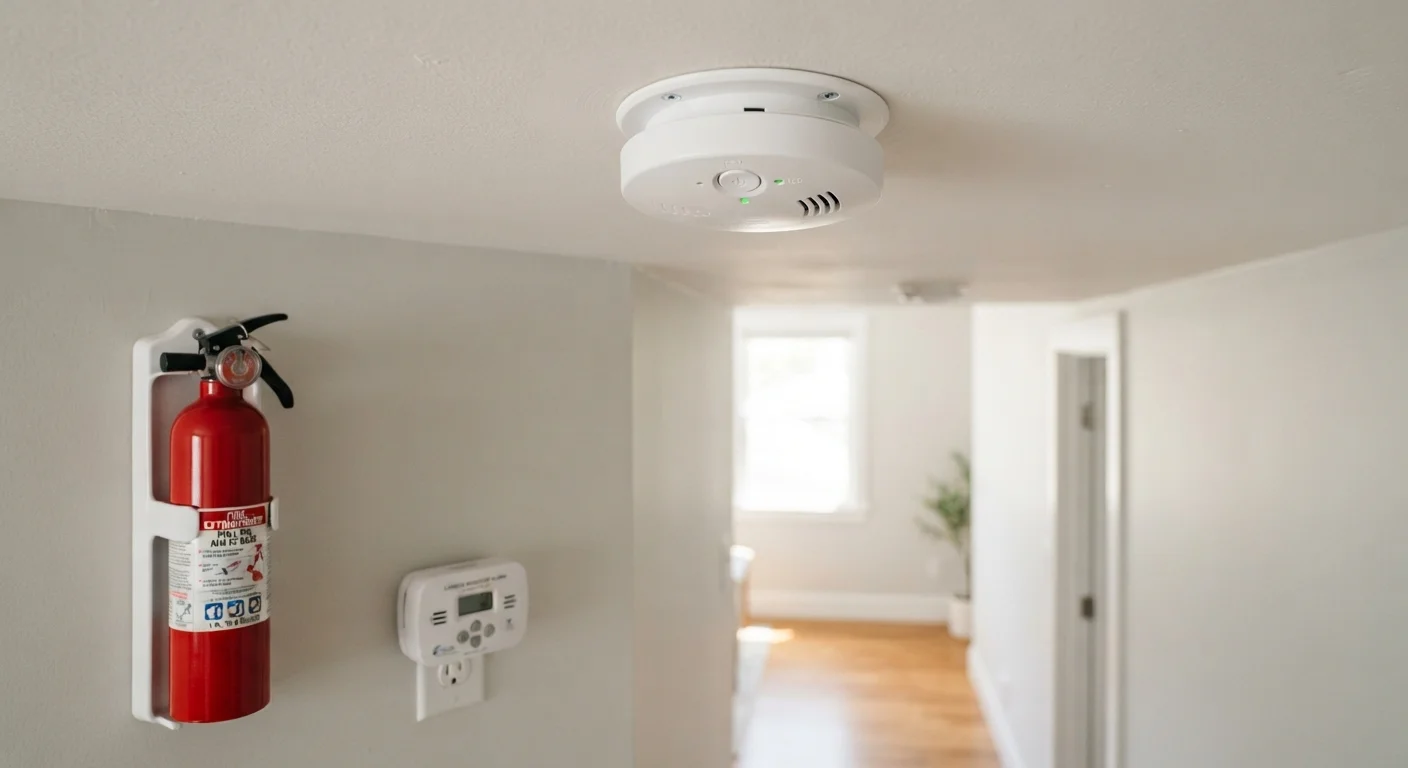
Smoke detectors, carbon monoxide (CO) alarms, and fire extinguishers are the first line of defense in a home emergency. Yet many households have at least one device that is expired, misplaced, or simply dead. A systematic audit, run once a year and briefly checked monthly, closes those gaps before they matter.
This checklist is organized so you can work through one device category at a time. Print it, open it on your phone, or keep notes as you go. If you find gaps in other home safety routines while you are at it, see our guidance on dryer vent cleaning, a fire hazard many households overlook entirely.
Never ignore a CO alarm in the red zone
If a carbon monoxide alarm sounds a continuous alert (not a chirp), treat it as an emergency. Leave the home immediately, leaving doors open as you exit, and call 911 from outside. Do not re-enter until emergency responders confirm it is safe. CO is colorless and odorless, so you cannot detect it without a functioning alarm.
Do not rely on an expired device
A smoke detector or CO alarm that is past its service life may appear to pass a button test, because the test circuit can still function even when the actual sensing element has degraded. A passed button test on an old unit does not confirm accurate smoke or CO detection. Replace devices on schedule.
Tools and materials you will need
Gather these before you start so you can complete the audit in one pass.
Step stool or ladder
Needed to safely reach ceiling-mounted detectors and to check placement heights.
Replacement batteries (9V and AA)
Required to replace low or dead batteries found in battery-operated detectors and alarms during the audit.
Pen and notepad or phone notes app
Used to record which devices pass, which need replacement, and any follow-up purchases.
Vacuum with soft brush attachment
Useful for clearing dust from detector vents without damaging the sensor.
Tape measure
Helps verify detector and extinguisher mounting heights meet general installation guidelines.
The audit checklist
Work through each group in order. Mark items as you go so you can track what needs follow-up.
Smoke detector placement and condition
Carbon monoxide alarm placement and condition
Fire extinguisher readiness
Household awareness and emergency readiness
What to do with your findings
After completing the checklist, you will likely have a short list of action items. Prioritize anything marked "must" in the checklist above. A missing detector or a discharged extinguisher is not a task to defer.
For devices that are simply due for replacement, note the manufacture date stamped on the back or side of the unit. Many alarms sold at hardware stores include a manufacture date, not just a purchase date, which is the date that matters for calculating the end of service life.
If cost is a concern, local fire departments sometimes offer free or subsidized smoke detectors and CO alarms to residents. Contact your local fire department directly to ask. You can also weigh safety device replacements against other home priorities using a home maintenance budget guide.
Once all devices are in good shape, build monthly testing into a routine. Pair it with another monthly habit, such as checking your home Wi-Fi settings using a home security audit checklist, so it does not slip.
This article is for general informational purposes only. Always follow the manufacturer's instructions for your specific devices and consult your local fire code requirements, which vary by jurisdiction.