
The spots that slip through every checklist
Standard maintenance advice covers gutters, HVAC filters, and smoke detectors. Those tasks matter, but the spots that tend to cause the most expensive surprises are the ones that look fine from the outside: sealed, set into concrete, or tucked under an overhang. They rarely show obvious wear until water or pests have already moved in.
The six areas below share one common trait: they are easy to overlook because they require no routine cleaning in the traditional sense. A quick visual check and occasional minor repair are all that most of them need. If you are weighing which projects to tackle first, prioritizing home maintenance tasks by risk and cost is a useful place to start.
Expansion joints in concrete flatwork
The planned gaps cut into driveways, sidewalks, and patios are called expansion joints. They give concrete room to shift with temperature changes without cracking randomly. Over time, the foam backer rod or flexible sealant inside these joints dries out, shrinks, or pulls away, leaving an open channel where water, dirt, and weed seeds collect.
Water that enters an open joint freezes and expands in cold weather, forcing the concrete slabs apart and accelerating cracking. Inspect expansion joints once a year. If the sealant is crumbly, missing, or has pulled away from one edge, clean out debris with a stiff brush, cut back any deteriorated sealant, and apply a self-leveling polyurethane or silicone concrete sealant rated for outdoor use. This is a straightforward DIY task that takes an afternoon.
An open expansion joint can allow freeze-thaw cycles to crack concrete slabs within a single winter.
Crawl space vents and the area around them
Homes with a crawl space (the short, unfinished gap between the ground and the first floor) rely on perimeter vents to move moisture out and prevent condensation from building up on wood framing and insulation. Leaves, soil, and pest nesting material can block these vents completely without anyone noticing from indoors.
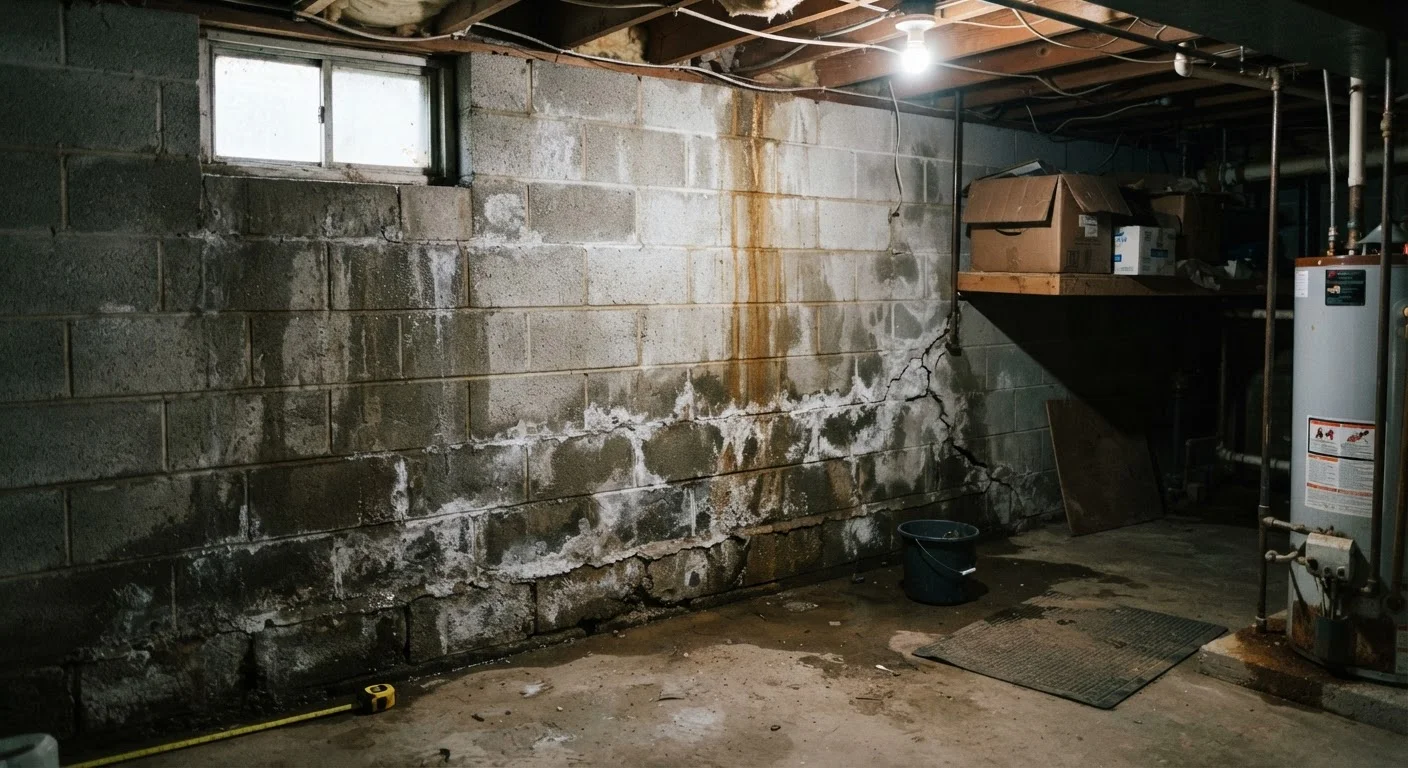
Check each vent cover twice a year, once in spring and once in fall. Clear any debris from the outside grill, and look inside with a flashlight to confirm airflow is not blocked. Also check that vent covers have intact screens; gaps let rodents and insects in. If you notice persistent dampness, musty odors, or efflorescence (white mineral deposits) on foundation walls, read more about diagnosing crawl space and basement moisture before conditions affect your framing.
Blocked crawl space vents can cause moisture to accumulate on wood framing, increasing rot and mold risk.
Weep holes in brick and window frames
Weep holes are the small openings at the base of a brick veneer wall or along the bottom edge of window frames. They allow moisture that gets behind the brick or into the window track to drain out instead of pooling inside the wall assembly. Without clear weep holes, water backs up and soaks into mortar, framing, or window sills.
These holes are easy to overlook because they look like gaps that should be filled. Do not fill them. Instead, check that each opening is clear of paint, caulk, mortar drips, or debris. Use a toothpick or thin wire to clear any blockage. While you are at the window, inspect the sill sealant as well. Understanding where caulk and sealant belong helps you avoid accidentally blocking weep holes when resealing windows.
Weep holes look like gaps that should be sealed, but filling them traps water inside your wall assembly.
Dryer vent duct from appliance to exterior
Most homeowners clean the lint trap before each load, but the duct that carries hot, moist air from the dryer to the outside wall accumulates lint along its entire length. A partially blocked dryer duct forces the appliance to run longer, raises energy use, and, in severe cases, can ignite accumulated lint inside the duct. The U.S. Fire Administration has identified clothes dryers as a notable source of residential structure fires, with failure to clean the duct as a leading factor.
Disconnect the duct from the back of the dryer once a year and use a long-handled dryer vent brush to clear lint from the full length of the run. Also check the exterior vent flap: it should open freely when the dryer runs and close fully when it does not. A stuck-open flap allows cold air and pests inside.
Lint builds up through the full duct length, not just the trap, creating a fire hazard over time.
Roof flashing around penetrations
Flashing is the thin metal material (typically galvanized steel or aluminum) that seals the gaps where the roof meets a chimney, vent pipe, skylight, or wall. It is not the shingles themselves, and it often fails before the shingles do. Gaps, rust, lifted edges, or cracked sealant at flashing joints create the most common entry points for roof leaks.
You do not need to climb onto the roof to do a basic check. Use binoculars from the ground to look for lifted or missing flashing sections, rust staining running down from a penetration, or visible gaps at the seam. A proper roof inspection covers flashing, shingles, and more. Any repair that requires walking on the roof should be done by a licensed roofing contractor to avoid injury and further damage.
Flashing often fails before shingles do, and gaps at penetrations are the most common source of roof leaks.
Attic soffit and ridge vents
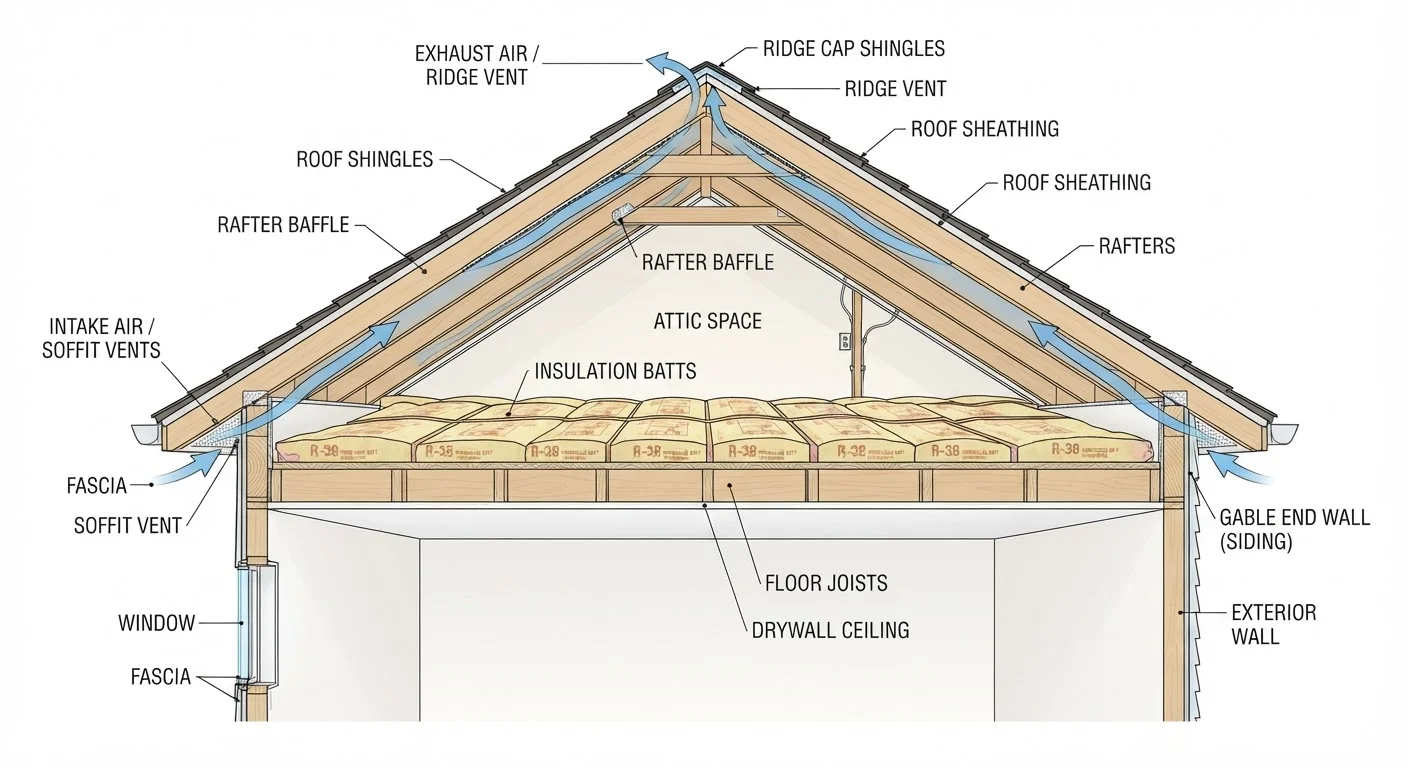
Attic ventilation depends on a system where cooler outside air enters through soffit vents (along the underside of roof overhangs) and exits through ridge vents (along the peak). When insulation is pushed too close to the soffit or birds nest in the ridge vent, airflow stops. The result is heat and moisture buildup that shortens shingle life from below and can cause condensation on rafters in winter.
From the attic interior, use a flashlight to check that baffles (foam or cardboard channels stapled between rafters at the eave) are in place and unobstructed. From outside, confirm the ridge vent cap is intact and free of debris. How insulation and ventilation interact explains why both need to work together. If your attic is uncomfortable to enter, hire an insulation or ventilation contractor to assess the space safely.
Blocked soffit or ridge vents can cut years off your shingles and allow winter condensation to form on rafters.
Turning a once-a-year check into a habit
None of these tasks requires specialized knowledge or expensive tools. A stiff brush, a flashlight, a tube of appropriate sealant, and a dryer vent brush handle most of them. The harder part is remembering they exist.
Tying these checks to a seasonal event, such as the spring daylight saving change or the fall furnace startup, makes them easier to remember. A short written or digital checklist that lives with your other home files keeps each item visible. Some of these areas, particularly weep holes and expansion joints, also benefit from attention after any season of heavy rain or hard frost, since those conditions reveal damage that dry weather hides.
When to call a professional
Several items on this list, specifically roof flashing repair, crawl space structural concerns, and any electrical work near attic insulation, fall outside routine DIY scope. When in doubt, a licensed contractor can assess conditions safely and verify that repairs meet local building codes. Skipping a permit where one is required can complicate home sales and insurance claims later.
For anything involving water getting into finished areas, the problem is rarely just the spot you can see. Grout and tile joints around tubs and showers follow the same pattern: small grout gaps lead to water intrusion behind walls if left unaddressed for a season or two.