Why low-water landscaping is worth the effort
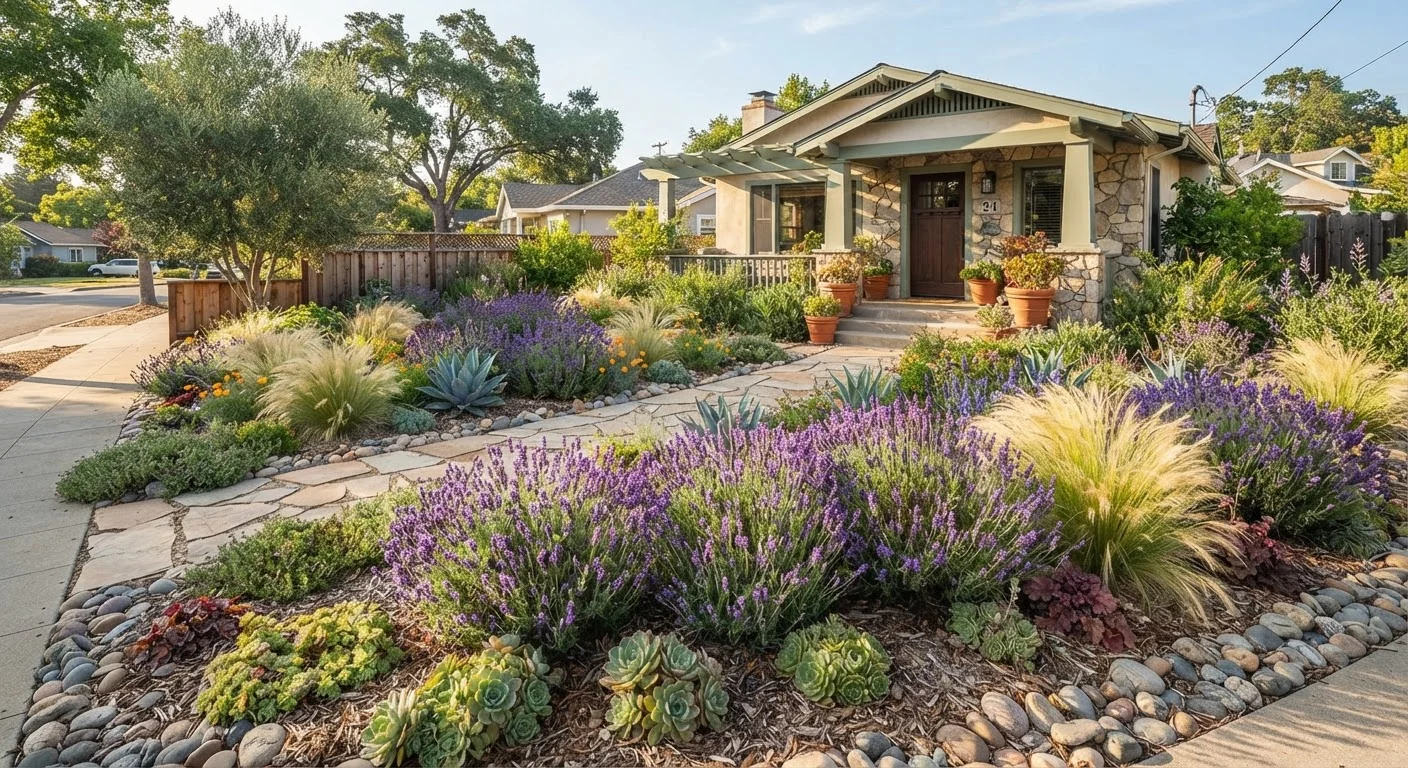
Many homeowners picture a drought-tolerant yard as a flat bed of gravel with a lone cactus in the corner. That picture is wrong. With the right plant palette and a few design principles, a low-water landscape can have color, structure, and year-round interest while using a fraction of the water a traditional lawn demands.
Water bills are one reason to make the switch. Another is resilience: a landscape built around drought-tolerant plants handles dry spells without the stress, brown patches, and constant intervention a thirsty lawn requires. If your current setup feels like a constant battle against the weather, these ideas offer a practical way forward.
The month-by-month lawn care calendar is a useful companion for timing any yard transitions you plan around these strategies.
Start with the right plants for your region
Plant selection is the single most important decision in drought-tolerant design. A plant native to the Southwest will struggle in humid Georgia, and vice versa. Focus on species native to your region or those adapted to its climate patterns. Native plants have developed root systems and seasonal rhythms that suit local rainfall, so they need minimal supplemental water once established.
Good choices across many U.S. climates include lavender, salvia, yarrow, coneflower (Echinacea), black-eyed Susan, and ornamental grasses such as blue fescue and little bluestem. In arid climates, agave, yucca, and penstemon hold up well. In the Pacific Northwest, drought-tolerant does not mean desert plants; it means species that handle summer dry spells, such as Oregon grape or kinnikinnick.
See why native plants are worth planting for a deeper look at the regional benefits.
Matching plants to your region's rainfall patterns is the foundation of any low-water landscape.
Improve your soil before you plant anything
Drought-tolerant plants still need soil that drains well and holds enough moisture to sustain them between rain events. Compacted clay holds water at the surface and starves roots of oxygen. Sandy soil drains so fast that water never reaches the root zone. Both problems are corrected with organic matter.
Work a 3- to 4-inch layer of compost into the top 10 to 12 inches of soil before planting. This improves drainage in clay and water retention in sand. For beds with severely compacted soil, a broadfork or garden fork loosens the structure without disrupting the soil layers the way rototilling can.
Rocky or gravelly soils in arid regions often do not need amendment at all; many desert-adapted plants actually prefer lean, well-drained conditions and struggle in enriched soil.
Compost improves both clay and sandy soils, giving drought-tolerant roots a better environment to establish.
Use mulch to hold moisture at the root zone
A 2- to 3-inch layer of organic mulch, such as shredded bark, wood chips, or straw, reduces soil moisture evaporation by a meaningful margin. It also moderates soil temperature, suppresses weeds that would compete for water, and breaks down over time to feed soil biology.
Keep mulch a few inches away from plant stems and tree trunks to prevent rot. Refresh it once a year, typically in spring before the dry season begins. In very arid or desert-style beds, decomposed granite or crushed stone works in place of organic mulch and fits the aesthetic naturally. Stone mulch does not improve soil over time the way organic material does, but it requires essentially no upkeep.
Mulching is one of the lowest-effort, highest-return moves you can make in a dry garden.
Group plants by water needs (hydrozoning)
Hydrozoning means placing plants with similar water requirements together so you can water each zone precisely rather than applying a uniform schedule to the whole yard. A thirsty perennial border near a downspout can share a drip zone, while a dry-adapted meadow planting on a slope gets far less water or none at all.
This approach eliminates the waste that comes from watering drought-tolerant plants on the same schedule as high-water plants. It also reduces the risk of overwatering, which is a common cause of root rot and plant loss. Mapping your yard into two or three hydrozones before planting is simpler than retrofitting zones later.
Grouping plants by water need lets you water each area on its own schedule, cutting waste.
Replace turf with ground covers, gravel, or mixed plantings
Traditional turfgrass is among the highest water consumers in a residential yard. Replacing even a portion of it with ground covers, decomposed granite pathways, or dense perennial plantings reduces water demand while adding visual variety. Creeping thyme, sedum, or buffalo grass (in appropriate climates) are all low-water turf alternatives that fill space without the irrigation overhead.
For areas that need to stay walkable, stepping stones set into a low-growing ground cover give structure and function. Gravel or decomposed granite pathways work well in dry climates and require almost no maintenance once installed. If a full lawn replacement feels too large a project, start by converting the front parkway strip, which is typically the hardest part of a yard to keep green.
For context on how much water a lawn typically uses, the lawn watering schedule guide breaks down realistic irrigation needs by season.
Even a partial turf replacement with drought-tolerant ground covers can cut your yard's water use noticeably.
Add structure with rocks, boulders, and hardscape
Rocks and boulders do more than fill space. They retain heat, create microclimates where cold-sensitive plants can shelter, and give a low-water landscape the visual weight that would otherwise come from a dense lawn. A few well-placed boulders of varying sizes look intentional; an even scattering of small rocks looks like fill material.
Dry-stacked stone walls or raised beds extend the design while improving drainage on slopes. Permeable hardscape, such as flagstone set in sand rather than mortar, lets rainwater infiltrate rather than run off. This is worth considering if your municipality has stormwater rules about impervious surface coverage.
Boulders and dry-stacked stone add structure and visual weight while supporting plant microclimates.
Putting it all together
A successful low-water landscape is built in layers: improved soil at the base, well-chosen plants above it, and mulch protecting the surface. Each layer supports the others. You do not need to redo everything at once. Starting with one bed, one border, or one problem area is enough to test what works before expanding.
Overwatering is one of the most common garden mistakes, and it is just as damaging to drought-tolerant species as underwatering. Once your plants are established, resist the habit of supplemental irrigation unless there is a genuine extended dry period. Let the plants do what they were selected to do.
Water new plantings until they establish
Even drought-tolerant plants need regular watering during their first one to two growing seasons while roots develop. A slow, deep watering once or twice a week is more effective than frequent shallow watering. Once plants are established, you can taper off and let rainfall do most of the work. Drip irrigation or a soaker hose makes this establishment phase easier to manage without oversaturating the soil.