How overwatering actually harms plants
Healthy roots need both water and oxygen to function. When soil stays saturated for too long, water fills the air pockets that roots depend on. Without oxygen, roots begin to suffocate and break down. This decay invites fungal pathogens that cause root rot, a condition where roots turn soft, brown, and unable to take up water or nutrients.
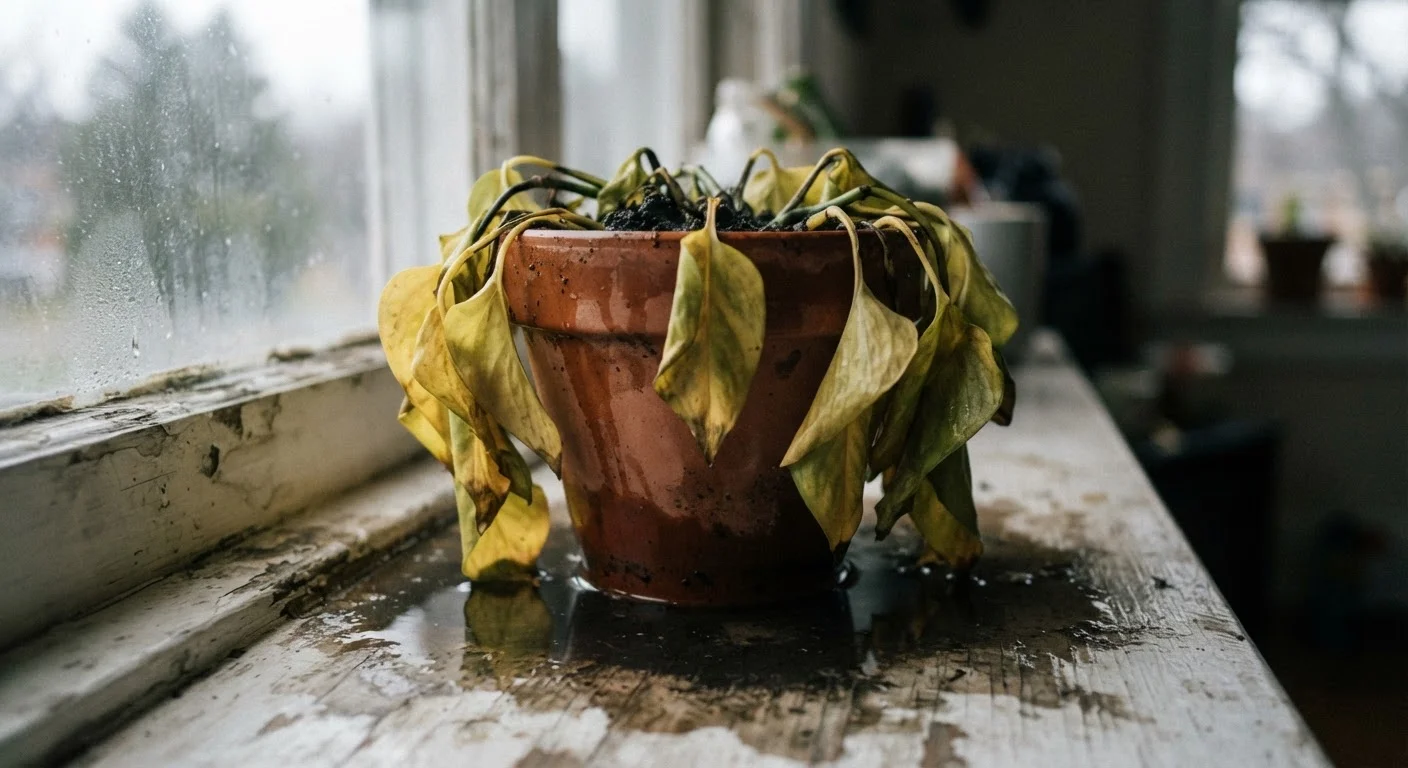
The cruel irony is that an overwatered plant often looks like an underwatered one. Leaves wilt, yellow, and drop because the damaged roots can no longer supply the plant with what it needs, even though there is plenty of water in the pot. Many homeowners respond by watering more, accelerating the damage.
For a broader look at how seemingly helpful habits can backfire around the home, see common household maintenance myths that cause similar unintended damage.
Wilting does not always mean underwatering
Many homeowners water more aggressively when they see a wilting plant, which can make the problem much worse if overwatering is already the cause. Before adding water, press your finger about an inch into the soil. If it feels wet or cool, the plant likely needs less water, not more.
Common overwatering mistakes and how to fix them
Most overwatering problems come from a small set of habits that are easy to change once you understand what is going wrong. The mistakes below are among the most frequent, and correcting even one of them can make a real difference.
Watering on a fixed daily schedule regardless of soil moisture.
Why it happens: A routine feels reliable and easy to follow, so many gardeners assume consistent daily watering is responsible care.
Using pots or beds without adequate drainage.
Why it happens: Decorative containers are often chosen for appearance, and drainage holes are overlooked. Some gardeners also add a gravel layer at the bottom of pots, believing it improves drainage, but this actually raises the water table inside the container.
Treating all plants as if they have the same water needs.
Why it happens: Homeowners often apply one watering habit across all their plants, not realizing that succulents, tropical plants, and vegetable seedlings have very different moisture requirements.
Ignoring early warning signs like yellowing leaves or a sour soil smell.
Why it happens: Yellow leaves are commonly blamed on nutrient deficiency or pests, so the real cause, waterlogged roots, goes unaddressed while damage deepens.
Watering by volume rather than by plant response.
Why it happens: It feels intuitive to pour a set amount of water each time, but soil type, pot size, temperature, and humidity all affect how quickly water drains or evaporates.
If you are also rethinking your outdoor watering approach, the lawn watering schedule guide covers how depth and frequency affect turf health across different seasons.
Choosing plants that are harder to overwater
One practical way to reduce overwatering risk is to grow plants that tolerate or even prefer drier conditions. Succulents, cacti, lavender, and many native species store water in their tissues or have adapted to irregular rainfall. They are forgiving if you miss a watering but suffer quickly in waterlogged soil.
Root rot can kill a plant fast
Once root rot sets in, the plant loses its ability to absorb water or nutrients, even if the soil dries out. If you catch it early, trimming affected roots and repotting into fresh, well-draining soil may help. Severely rotted roots usually mean the plant cannot recover. Act at the first sign of soft, brown, or foul-smelling roots.
Native plants, in particular, are worth considering for garden beds. Because they evolved in local conditions, they generally need less supplemental water than non-native species. The benefits of native plants for American gardens goes into more detail on why they are a practical choice for lower-maintenance landscaping.
Whatever plants you grow, pairing the right species with the right soil and container will reduce the margin for error. A well-draining mix, a pot with holes, and the habit of checking moisture before watering will prevent most overwatering problems before they start.