How to use this calendar
Lawn care timing depends on two things: your grass type and your climate zone. Cool-season grasses (Kentucky bluegrass, fescue, ryegrass) grow most actively in spring and fall. Warm-season grasses (Bermuda, zoysia, St. Augustine) thrive in summer heat and go dormant in winter. If you are unsure which type you have, a local cooperative extension office can identify it from a clipping or photo.
This calendar uses months as a loose guide. Adjust by two to four weeks earlier in the South or later in the North. Soil temperature is a better trigger than the calendar date for several tasks, especially fertilizing and pre-emergent herbicide application.
| Cool-season grass growth peaks | Spring and fall (soil temps 50-65 degrees F) |
| Warm-season grass growth peaks | Late spring through summer (soil temps 70-90 degrees F) |
| Ideal mowing height (cool-season) | 3 to 3.5 inches |
| Typical weekly water need | About 1 inch per week |
| Best aeration timing (cool-season) | Early fall (September) |
| Best aeration timing (warm-season) | Late spring (May to June) |
| Pre-emergent herbicide window | Before soil reaches 55 degrees F in spring |
| Final mow height before winter | 2 to 2.5 inches |
January through March: Late winter and early spring
January and February: Most lawns are dormant. Avoid walking on frozen or frost-covered grass, which can damage individual blades. Use this time to service your mower: sharpen the blade, change the oil, and replace the air filter. A sharp blade cuts cleanly rather than tearing grass, which reduces disease entry points.
March: As soil temperatures approach 50 degrees Fahrenheit, cool-season grasses begin waking up. Rake away any matted leaves or debris that could block sunlight and trap moisture. If bare spots appeared over winter, scratch the soil surface lightly and overseed with a grass seed matched to your existing lawn. See the spring planting checklist for soil prep steps that apply to lawn patches as well as garden beds.
Apply pre-emergent herbicide for crabgrass control before soil temperatures reach 55 degrees Fahrenheit. Once crabgrass seeds germinate, pre-emergent products are no longer effective. Learn more about identifying common lawn weeds before treating so you know exactly what you are targeting.
April through June: Active growing season
April: Begin mowing once grass reaches about one-third taller than your target height. For most cool-season lawns, that target is 3 to 3.5 inches. Cutting too short stresses the grass and invites weeds. Apply a slow-release nitrogen fertilizer for cool-season grasses once the lawn greens up fully. For warm-season grasses, hold off until May. See lawn fertilizing facts and myths for guidance on timing and how much nitrogen is actually appropriate.
May: Warm-season grasses are now actively growing and ready for their first feeding. Establish a consistent watering schedule: most lawns need about one inch of water per week from rain or irrigation, applied deeply and infrequently rather than in shallow daily bursts. The lawn watering schedule guide explains how to measure output and adjust for your soil type.
June: Raise your mower deck by half an inch as summer heat builds. Taller grass shades the soil, retains moisture, and competes better against weeds. Spot-treat broadleaf weeds with a targeted herbicide rather than broadcasting across the whole lawn.
July and August: Managing summer stress
Heat and drought push most cool-season lawns into partial dormancy. Avoid fertilizing cool-season grass during this period as nitrogen on stressed turf can cause burn. Warm-season grasses, however, are at peak growth and benefit from a midsummer feeding.
Water early in the morning to reduce evaporation and fungal disease risk. If water restrictions apply in your area, drought-tolerant landscaping strategies can help reduce the lawn's overall water demand long-term. Brown, dormant cool-season grass usually recovers on its own once temperatures drop and fall rains return, provided the dormancy lasts fewer than four to six weeks.
Watch for grub activity, which peaks in midsummer. Small dead patches that lift like a rug often indicate grub feeding on roots. Confirm the problem before treating: dig up a square foot of sod to count grubs per square foot, then compare to threshold levels on your cooperative extension service's guidelines.
September and October: The most important weeks of the year
Fall is the best window for cool-season lawn recovery. Soil is still warm, air is cooler, and weed pressure drops. Aerate compacted soil in early September before overseeding: core aeration (which removes small plugs) improves water penetration and root depth. The lawn aeration guide explains when aeration helps and when you can skip it.
Overseed thin or bare areas immediately after aerating. Keep the seedbed consistently moist until germination. Apply a fall fertilizer with a higher potassium content to strengthen root systems before winter. The organic versus synthetic fertilizer comparison can help you choose a product type that fits your soil goals.
Warm-season grasses slow down now. Stop fertilizing them by early September to avoid pushing tender growth that winter will kill. The fall yard preparation checklist covers additional tasks for closing out the season properly across the whole yard.
November and December: Closing down
Take your final mow of the season slightly lower than usual, around 2 to 2.5 inches for cool-season grasses, to discourage snow mold. Clear fallen leaves before they mat down: a thick leaf layer blocks light and traps moisture against the grass surface, creating ideal conditions for fungal disease.
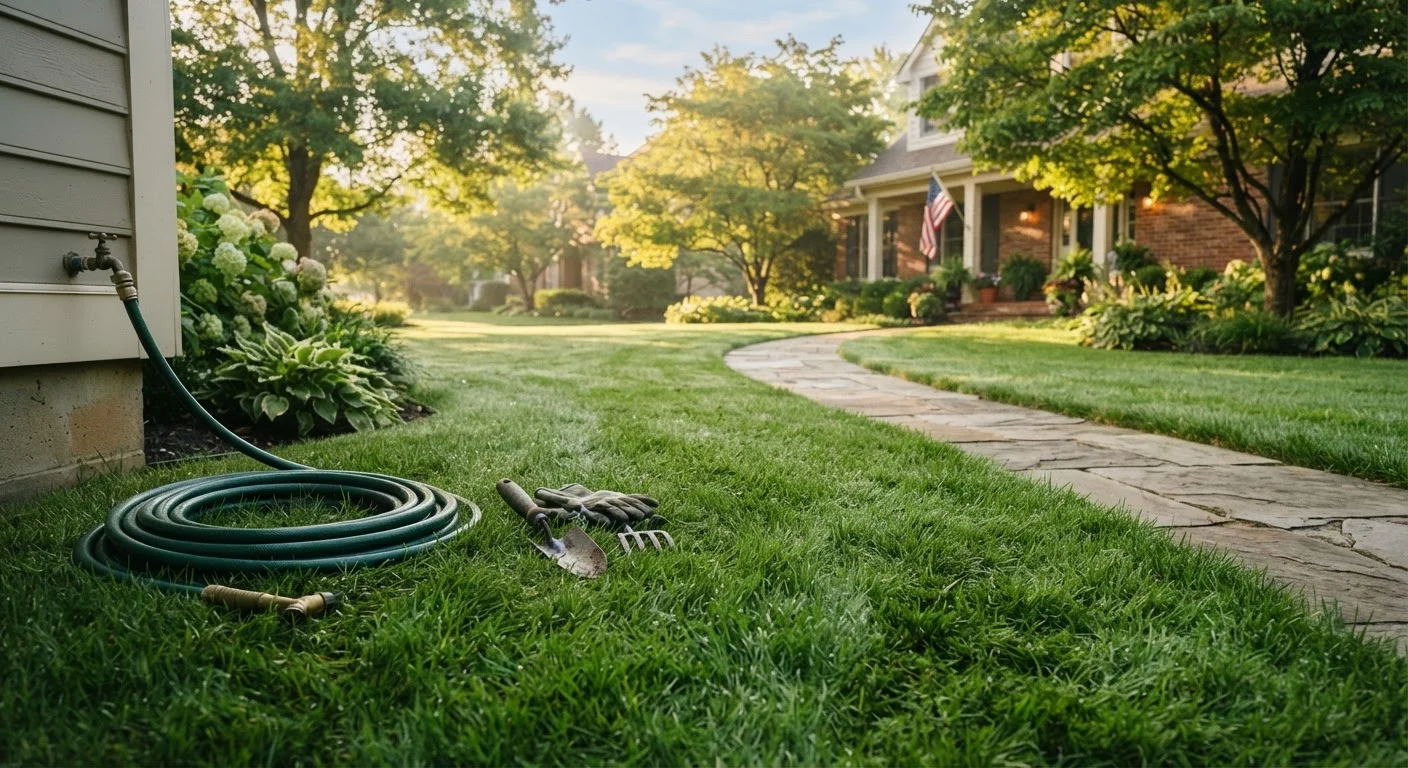
Drain and store garden hoses once freezing temperatures arrive regularly. Winterize any in-ground irrigation system before the first hard freeze to prevent pipe damage. Store fertilizer in a dry location where it will not absorb moisture and clump. With mower maintenance done and equipment stored properly, the lawn is ready to start the cycle again in late winter.