What each letter in N-P-K actually does
Nitrogen (N) is the nutrient most responsible for the deep green color and dense growth you want from a lawn. Grass consumes nitrogen faster than the other two primary nutrients, which is why most maintenance fertilizers carry a high first number.
Phosphorus (P) supports root development. Young seedlings and newly laid sod draw on phosphorus heavily while establishing their root systems. In a mature, well-established lawn growing in healthy soil, phosphorus demands are much lower, and many soils already hold enough without supplementing.
Potassium (K) helps grass tolerate stress: drought, cold temperatures, foot traffic, and disease pressure. It does not produce visible top growth the way nitrogen does, but a lawn low in potassium tends to thin out and recover slowly from damage.
Read the label before you buy
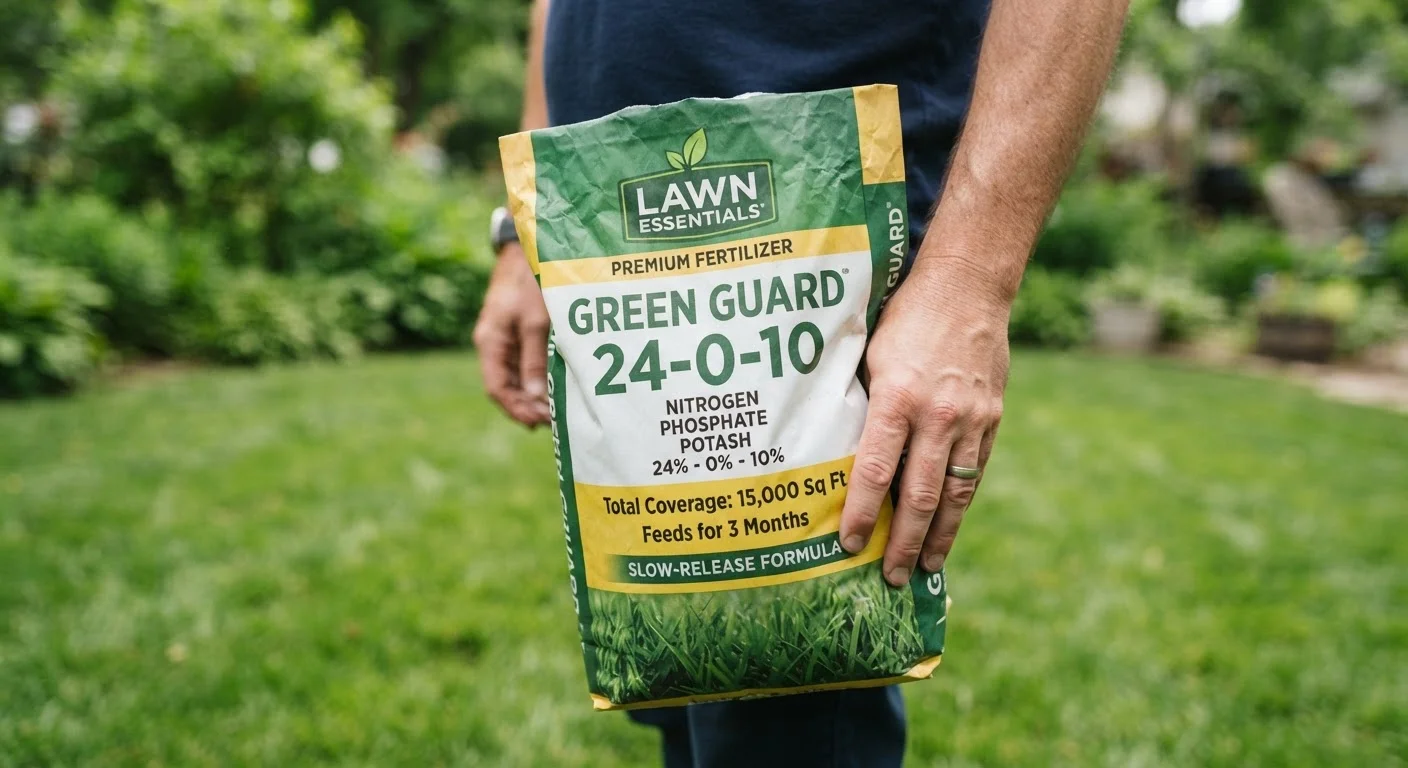
Fertilizer labels in the U.S. must list the guaranteed minimum percentages of nitrogen, phosphorus, and potassium by law. Take a photo of the label before leaving the store so you can compare it to your soil test results at home. The ratio that helped a neighbor's lawn may not match what your soil actually needs.
Understanding these three roles makes it easier to read a fertilizer label with purpose rather than guessing. A bag with numbers like 32-0-8 is built for pushing green growth on a lawn that already has good root structure and adequate phosphorus. A 10-18-10 formula is built for a different situation entirely.
How to read the numbers on the bag
The three numbers always appear in the same order: N, then P, then K. On a 50-pound bag labeled 20-5-10, the bag contains 10 pounds of nitrogen (20% of 50), 2.5 pounds of phosphorus (5% of 50), and 5 pounds of potassium (10% of 50). The remaining 32.5 pounds is carrier material.
This math matters when comparing products by cost. A cheaper bag with a lower nutrient percentage may actually deliver less nitrogen per dollar than a pricier, concentrated formula. Dividing the cost by the pounds of actual nitrogen in the bag gives you a cleaner comparison.
Some fertilizer labels also show secondary nutrients like calcium, magnesium, and sulfur, plus micronutrients like iron. These appear below the primary N-P-K analysis. They can matter for specific deficiencies, but the three primary numbers cover most lawn nutrition decisions.
3
Primary nutrients in every complete fertilizer
Nitrogen, phosphorus, and potassium are classified as primary macronutrients by the American Society of Agronomy because grass requires them in larger quantities than any other nutrients.
46%
Nitrogen content in urea, a common fertilizer source
Urea (46-0-0) is one of the most concentrated nitrogen sources used in lawn fertilizers, meaning a smaller quantity delivers the same nitrogen as a larger bag of a dilute product.
6.0 to 7.0
Ideal soil pH range for most lawn grasses
The University of Minnesota Extension notes that soil pH outside this range limits a grass plant's ability to absorb nutrients regardless of how much fertilizer is applied.
Why a soil test comes before a fertilizer purchase
Applying fertilizer without knowing your soil's current nutrient levels is a guessing exercise. Soil in one neighborhood can differ substantially from soil two streets over depending on prior land use, organic matter content, and drainage patterns.
A soil test, available through most university cooperative extension services, measures nitrogen, phosphorus, potassium, and pH. The pH reading matters because grass cannot absorb nutrients effectively when soil is too acidic or too alkaline, regardless of how much fertilizer you apply. A lawn struggling despite regular fertilizing is often dealing with a pH problem, not a nutrient shortage. For more on common fertilizing misconceptions, see this guide to lawn fertilizing myths.
Test results come with specific recommendations, which removes the guesswork and prevents over-application. Excess phosphorus in particular washes off lawns into storm drains and contributes to algae growth in local waterways. Many states now restrict or ban high-phosphorus fertilizers for established turf for this reason.
Matching the ratio to the situation
Established cool-season grasses like Kentucky bluegrass or tall fescue typically respond well to nitrogen-heavy fertilizers applied in fall. Warm-season grasses like bermuda or zoysia grow most actively in summer and benefit from nitrogen applications timed to that window.
For a lawn being seeded or sodded, a starter fertilizer with a higher middle number (phosphorus) supports early rooting. Once the turf fills in, switching to a maintenance formula with a higher first number makes more sense.
Lawns that thin out under heat or heavy use may need potassium support going into summer or before winter dormancy. A fertilizer with a strong third number (such as a 12-0-12 or 15-0-15) addresses that without pushing excessive top growth at the wrong time of year.
Soil health also connects to other lawn care practices. Compacted soil limits how well roots can access any nutrient you apply, so pairing fertilization with proper aeration can improve results. See how lawn aeration works and when it helps for more on that side of lawn care.