Why fertilizing myths are so persistent
Lawn fertilizing advice spreads quickly through neighborhoods, garden centers, and social media, and much of it sounds reasonable. The problem is that a lot of it contradicts how grass and soil actually work. Following bad advice wastes money and can set a lawn back by months. Understanding where these myths come from is the first step toward a healthier yard.
Most misconceptions share a common source: applying logic meant for houseplants or vegetable gardens to turfgrass, which has different nutrient cycles, rooting patterns, and stress responses. A few myths come from outdated product marketing. Whatever the origin, the corrections below are grounded in how grass biology and soil chemistry work.
Myth
Fertilizing more often produces a thicker, greener lawn.
Fact
Excess fertilizer, especially nitrogen, burns grass, weakens roots, and triggers rapid top growth that the root system cannot sustain.
Grass needs nitrogen in measured amounts at specific growth stages. When you apply more than the soil can hold and the plant can use, the surplus either scorches the blades through salt damage or leaches below the root zone entirely. The result is patchy, stressed turf that is more vulnerable to disease. Most lawn grasses need two to four applications per year, timed to active growth periods, not a steady stream of product.
Myth
Summer is a great time to fertilize because the grass is growing fast.
Fact
For cool-season grasses, summer heat causes dormancy or stress, and fertilizing during that period can seriously damage the lawn.
Cool-season grasses slow or stop growing when soil temperatures climb above roughly 85 degrees Fahrenheit. Applying nitrogen at that point pushes the plant to produce new growth it cannot support in the heat, making it far more susceptible to disease, drought stress, and burnout. Warm-season grasses tolerate summer feeding because they are actively growing then, but even they should not be fertilized late in the season when they are preparing for dormancy. Timing matters more than the calendar month.
Myth
Grass clippings left on the lawn will build up thatch and suffocate grass.
Fact
Grass clippings decompose quickly and return nitrogen to the soil; they do not cause thatch when mowing is done regularly.
Thatch is a layer of stems, roots, and other woody organic matter that breaks down slowly. Grass blade clippings are mostly water and decompose within days. Returning clippings to the lawn through "grasscycling" can supply roughly one pound of nitrogen per 1,000 square feet per season, meaningfully reducing how much fertilizer you need to apply. The only time clippings can contribute to thatch is if you let grass grow very tall before mowing and then leave thick clumps sitting on the surface.
Myth
A fertilizer with the highest nitrogen number is always the strongest choice.
Fact
The right nitrogen percentage depends on your grass type, the time of year, and what a soil test shows your lawn already has.
High-nitrogen fertilizers applied at the wrong rate or season cause more problems than low-nitrogen ones applied correctly. Fall applications for cool-season grasses benefit from a formulation that also includes potassium to help roots harden before winter. Spring applications call for moderate nitrogen to encourage steady, manageable growth. Understanding what the three numbers on a fertilizer bag represent helps you match the product to the moment. The N-P-K guide walks through this in plain terms.
Myth
You do not need to water after applying granular fertilizer.
Fact
Granular fertilizer must be watered in to dissolve the granules, move nutrients into the root zone, and prevent blade burn.
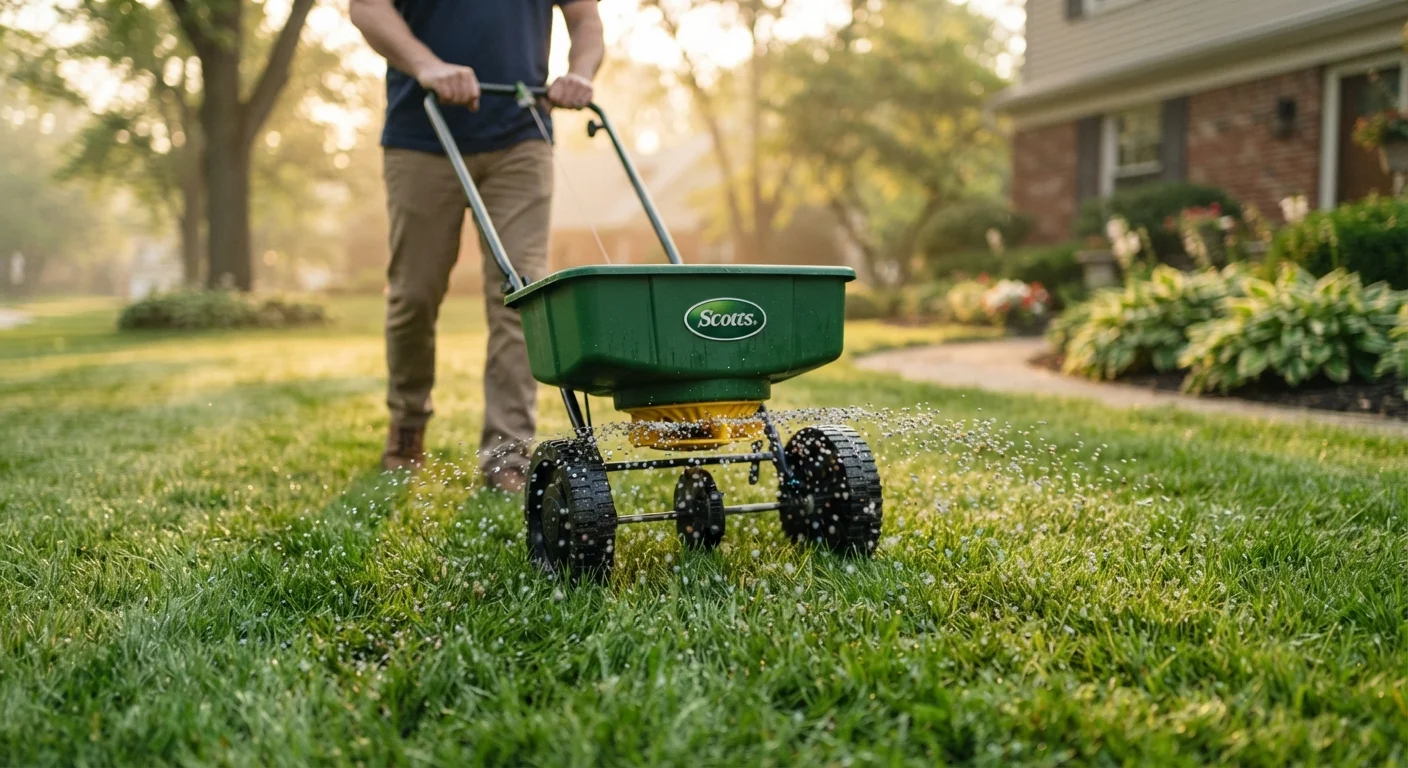
Granular fertilizer sitting on dry grass blades can concentrate salts and cause burn, particularly on warm days. Watering lightly after application, typically a quarter to a half inch, dissolves the product and moves it down to where roots can absorb it. This is especially important for any fertilizer applied during warmer weather. The exception is liquid fertilizer, which is already dissolved, but even then, a light watering helps reduce any residue on the blades.
Myth
All lawns follow the same fertilizing schedule regardless of grass type or region.
Fact
Fertilizing schedules differ significantly between cool-season and warm-season grasses, and between geographic regions.
A fertilizing plan suited to a Kentucky bluegrass lawn in Minnesota will harm a bermuda grass lawn in Georgia if applied on the same dates. Cool-season grasses peak in fall and spring; warm-season grasses peak in late spring and summer. Soil temperature, rainfall patterns, and local frost dates all shape when nutrients are most useful. The seasonal lawn care calendar breaks down a month-by-month approach by grass category so you can adapt the schedule to your actual lawn, not a generic one.
How to build a fertilizing routine that actually works
Once you have set the myths aside, a sound routine becomes straightforward. Start with a soil test, available through most cooperative extension offices for a small fee. The results tell you the pH, existing nutrient levels, and what amendments your specific lawn needs. Without that baseline, you are guessing, and guessing often leads to over-application.
Time applications to your grass type. Cool-season grasses like Kentucky bluegrass and tall fescue respond best to feeding in early fall and again in early spring. Warm-season grasses like bermuda and zoysia need fertilizer when they are actively growing, generally late spring through summer. The month-by-month lawn care calendar lays out timing by grass type and region in more detail.
Pair fertilizing with good watering practice. Granular fertilizer needs moisture to dissolve and reach the root zone, but soggy soil after a heavy application can push nutrients past the roots and into groundwater. The lawn watering schedule guide explains how depth and timing interact with nutrient uptake. If you want to compare product types before your next purchase, the organic vs. synthetic fertilizer comparison covers release rates, soil impact, and practical tradeoffs. For help reading the numbers on the bag itself, the N-P-K ratio guide explains what each figure means in plain terms.