What compaction actually does to your lawn
Soil compaction happens when soil particles are pressed tightly together, squeezing out the small air pockets that roots depend on. Heavy foot traffic, repeated mowing, and clay-heavy soil all contribute. Over time, compacted soil behaves almost like a hard pan: water runs off instead of soaking in, roots stay shallow, and grass struggles to get the oxygen and nutrients it needs.
You can do a simple screwdriver test to check your soil. Push a standard screwdriver into moist soil with hand pressure only. If it meets strong resistance in the top two to three inches, the soil is likely compacted. Soft soil should accept the screwdriver easily to at least six inches.
Compaction is most common in high-traffic areas, around play equipment, and in lawns with heavy clay content. Sandy soil rarely becomes compacted enough to need regular aeration.
Check soil moisture before you rent the machine
Aerate when the soil is moist but not saturated. Soil that is too dry will resist tine penetration, producing short, ineffective cores. Water one to two days ahead of your planned aeration date if rain is not expected.
How core aeration relieves compaction
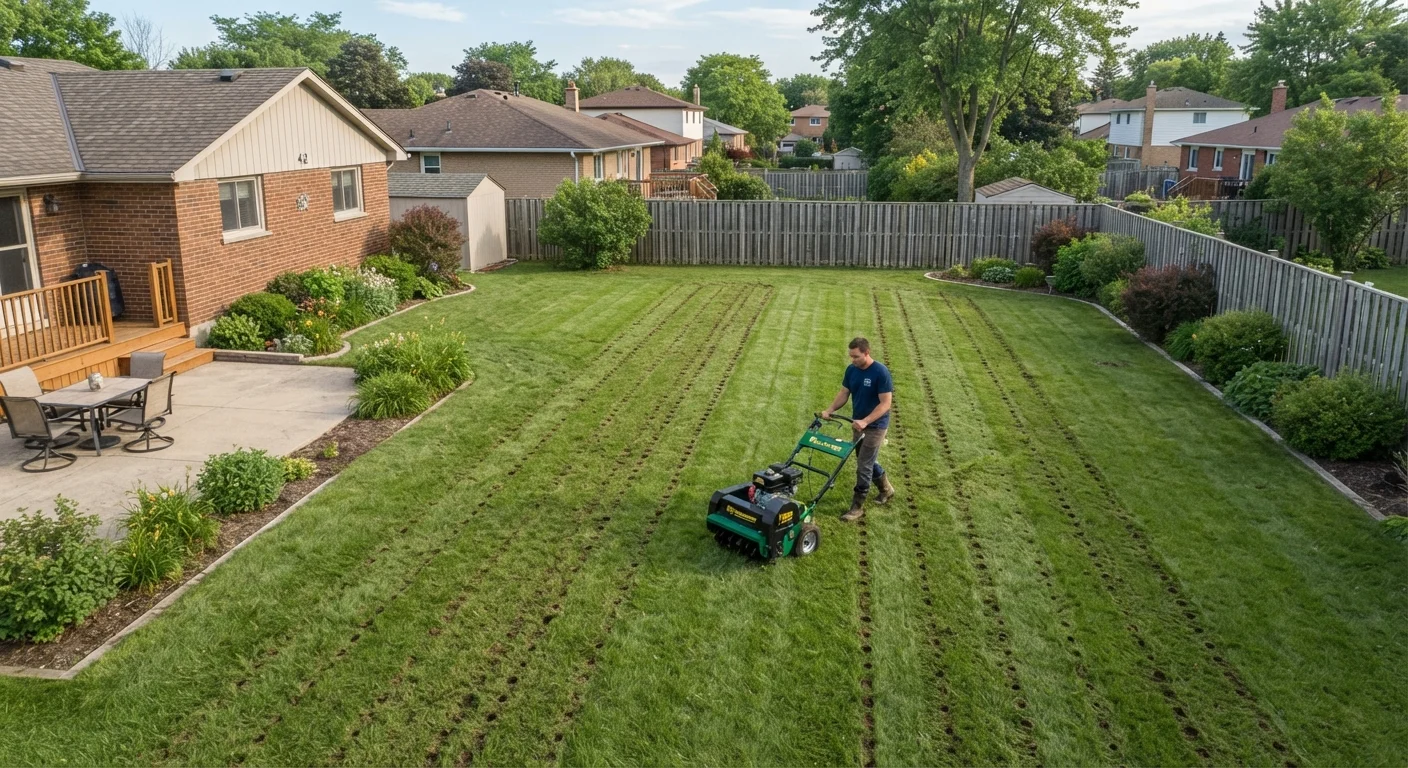
A core aerator uses hollow metal tines to pull out small cylinders of soil, typically about half an inch in diameter and two to three inches deep. Those holes give compressed soil room to expand. Air, water, and fertilizer can now move freely down to the root zone instead of pooling on the surface.
The soil plugs left on the lawn are not waste. They contain living microbes that help break down thatch and return organic matter to the surface as they decompose over a week or two. There is no reason to collect or remove them.
Spike aerators, which poke holes without removing material, are less effective because they push soil sideways, which can increase compaction around each hole rather than relieve it. Core aeration is the method most turf researchers and extension services recommend for sustained results.
When aeration actually helps (and when it does not)
Aeration is worth doing when your lawn shows specific signs: water pools after rain instead of absorbing, grass feels spongy or looks thin despite adequate watering and fertilizing, or the screwdriver test shows resistance. Lawns on clay soil, heavily used areas, and yards where heavy equipment recently operated are good candidates.
Aeration is less useful on sandy soil with good drainage, lawns that are already growing vigorously, or grass that was installed less than a year ago. Aerating healthy, loose soil does not harm the lawn, but it uses your time and equipment rental budget without a clear payoff.
Timing matters as much as the decision to aerate. For cool-season grasses such as Kentucky bluegrass, tall fescue, and perennial ryegrass, early fall (late August through October) is the best window. The grass is still actively growing, so it recovers quickly and can fill in the holes before winter. For warm-season grasses such as Bermuda and zoysia, late spring through early summer works better because that is when those grasses are growing most vigorously. Aerating warm-season grasses in fall, or cool-season grasses in midsummer heat, puts unnecessary stress on the turf. See the seasonal lawn care calendar for month-by-month timing guidance.
Getting the most out of an aeration session
Water your lawn thoroughly one to two days before aerating so the tines can penetrate to a useful depth. Dry, hard soil prevents tines from pulling full-length cores, which limits the benefit. Avoid aerating waterlogged soil, since the machine will drag and smear rather than pull clean plugs.
After aeration, overseeding and fertilizing are both more effective because seed and nutrients fall directly into the open holes and make contact with loose soil. This is one of the best times of year to overseed thin patches. Our guide on grass seed vs. sod can help you decide whether to seed or use another approach. Pair overseeding with a good watering schedule to keep the seed moist while it germinates.
Keep foot traffic off the lawn for at least a week after aeration to let the soil begin to loosen and plugs break down. For a broader fall maintenance checklist, the fall yard prep guide covers aeration alongside the other tasks that set up a healthier spring lawn.
3 inches
Typical core depth for effective aeration
University cooperative extension guides generally recommend tine penetration of two to three inches for meaningful compaction relief.
1 to 2 weeks
Time for soil plugs to break down
With regular watering and light foot traffic, surface cores decompose and return organic matter to the lawn within about two weeks.
Once a year
Recommended aeration frequency for most lawns
Most cooperative extension lawn care programs recommend annual core aeration for lawns with moderate compaction on clay or mixed soils.