A region that defies easy generalization
Central America spans roughly 200,000 square miles and connects North and South America through seven countries. Most American travelers treat it as a single destination, but the countries differ from one another as sharply as Italy differs from Sweden. The food, the dominant language of indigenous communities, the geography, the colonial history, and the condition of roads all shift substantially as you move from Guatemala's highlands to Panama's canal zone.
That range is exactly what makes the region worth exploring country by country. Whether you prefer volcanoes and coffee farms, Caribbean reef diving, pre-Columbian ruins, or a walkable capital city with rooftop restaurants, at least one Central American country is built around what you are looking for. The urban versus nature-based travel question that shapes most trip planning decisions has a clear answer somewhere in this region.
Before traveling, verify current entry requirements, health recommendations, and any U.S. State Department advisories for each country you plan to visit, since conditions change and official sources are the only reliable reference.
Guatemala: highland culture and ancient Maya cities
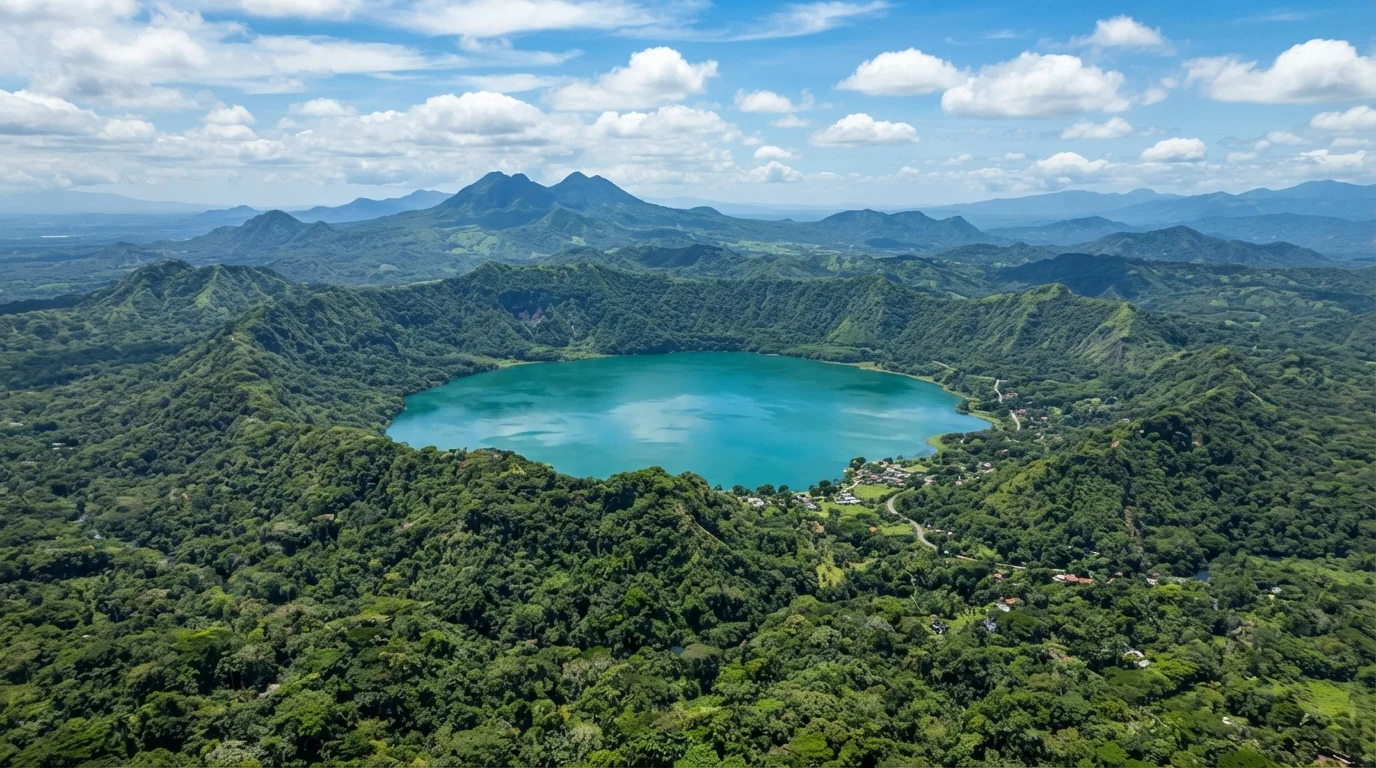
Guatemala has the largest indigenous population in Central America, and roughly 40 percent of residents speak a Mayan language as their first language. That shapes everything from market culture in Chichicastenango to the textiles worn in villages around Lake Atitlan, a caldera lake ringed by three volcanoes.
Antigua Guatemala, a colonial city surrounded by active and dormant volcanoes, is compact and walkable, with cobblestone streets and well-preserved Spanish baroque architecture. The archaeological site of Tikal in the lowland Peten region contains some of the most significant Classic Maya temple complexes in the Americas, accessible via domestic flight or a long overland trip from Antigua.
Infrastructure in rural areas is limited, and some highland roads are rough. Petty theft is a concern in certain urban areas. Check current advisories and use registered transport where possible.
Guatemala has the largest indigenous population in Central America, shaping its markets, textiles, and daily life.
Belize: English-speaking reef access and jungle lodges
Belize is the only country in Central America where English is the official language, which removes a common logistical barrier for American travelers. The country is small, roughly the size of Massachusetts, and its eastern edge borders the Mesoamerican Barrier Reef, the second-largest coral reef system in the world. Ambergris Caye and Caye Caulker are the most visited reef islands, with snorkeling and diving as the primary draws.
Inland, Belize has significant Maya sites including Caracol and Xunantunich, as well as jaguar reserves and cave tubing routes in the Cayo District. Accommodation ranges from basic guesthouses on the cayes to wilderness lodges in the jungle interior. Prices are higher than in neighboring Guatemala or Honduras, partly because the Belize dollar is pegged at 2 BZD to 1 USD.
Belize is the only English-speaking country in Central America, with reef access just offshore from its cayes.
Honduras: Mayan ruins and Caribbean dive sites
Copan Ruinas in western Honduras contains one of the most artistically detailed Maya sites in the region, particularly noted for its carved stone stelae and a hieroglyphic stairway. The site is near the Guatemalan border and pairs well with a Guatemala itinerary.
On the Caribbean side, the Bay Islands, including Roatan and Utila, sit above reef walls with water clarity that draws divers from around the world. Utila has historically been one of the more affordable places in the Caribbean basin to complete a dive certification. The mainland interior includes cloud forests and river valleys, though traveler infrastructure is thinner there than on the coast or near Copan. Honduras has higher violent crime rates in some urban areas than neighboring countries; staying in established traveler corridors and following current U.S. State Department guidance is advisable.
Copan Ruinas contains some of the most detailed stone carving in the entire Maya world.
Costa Rica: national parks, wildlife, and outdoor activity
Costa Rica has built its travel identity around protected natural areas, which cover roughly a quarter of the country's land. The country holds a disproportionate share of the world's known species in a small area, including sloths, toucans, sea turtles, and multiple monkey species. National parks such as Corcovado, Manuel Antonio, and Tortuguero each have distinct ecosystems and wildlife profiles.
The country also has active volcanoes accessible to visitors, among them Arenal and Poas, along with Pacific and Caribbean coastlines that differ in weather patterns and wave conditions. Tourist infrastructure is well developed by regional standards, with a reliable domestic flight network and a wide range of accommodation types. Costa Rica costs noticeably more than most of its neighbors, and road conditions outside the Central Valley can be rough, particularly during the May-to-November rainy season.
Protected areas cover roughly a quarter of Costa Rica's land, making wildlife encounters part of routine travel.
Panama: canal history, city life, and remote indigenous territories
Panama City is the most cosmopolitan capital in the region, with a skyline of high-rise buildings above Panama Bay, a restored colonial neighborhood called Casco Viejo, and direct flights from multiple U.S. cities. The Panama Canal itself is a working piece of infrastructure that visitors can observe from the Miraflores visitor center, watching container ships transit between the Pacific and Atlantic.
Beyond the city, the country extends into the Darien, one of the most ecologically dense and least-traveled jungles in the Western Hemisphere. The Bocas del Toro archipelago on the Caribbean coast has a backpacker-friendly island scene, while the San Blas Islands are governed by the Guna indigenous people and accessible only by small plane or boat. Panama uses the U.S. dollar as its everyday currency alongside the Panamanian balboa, which eliminates currency exchange friction for American travelers.
Panama uses the U.S. dollar as its everyday currency, removing exchange complications for American visitors.
Planning across the region
Inter-country travel in Central America is possible by bus, domestic flight, and in some cases ferry. Overland crossings can be straightforward or slow depending on the border, the day of the week, and whether you need a visa. Panama and Costa Rica share a land border, as do Guatemala and Belize, so multi-country trips are logistically manageable with advance research.
Budget expectations vary widely. Guatemala and Honduras are among the more affordable destinations for accommodation and food. Costa Rica and Belize tend to cost more, partly because both have mature tourism infrastructures and, in Belize's case, a currency pegged to the U.S. dollar at a fixed rate. Panama City's hotel market reflects its status as a regional business hub. A common myth about traveling abroad as an American is that your dollar stretches equally everywhere outside the U.S., but pricing in this region is genuinely uneven.
If Central America's mix of history, reefs, and rainforest appeals but you are also weighing a Caribbean island itinerary, the differences between the Caribbean's island chains article covers how that region compares in terms of geography and travel style. For travelers drawn to the longer-haul option, the major regions of South America offer a sense of how a continent-scale destination contrasts with Central America's more compact geography.
Consider a single-country trip first
Multi-country itineraries in Central America sound appealing, but travel times between destinations are longer than a map suggests. Overland border crossings can take several hours. Spending a full week or two in one country often produces a richer experience than rushing across four in the same time.