What actually separates these two travel styles
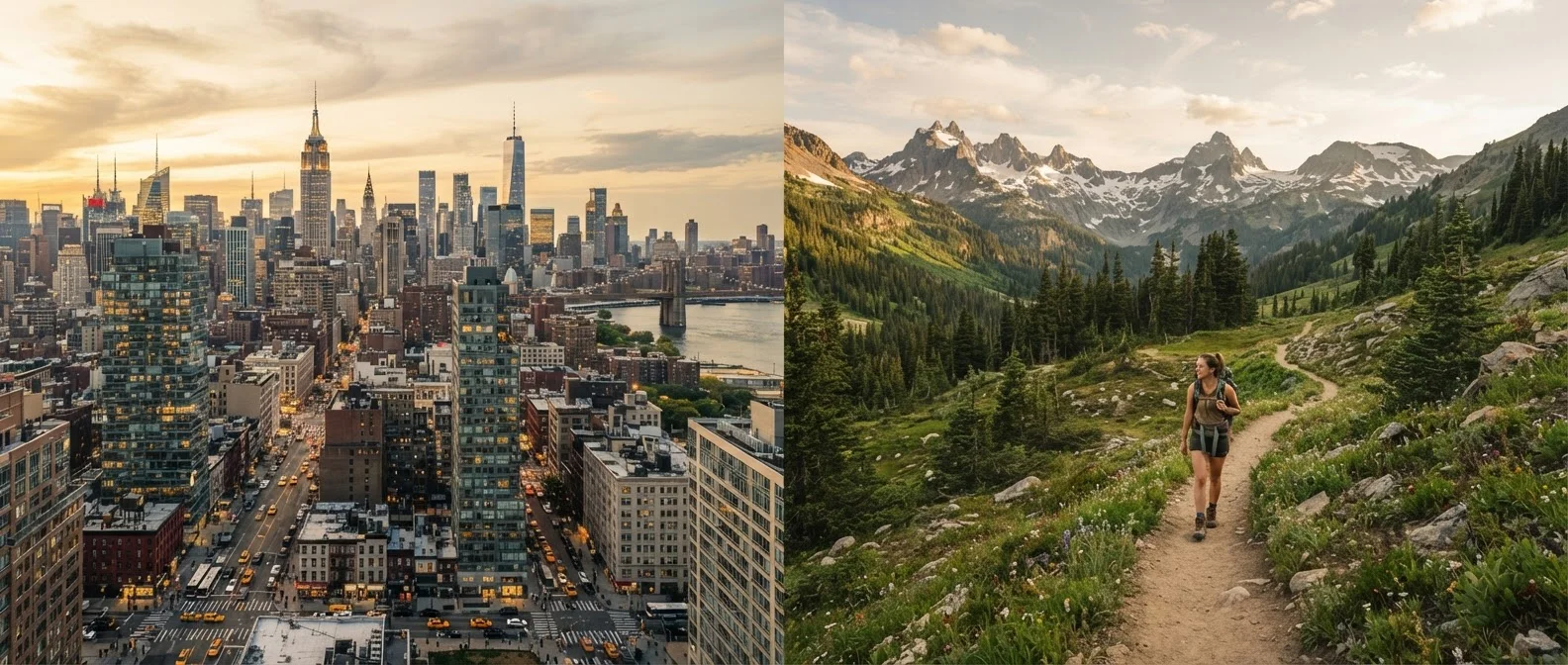
Urban travel and nature-based travel are not simply about scenery. They represent different relationships with time, comfort, and stimulation. A city trip typically means infrastructure at your fingertips: public transit, restaurants at every corner, and a schedule that bends around your interests. A nature trip strips some of that away, trading convenience for direct contact with landscapes that require a little more planning and physical effort to reach.
The distinction also shows up in pacing. City travelers often move fast, covering neighborhoods, institutions, and food scenes in a single day. Nature travelers tend to move slower, spending half a day on a single trail or watching weather roll across a mountain range. This comparison of city breaks versus slow travel in Europe explores how dramatically pace changes the character of a trip.
Neither pace is inherently relaxing or exhausting. Both can leave you drained or energized depending on what you were craving.
The case for urban travel
Cities compress an enormous amount of human activity into walkable distances. A traveler in Chicago, New Orleans, or Philadelphia can visit a world-class museum, eat regionally specific food, catch live music, and explore neighborhoods with distinct histories, all without a car. That density is genuinely hard to replicate in a rural or wilderness setting.
Cities also tend to be more forgiving for travelers with limited mobility, tight budgets, or a wide range of interests within one group. Public transit reduces costs and removes the logistics of renting a vehicle. Getting around an unfamiliar city's transit system is a learnable skill that pays off quickly once you arrive.
High density of attractions in a small area
Cities let travelers cover museums, historic sites, markets, and restaurants without long drives between stops. This suits travelers with limited vacation days.
Strong public transit reduces costs and logistics
Many American and international cities have transit systems that make car rental unnecessary, which lowers expenses and removes parking stress.
More accessible for travelers with mobility limitations
Urban environments generally have paved surfaces, elevators, and wheelchair-accessible attractions. Many nature sites involve unpaved or steep terrain.
Weather disruptions cause fewer trip-wrecking problems
A rainy day in a city opens doors to indoor alternatives. The same conditions can close trails, cancel boat tours, or make camping genuinely dangerous.
Easier to satisfy mixed-interest travel groups
Cities allow different travelers to split apart and pursue separate interests before regrouping, which reduces compromise and frustration in larger groups.
Weather disruptions affect city trips less severely than outdoor ones. A rainy afternoon in a city is an excuse to linger in a coffee shop or catch a show; the same afternoon on a camping trip is a real problem. For travelers who cannot afford to reschedule around conditions, that reliability matters.
The case for nature-based travel
What a city cannot offer is genuine quiet, physical scale, and the kind of scenery that requires no interpretation. Standing at the rim of the Grand Canyon, hiking through old-growth forest in the Pacific Northwest, or watching the Atlantic crash against a Maine coastline delivers something that no urban museum or rooftop bar can substitute. Comparing the Pacific Northwest and New England gives a useful picture of how dramatically two nature-focused American regions differ from each other.
Noise, crowds, and sensory overload are common
Urban environments are stimulating by design, which energizes some travelers and exhausts others. Busy tourist districts can feel relentless during peak periods.
Accommodation and dining costs tend to run higher
Central city hotels command premium prices, especially during events or holidays. Budget options exist but often require trading location for savings.
Nature access requires more planning and physical preparation
Popular parks and wilderness areas often require advance permit reservations, and reaching trailheads typically means renting a vehicle or booking a shuttle.
Seasonal conditions can close or degrade key experiences
Snow closes high-elevation trails, drought affects river trips, and heavy rain turns unpaved roads into obstacles. Timing a nature trip correctly requires research.
Limited infrastructure in remote areas raises safety considerations
Cell coverage, medical facilities, and emergency services are sparse in wilderness settings. Travelers with health conditions should plan accordingly and consult a physician before strenuous outdoor activity.
Nature-based destinations also tend to have stronger seasonal variation, which cuts both ways. Visiting the right place at the right time produces genuinely memorable conditions. Visiting at the wrong time means mud season, closed trails, or extreme heat. Understanding what travel seasons actually mean is worth reading before booking anything outdoors.
Practical factors that tip the decision
331M+
Annual visits to U.S. national parks
The National Park Service recorded over 331 million recreational visits across the national park system in 2023, indicating sustained demand for nature-based destinations.
Top 5
U.S. cities among global tourism destinations
New York, Los Angeles, Chicago, Miami, and San Francisco consistently appear among the most visited destinations in global tourism research, according to destination marketing organizations.
Group composition matters more than most travelers admit. A solo traveler can optimize entirely for their own preferences. A couple or family with mixed interests may find a city easier to navigate without conflict, since urban destinations allow people to split up and reunite. Solo travel versus group travel covers that dynamic honestly.
Budget shapes the choice too, though not in the direction people assume. Cities can be expensive, but budget accommodation and free public attractions make them accessible. Nature trips require gear, permits in some cases, and transportation to trailheads that are rarely served by transit. Choosing the right accommodation type is useful for either style.
If your schedule is rigid, a city usually absorbs last-minute changes more gracefully than a nature destination with limited permit windows or weather dependency. Last-minute trip planning realities explains where spontaneous travel tends to succeed and where it hits hard limits.