
Why geography matters before you book
Many travelers book a "Mediterranean trip" without realizing how much the region varies from one end to the other. A week in coastal Morocco feels nothing like a week in the South of France, even though both technically border the same sea. Understanding how the coast breaks down geographically helps you match your destination to your actual expectations around climate, cost, culture, and logistics.
The Mediterranean Sea stretches roughly 2,400 miles from east to west and touches parts of Europe, Asia, and Africa. No single trip covers all of it, and no single description fits all of it. When American travelers say they are going to "the Mediterranean," they usually mean somewhere in Southern Europe, but that still covers an enormous range of experiences.
Whether you are planning solo, as a couple, or with a group, geography shapes the decisions that are hardest to change after booking. See our guide to booking decisions that are hard to reverse for more on what to think through before you confirm anything.
The three main sub-regions for travelers
Travel writers and tour operators commonly divide the European-facing Mediterranean into three sub-regions, each with a distinct character.
Western Mediterranean
This stretch covers coastal Spain (including the Costa Brava and Costa del Sol), southern France (the Riviera and Languedoc), Italy's Tyrrhenian coast, and the islands of Sardinia, Corsica, and the Balearics (Mallorca, Ibiza, Menorca). Infrastructure for tourism is well-developed here. Prices in France and parts of northern Italy are among the highest in the region. Spain and Sardinia offer more mid-range options.
Central Mediterranean
This sub-region centers on southern Italy (including Sicily and the Amalfi Coast), Malta, and the waters between them. It has some of the region's most dramatic coastal scenery and a longer historical record of human settlement. Ferry and flight connections are generally reliable, though smaller islands can become isolated in winter.
Eastern Mediterranean
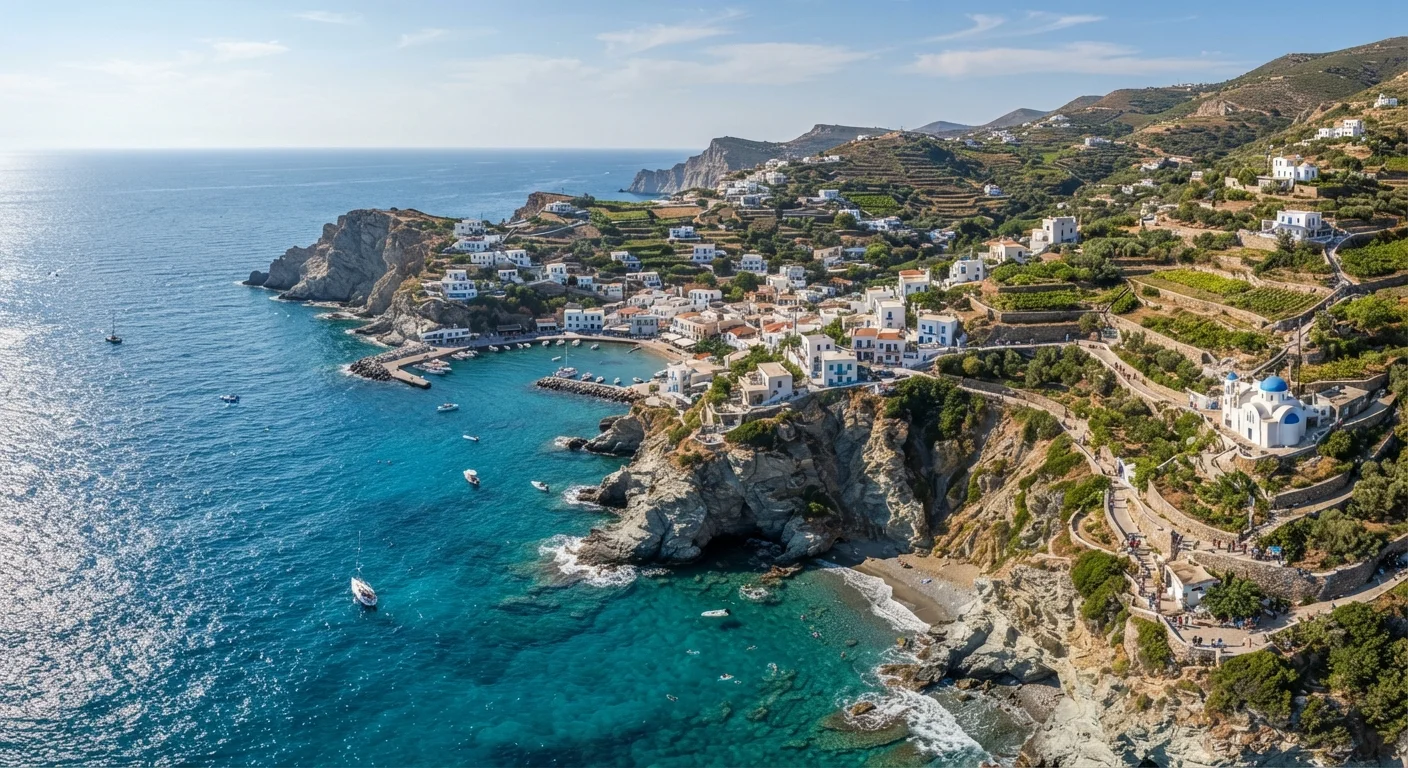
Greece (including hundreds of islands), Croatia, Montenegro, Turkey's Aegean and Anatolian coasts, Cyprus, and beyond make up this broad eastern arc. This is where budget-conscious American travelers often find more value. Greece and Croatia in particular attract large numbers of U.S. visitors each year. The cultural and culinary range is substantial across this sub-region alone.
21
Countries with Mediterranean coastline
The Mediterranean Sea borders nations across Europe, North Africa, and the Middle East.
~28,000 mi
Total Mediterranean coastline length
This figure includes mainland shores and the coastlines of major islands across the basin.
2,400 mi
East-to-west span of the Mediterranean Sea
The sea stretches from the Strait of Gibraltar in the west to the coast of Lebanon and Israel in the east.
Climate differences across the coast
The label "Mediterranean climate" describes a specific pattern: warm to hot, dry summers and mild, wetter winters. But the intensity of that pattern changes considerably depending on where you are.
The Western Mediterranean coast tends to be cooler in summer than the Eastern Mediterranean. Barcelona's coast sits at around 41 degrees north latitude, roughly the same as Chicago, which moderates extreme heat. Athens and coastal Turkey are further south and typically hotter in July and August. North African coastlines (Morocco, Tunisia) add yet more heat and aridity.
Altitude matters too. Many inland towns above the coastline, particularly in southern France, Tuscany, and Greece, are several degrees cooler than beach level. If heat is a concern, especially for travelers with young children or health sensitivities, geography affects your comfort as much as the calendar does.
For group trips where not everyone has the same heat tolerance, coordinating expectations early can prevent friction once you arrive.
Islands versus the mainland coast
The Mediterranean has thousands of islands, and for many travelers they represent the most appealing part of the region. But island destinations add a logistical layer that mainland coastal towns do not.
Getting to most Greek islands requires a domestic flight from Athens or a ferry, which adds time and booking complexity. The same applies to Sicily and Sardinia in Italy, the Balearics off Spain, and Croatia's Dalmatian islands. Ferry schedules are seasonal, and some smaller islands have no airport at all.
This matters for budget planning too. A ferry from Athens to Santorini or Mykonos costs less than a flight, but takes many hours. Fast ferries shorten the journey but cost more. Accommodation on smaller, well-known islands often carries a premium during peak summer months, so looking at lesser-known nearby islands is one way to manage costs without sacrificing the experience.
If you are drawn to a mix of city culture and coastal access, comparing a slower, longer stay in one area against fast city hopping is worth thinking through before you build an itinerary. Our article on city breaks versus slow travel in Europe covers those tradeoffs honestly.
Check ferry schedules before booking accommodation
Ferry routes to popular Mediterranean islands often run on reduced schedules outside of June through September. If your trip falls in shoulder season, confirm that the ferry connections you need are actually operating before you commit to island accommodation. Booking a refundable or flexible accommodation option gives you more room to adjust if schedules shift.
Matching geography to your travel style
Where you go on the Mediterranean coast should reflect what you actually want from the trip, not just which places appear most in travel photos.
If you want dense history and architecture with the coast nearby, Italy's Campania region (Naples, Pompeii, the Amalfi towns) or Istanbul's European shore gives you that combination. If open water, hiking, and quieter villages matter more, the Peloponnese peninsula in southern Greece or Corsica's interior-to-coast trails are worth considering. If you are drawn to cities, Barcelona, Nice, and Dubrovnik all sit directly on or near the water.
Urban and nature-based travel preferences often pull in different directions, and the Mediterranean has enough geography to satisfy both. Thinking through which you genuinely prefer before booking helps you avoid an itinerary that tries to do everything and delivers less of each. Our article on urban versus nature-based travel preferences can help clarify which style fits you.
Travel conditions, entry requirements, and local regulations change. Verify visa rules, health advisories, and transportation schedules with official government and provider sources before making any bookings.