Why most bags end up overstuffed
Overpacking almost always comes from the same place: packing for every possible scenario rather than the trip you are actually taking. A weekend city trip does not need five pairs of shoes. A beach week does not need three pairs of jeans. The bag fills up with insurance items, things you might want if the weather changes or plans shift, and duplicates of things available at your destination.
The fix is not willpower. It is a process. Working through a structured sequence before you touch your luggage produces a leaner, more useful bag every time. The steps below apply to any trip length or destination, whether you are heading abroad for two weeks or taking a domestic long weekend.
For the full picture on what to do before you ever zip the bag, see our pre-trip packing checklist. And if you are still deciding between carry-on and checked luggage, our carry-on versus checked luggage guide lays out the real trade-offs.
What you need before you start
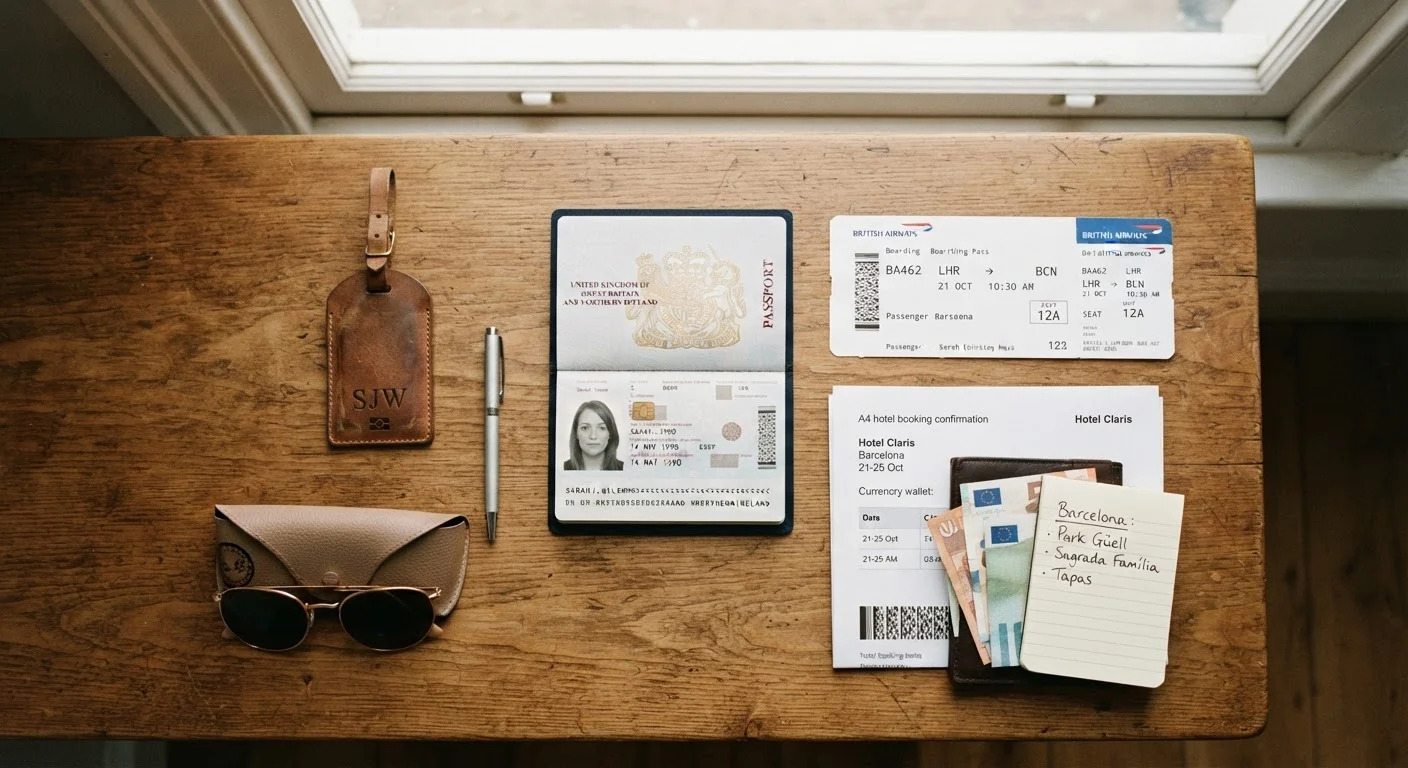
Gather these items before working through the steps below.
What you will need
Step-by-step: packing without the bulk
Follow these steps in order. Skipping ahead, especially to step three before finishing step two, is how bags get heavy.
Write your list before opening the bag
Start with paper or a notes app, not your closet. Write down every category relevant to your trip: clothing, footwear, toiletries, documents, electronics, medications, and any activity-specific gear. Under each category, list only what the trip actually calls for.
Once the list is written, cut it. Go through each item and ask whether you would genuinely miss it or whether it just feels reassuring to include. Items in the second group stay off the list.
Choose clothing that works in combinations
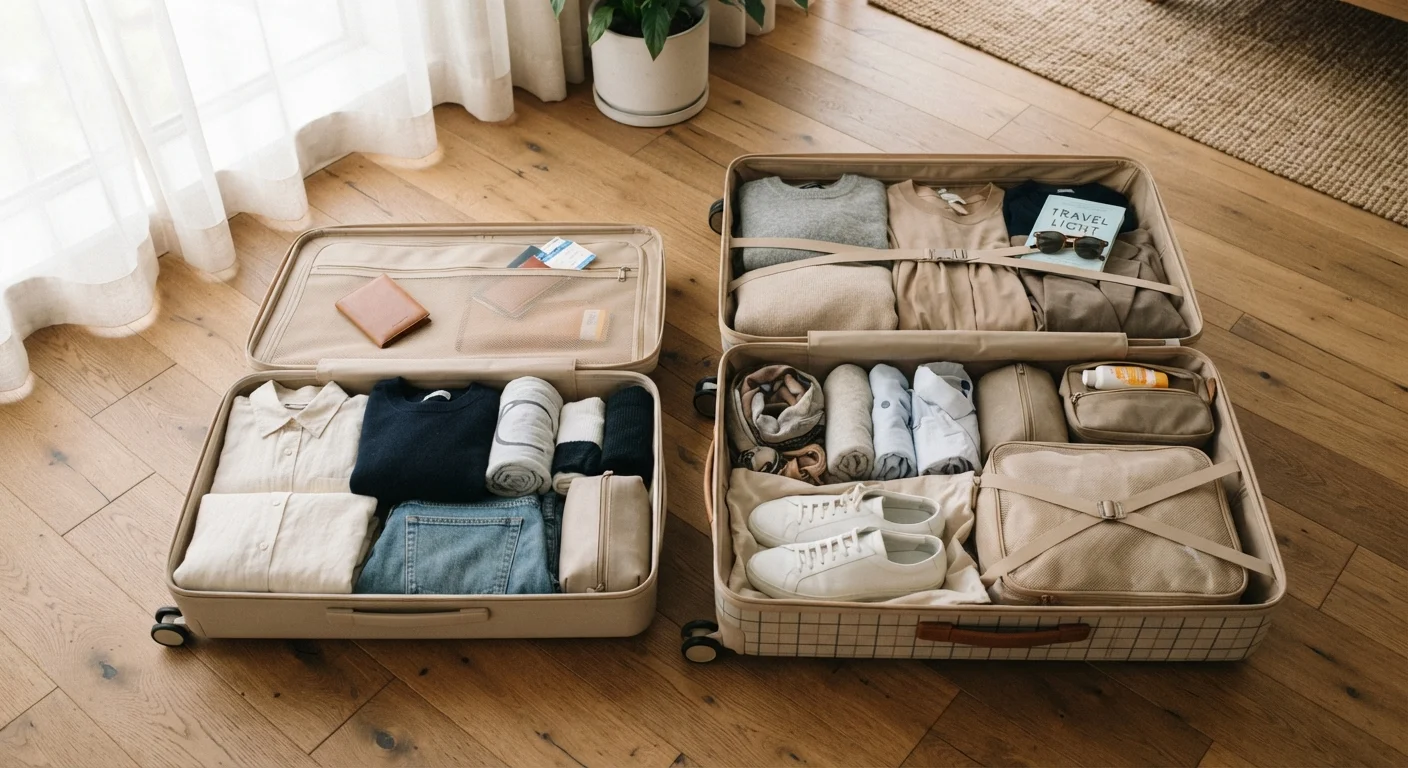
Lay out the clothes on your list before they go into the bag. Every top should pair with at least two bottoms. Every bottom should pair with at least two tops. If an item only works with one other thing, it probably does not earn its space.
Stick to two or three colors that work together so accessories and layers do double duty. One pair of comfortable walking shoes and one pair appropriate for nicer settings covers most trips without a third pair.
Pack using a logical system
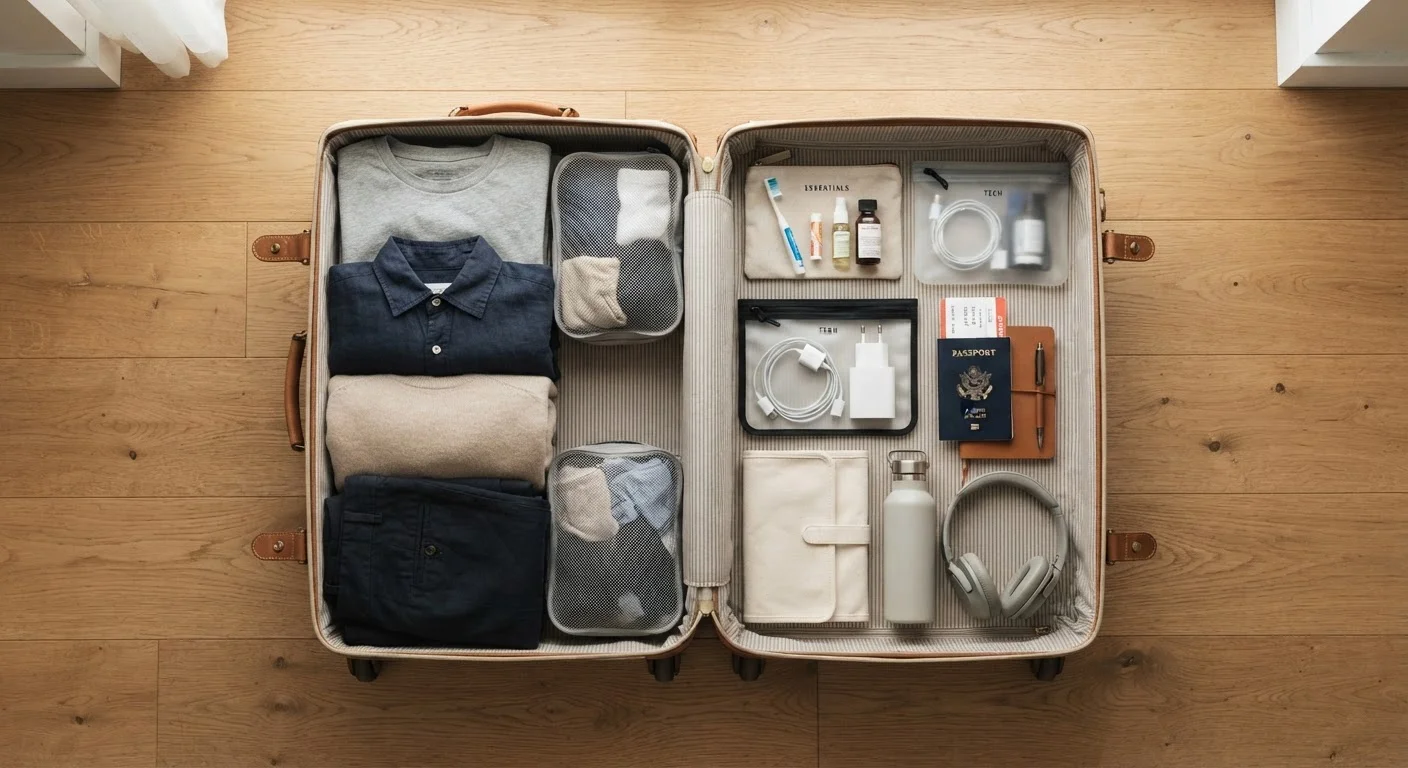
Packing cubes group clothing by type and compress it enough to reclaim real space. Shoes go in the corners or along the spine of the bag, soles facing outward to keep the rest of your items clean. Fill shoes with socks or small items so no interior space goes to waste.
Heavier items go closest to the wheels on a rolling bag, or closest to your back in a backpack. This keeps the bag stable and easier to carry. Liquids and toiletries go in a separate pouch so a leak stays contained.
Weigh the bag and adjust
Once everything is in, weigh the bag with a luggage scale or a bathroom scale before you leave home. Compare that number against your airline's weight limit. If you are over, do not try to redistribute weight between bags first: remove items.
Start with the heaviest things you could buy or borrow at the destination, then remove any item that appears twice. Most travelers find at least one category where they packed a backup that turned out to be unnecessary.
Do a final walkthrough 24 hours before departure
The day before you leave, open the bag and check it against your original list. Confirm that documents, medications, and any items with hard-to-replace originals are packed and accessible. Chargers and cables are the most common last-minute omission: check them specifically.
For international trips, this is also the time to confirm your device settings, offline maps, and any travel documentation are in order. Our international trip planning guide covers the full pre-departure sequence if you want a complete checklist.
The one-week rule for clothing
For trips longer than a week, plan to do laundry rather than pack more clothes. Most destinations have laundromats, hotel laundry service, or hand-washing options. Packing for one week and washing once or twice is almost always lighter than packing for two weeks straight.
Common trouble spots
Toiletries and electronics are where most bags gain unnecessary weight. For toiletries, many hotels and rentals supply shampoo, conditioner, and body wash. Carrying full-size bottles of things available at your destination adds bulk with no real benefit. Use travel-size containers for anything you genuinely cannot buy on the road.
Electronics deserve the same discipline. Bring the charger and cable for what you will actually use, not every adapter you own. Before you leave, sort out offline maps, roaming settings, and backup access so you are not scrambling at the destination. Our device prep checklist covers exactly what to handle before departure.
Medications need their own space and a bit of extra planning. If you carry prescription or over-the-counter medications, documentation and storage rules matter, particularly for international travel. Our guide on traveling with medications covers the specifics.
For destination-specific packing ideas, the destinations hub has guides that factor in local climate, customs, and typical activities. General packing and travel advice lives in our travel tips hub.