How each transmission type works
An automatic transmission uses a torque converter, a set of planetary gear sets, and hydraulic clutch packs to change gears without driver input. The system depends entirely on pressurized transmission fluid (ATF) to transfer power, cool internal components, and actuate gear changes. That makes the fluid itself both a lubricant and a hydraulic medium, which is why its condition matters so much.
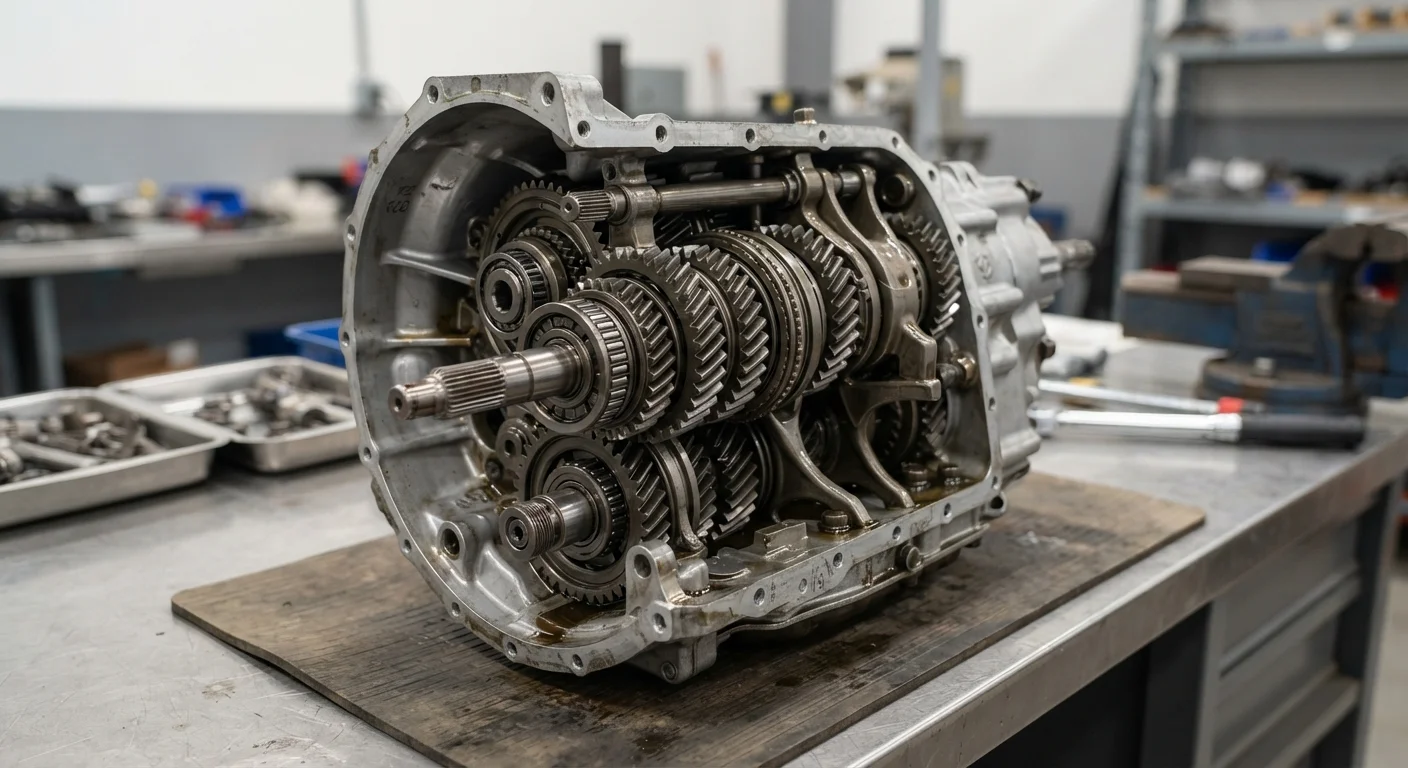
A manual transmission uses a driver-operated clutch to disengage the engine from the gearbox, allowing the driver to select gears via a shift lever. The internal gears, bearings, and synchronizers run in a gear oil bath, but the hydraulic complexity found in automatics is absent. The clutch assembly, located between the engine and the gearbox, is a separate wear item entirely.
Understanding this mechanical difference explains why the two systems have different maintenance profiles. It is not simply about fluid changes on different schedules; the failure modes and wear patterns diverge as well. See common maintenance intervals for a broader look at how transmission service fits into a full vehicle schedule.
Fluid service: intervals and fluid types
Automatic transmission fluid should typically be changed every 30,000 to 60,000 miles under normal driving conditions, though some manufacturers specify longer intervals for vehicles using newer synthetic ATF. The fluid in an automatic transmission operates under significant heat stress from the torque converter and clutch pack friction. Over time, it oxidizes, loses viscosity, and accumulates fine metallic particles from normal wear. Burnt or dark brown fluid is a sign the service interval has been missed.
Manual transmission fluid (gear oil) has a somewhat different job. It lubricates gears, bearings, and synchronizers, but it does not cycle through a hydraulic circuit under the same thermal load. Service intervals commonly fall between 30,000 and 45,000 miles, though some manufacturers set longer windows for vehicles using full synthetic gear oil. The fluid can still degrade or become contaminated with metal shavings, particularly in high-mileage transmissions with worn synchronizers.
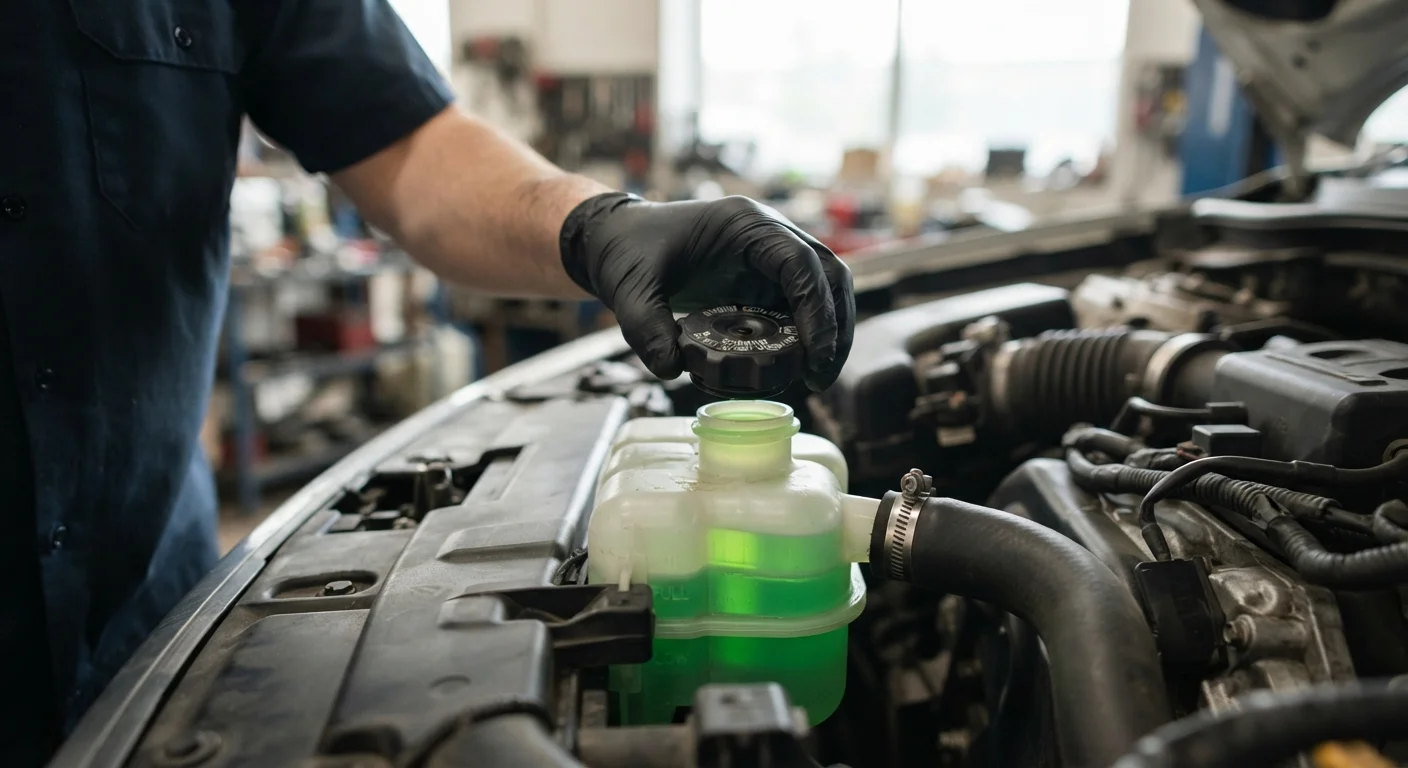
Both fluid types should be checked for color and consistency at least once a year. How to check your car's fluids covers where to find each reservoir and what healthy fluid looks like.
| Criterion | Automatic | Manual |
|---|---|---|
| Typical fluid change interval | 30,000 to 60,000 miles | 30,000 to 45,000 miles |
| Fluid type | ATF (hydraulic and lubricating) | Gear oil (lubricating only) |
| Separate wear item | Transmission filter | Clutch assembly |
| Common failure symptoms | Slipping, shuddering, delayed shift | Grinding shifts, clutch slip |
| Fluid service cost (general) | Moderate to high | Lower |
| Repair complexity | High (hydraulic, electronic) | Moderate (mechanical) |
Wear patterns and common service needs
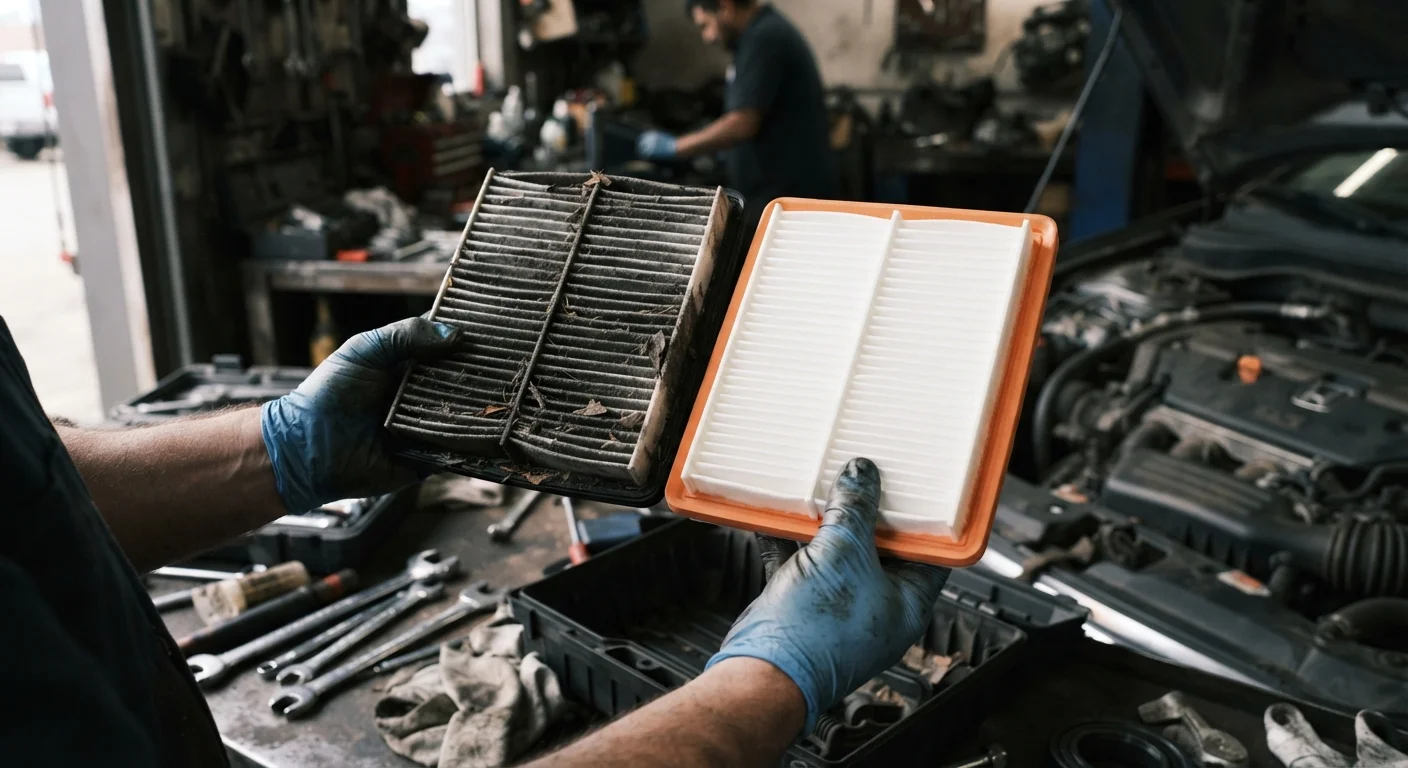
Automatic transmissions can develop solenoid failures, worn clutch packs, and torque converter problems, most of which produce specific symptoms: delayed engagement when shifting from park to drive, slipping between gears, or shuddering at highway speeds. A transmission filter, typically changed alongside the fluid, prevents debris from circulating through the hydraulic system. Some sealed automatic units do not have a serviceable external filter, so checking your owner's manual before assuming a filter change is included is worth the few minutes it takes.
Manual transmissions wear differently. The synchronizers, which allow smooth gear engagement, degrade over time and produce grinding when shifting into specific gears. The clutch disc, pressure plate, and flywheel wear with every engagement and are typically replaced as a set. Clutch life varies widely depending on driving habits: aggressive city driving or frequent towing shortens clutch life considerably compared to steady highway use. A clutch job is a more involved repair than a fluid change, and for most drivers it should be handled by a qualified mechanic.
For drivers focused on long-term reliability, maintenance habits that keep cars running past 150,000 miles address transmission care as part of a complete ownership routine.
Signs that your transmission needs attention
For automatics, watch for hesitation or a jolt when the transmission shifts gears, slipping (where the engine revs but vehicle speed does not increase proportionally), fluid leaks under the car, or a warning light on the dashboard. A burning smell after highway driving can indicate overheated fluid.
For manuals, difficulty getting into gear, a grinding or crunching sensation during shifts, a clutch pedal that feels spongy or sits unusually high or low, and noisy operation in neutral are the main signals. A clutch that slips, meaning the engine revs climb without a matching increase in speed, is nearing the end of its service life.
In both cases, catching the problem early avoids more extensive damage. A full transmission rebuild or replacement is one of the larger repair bills a vehicle can generate. The Car Ownership hub covers more on managing ownership costs across a vehicle's life.