Why intervals matter more than intuition
Most drivers know maintenance matters, but many rely on guesswork about when to act. The problem is that modern engines are engineered to tolerate neglect up to a point, and that tolerance creates a false sense of security. By the time a problem becomes audible or visible, internal wear has often already accumulated.
Manufacturer-specified intervals exist because engineers test components under real operating conditions. Those numbers reflect the point at which a fluid, filter, or part typically reaches the end of its useful life under normal driving. Ignoring them is not a neutral choice. As our article on what happens inside an engine when maintenance is deferred explains, cumulative damage from skipped service tends to compound over time.
The intervals below represent general guidance. Always cross-reference with your owner's manual, which contains a schedule calibrated for your specific engine and drivetrain. If you need help reading that schedule, see our guide to understanding your vehicle's maintenance schedule.
Common maintenance tasks and their typical intervals
The table below covers the most common service items. Intervals can shift based on driving conditions: frequent short trips, towing, dusty environments, or extreme temperatures all accelerate wear.
| Service item | Typical interval | Notes |
|---|---|---|
| Engine oil and filter | 5,000 to 10,000 miles (conventional); 7,500 to 15,000 miles (full synthetic) | Check your manual; older rules of 3,000 miles apply to few modern vehicles |
| Tire rotation | Every 5,000 to 7,500 miles | Often aligned with oil changes for convenience |
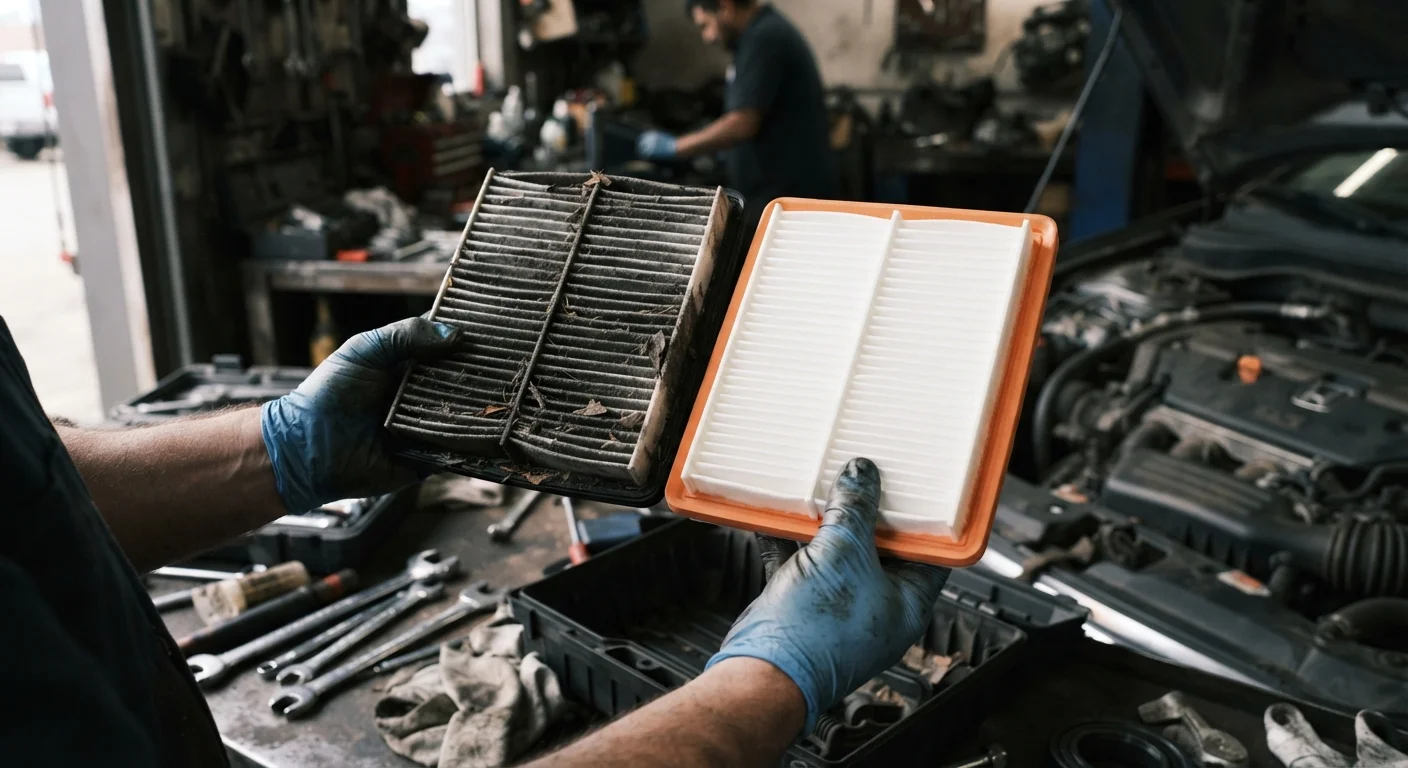
| Cabin air filter | Every 15,000 to 25,000 miles | More frequent in dusty or high-pollen areas |
| Engine air filter | Every 15,000 to 30,000 miles | Inspect annually; replace sooner if visibly dirty |
| Brake fluid | Every 2 years or 30,000 miles | Absorbs moisture over time, reducing boiling point |
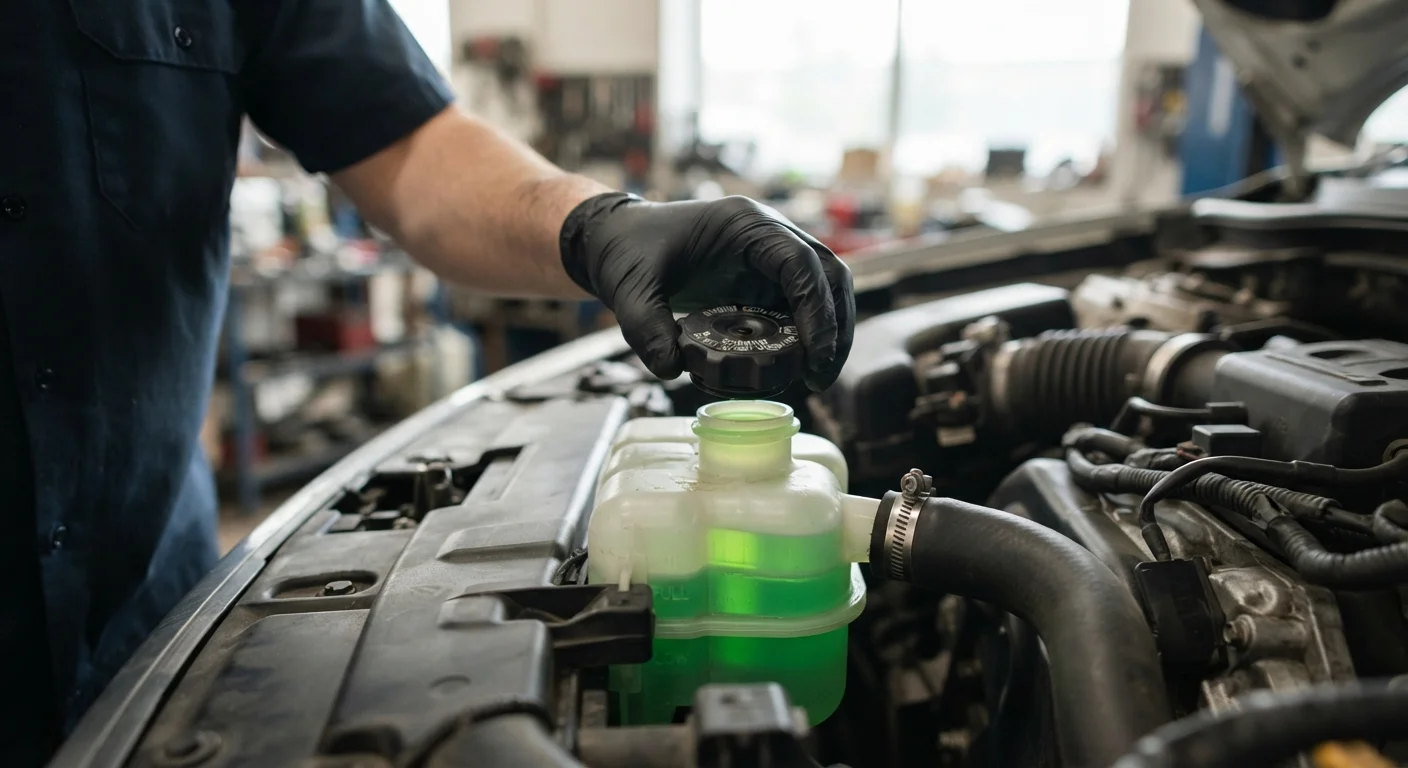
| Coolant flush | Every 30,000 to 50,000 miles (conventional); up to 150,000 miles (long-life) | Depends heavily on coolant type; verify with manual |
| Transmission fluid | Every 30,000 to 60,000 miles (conventional); 60,000 to 100,000 miles (CVT/automatic) | Some manufacturers label certain fills as lifetime; many mechanics dispute that claim |
| Spark plugs | Every 30,000 miles (copper); 60,000 to 100,000 miles (iridium/platinum) | Worn plugs reduce fuel efficiency and can stress the ignition coil |
| Timing belt | Every 60,000 to 100,000 miles | Failure can cause severe engine damage; chains last longer but still require inspection |
| Battery | Every 3 to 5 years | Test annually after year 3; heat accelerates degradation in warm climates |
| Wiper blades | Every 6 to 12 months | Replace sooner if streaking; safety item, not cosmetic |
| Brake pads | Every 25,000 to 65,000 miles | Wide range based on driving style, pad material, and brake use |
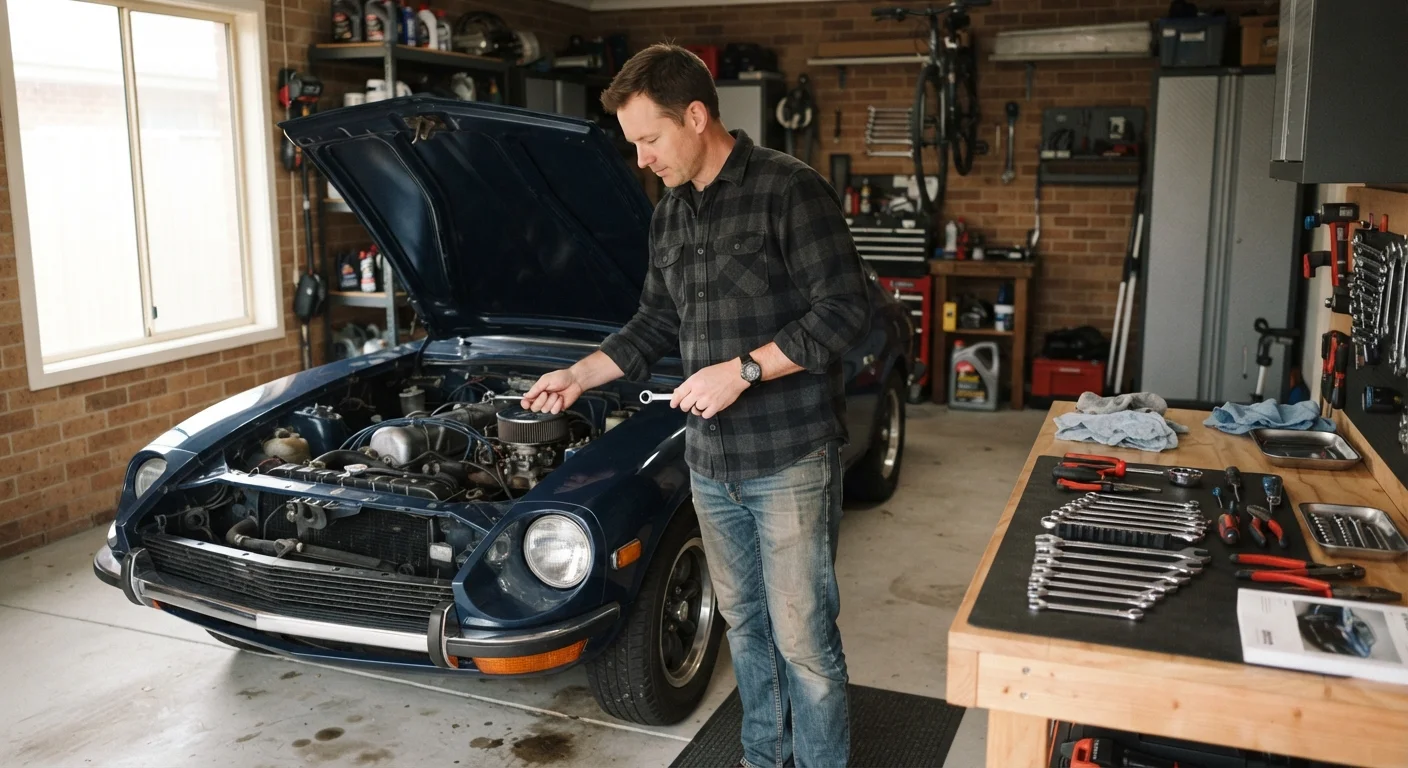
For a practical look at which of these tasks a careful home mechanic can handle and which require professional equipment, see our breakdown of DIY maintenance versus taking it to a mechanic.
Factors that shorten intervals
Vehicle manufacturers publish two schedules: normal and severe service. Severe does not mean unusual. Many everyday drivers qualify for it without realizing it.
- Frequent trips under 5 miles, especially in cold weather, prevent the engine from fully warming up, which leaves condensation in the oil and accelerates breakdown
- Towing or hauling heavy loads stresses the transmission, brakes, and cooling system more than highway cruising
- Stop-and-go city driving increases brake pad wear and generates more engine heat cycles than steady highway travel
- Driving in dusty or sandy conditions clogs air and cabin filters faster than the standard interval assumes
- Extreme heat or extreme cold affects battery capacity and fluid viscosity, shortening useful service life
If any of these conditions describe your regular driving, reduce intervals by roughly 20 to 25 percent from the standard recommendation, or consult a qualified mechanic for guidance specific to your vehicle and climate.
Staying on top of these items is one of the core habits covered in our article on keeping vehicle ownership costs from spiraling. The cost of a scheduled oil change or filter replacement is consistently lower than the repair that follows from skipping it.
Building a personal maintenance log
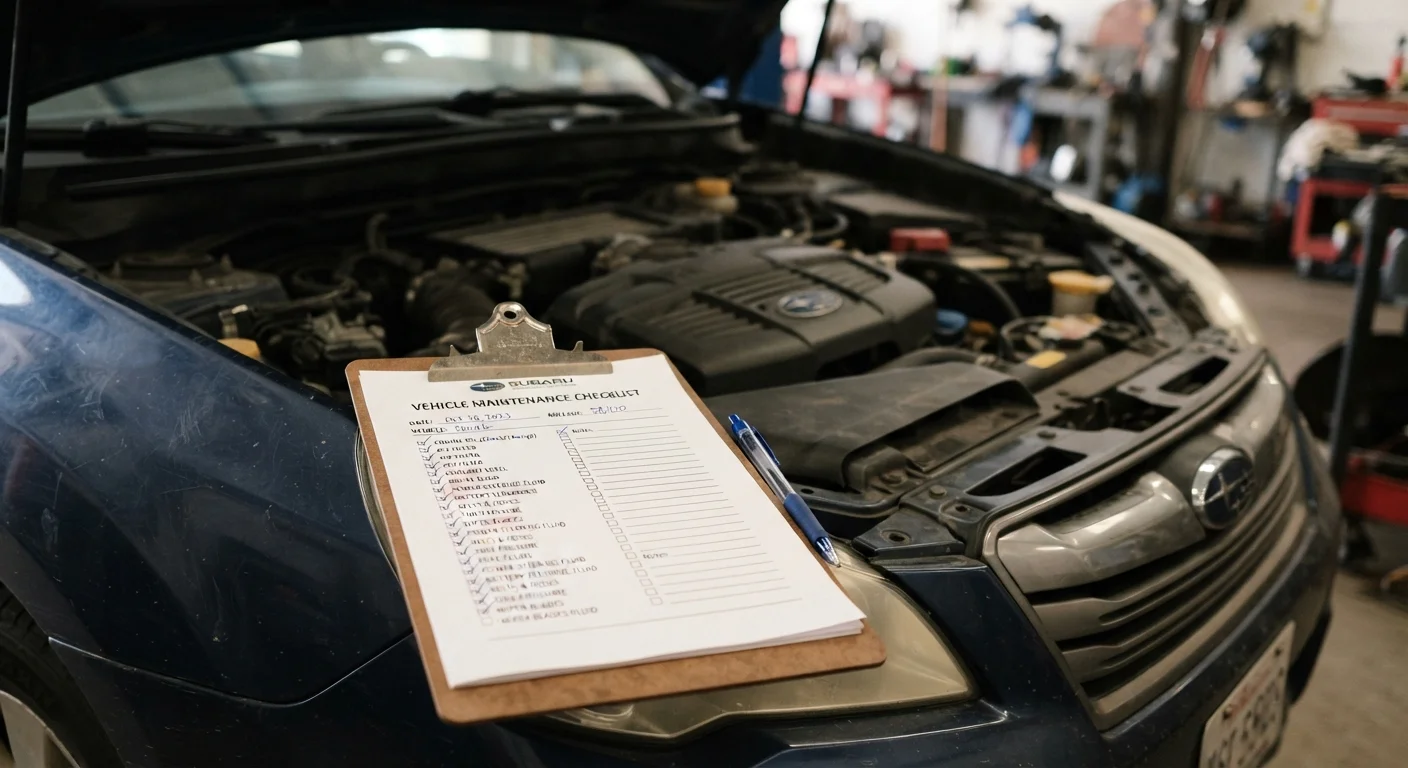
A written or digital log of every service performed, with dates and odometer readings, gives you two advantages. First, it prevents duplicate or missed services when multiple people drive the same vehicle. Second, it documents care history, which matters if you sell the car or need to make a warranty claim.
At minimum, record the service type, date, mileage, and who performed the work. Keep receipts. If a shop provides a multi-point inspection printout, file it with the receipt.
Drivers aiming to keep a vehicle well past 100,000 miles benefit most from this habit. Our article on maintenance habits that add years to any vehicle goes deeper into what high-mileage owners do differently. And if you reach a point where repair costs start outweighing the vehicle's value, our article on when to repair versus replace an aging car can help you evaluate that decision clearly.
Severe service
A manufacturer-defined driving category covering conditions that accelerate component wear, such as frequent short trips, towing, dusty environments, or extreme temperatures. Vehicles that qualify require shorter service intervals than the standard schedule.
Transmission fluid
A lubricant that cools and protects the internal components of a transmission. It degrades over time and, if not replaced, can cause slipping, rough shifts, or transmission failure.
Timing belt
A rubber belt that synchronizes the rotation of the engine's camshaft and crankshaft. If it breaks, pistons and valves can collide, causing severe internal engine damage. Some engines use a metal chain instead.
Coolant flush
A service that drains old engine coolant, cleans the cooling system, and refills it with fresh fluid. Over time, coolant loses its anti-corrosion properties and can allow rust or scale buildup inside the engine.
Cabin air filter
A filter that cleans air entering the passenger compartment through the heating and ventilation system. A clogged filter reduces airflow and can allow dust and allergens into the cabin.
Brake fluid
A hydraulic fluid that transfers force from the brake pedal to the brake calipers. It absorbs moisture from the air over time, which lowers its boiling point and can reduce braking effectiveness under heavy use.