
What actually kills a car battery
Battery failure is not usually a sudden event. It builds over months through a combination of chemical wear, incomplete recharging, and electrical drain. Understanding what accelerates that process helps drivers catch problems early.
The most common culprit is heat. High temperatures speed up the chemical reactions inside a lead-acid battery, which increases internal corrosion and water loss from the electrolyte. Batteries in warm-climate states like Arizona and Florida often fail well before the 3-year mark for this reason.
Cold weather is hard on batteries for a different reason. Low temperatures reduce the chemical activity inside the battery, which cuts its ability to deliver current. A battery that starts a car fine at 70 degrees Fahrenheit may not have enough power to turn the engine over at 10 degrees. Cold itself does not destroy the battery, but it exposes existing weakness.
Parasitic drain is another major cause of failure. This is the slow draw of power from systems left active when the engine is off: interior lights, phone chargers, outdated factory accessories, or aftermarket electronics wired without a proper fuse. A healthy battery can tolerate a small parasitic draw for a night, but repeated deep discharges shorten its life significantly.
Short-trip driving is more damaging than most drivers realize. Every engine start draws a large burst of current. The alternator recharges the battery while the engine runs, but a five-minute commute does not give it enough run time. Over weeks, this cycle leaves the battery in a chronically undercharged state, which accelerates sulfation, a process where lead sulfate crystals form on the battery plates and permanently reduce capacity.
Check battery age before winter
The manufacture date is printed on a sticker on most batteries, usually as a month and year code. If your battery is approaching 3 years old heading into cold weather, have it load-tested before temperatures drop. A battery that is borderline in October is much more likely to fail in January.
How to test battery condition before problems start
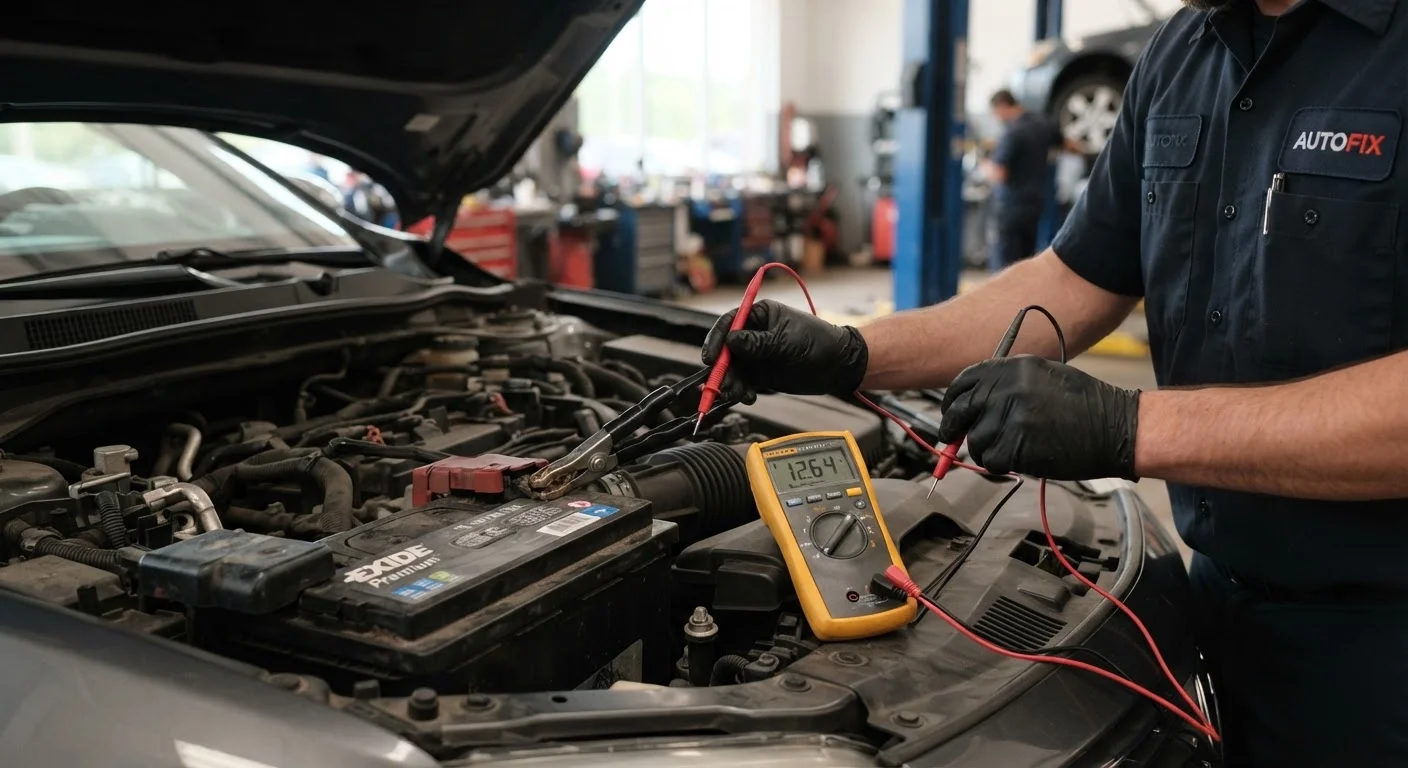
Testing a battery is straightforward and does not require specialized equipment for a basic check. A digital multimeter set to DC voltage will do the job at home.
With the engine fully off and the vehicle sitting for at least two hours, connect the multimeter's red lead to the positive terminal and the black lead to the negative terminal. A fully charged, healthy battery reads approximately 12.6 volts. A reading between 12.2 and 12.4 volts suggests a partial charge. Anything below 12.0 volts at rest points to a battery that is either deeply discharged or degraded.
A resting voltage test only tells part of the story. A battery can read 12.6 volts and still fail under the load of an engine crank. A load test, which applies a controlled current draw and measures how far the voltage drops, gives a much clearer picture of real-world health. Most auto parts stores offer free load testing, and a qualified mechanic can perform one during a routine service visit.
As part of a broader maintenance routine, battery condition is worth checking at least once a year on vehicles older than two years. See how battery checks fit into your overall service schedule in our vehicle maintenance schedule guide.
Habits that extend battery life
Several driving and maintenance habits have a real effect on how long a battery lasts.
- Take longer drives periodically if most trips are short. A 20- to 30-minute highway drive gives the alternator time to fully recharge the battery.
- Turn off all lights and accessories before shutting the engine off. Interior lights left on overnight are a common cause of dead batteries in the morning.
- Keep battery terminals clean. White or blue-green corrosion on the terminals increases electrical resistance and reduces charging efficiency. A wire brush and a baking soda and water solution can clean corroded terminals safely; wear gloves and eye protection when doing so.
- Have the charging system checked when the battery is replaced. A faulty alternator or voltage regulator can undercharge or overcharge a new battery and shorten its life prematurely.
For drivers who park a vehicle for weeks at a time, a battery maintainer (sometimes called a trickle charger) keeps the battery at full charge without overcharging it. This is particularly worth considering for seasonal vehicles or second cars driven infrequently.
These habits connect to a broader philosophy of ownership covered in long-term car ownership maintenance habits: consistent, low-effort attention prevents the large, inconvenient failures.
When to replace the battery and what to expect
There is no fixed date at which a battery must be replaced, but most manufacturers use a 3-to-5-year window as a general guideline. Batteries older than 3 years deserve closer attention, particularly heading into winter or summer when demand is highest.
Signs that replacement is likely overdue include a slow engine crank on startup, repeated need for jump-starts, a battery warning light on the dashboard, and visible swelling or cracking of the battery case. Swelling, in particular, can indicate internal damage and the battery should be assessed by a mechanic promptly.
Battery replacement is one of the more straightforward automotive tasks, though it does involve working near corrosive material and stored electrical energy. Drivers who prefer to handle it themselves should consult their owner's manual first, as some vehicles require a computer reset after battery replacement to maintain settings for the engine management system, power windows, and radio. When in doubt, a professional installation is the safer choice.
Being prepared for a battery failure is also worth planning ahead. A set of jumper cables or a portable jump starter in the car can turn a stranded situation into a minor inconvenience. For a full list of what to keep on hand, the roadside emergency kit essentials guide covers the basics.
3 to 5 years
Typical car battery lifespan
AAA research has consistently placed average battery life in this range, with significant variation based on climate and usage patterns.
1 in 5
Roadside calls attributed to battery failure
Battery-related breakdowns are among the most common reasons drivers call for roadside assistance, according to AAA data.
12.6 V
Resting voltage of a fully charged battery
A healthy 12-volt lead-acid battery at rest should read approximately 12.6 volts; readings below 12.2 V suggest reduced charge or degradation.