Why a roadside kit belongs in every vehicle
Flat tires, dead batteries, and overheated engines are among the most common reasons drivers end up stranded. None of them announce themselves in advance. The difference between a manageable inconvenience and a genuinely hazardous situation often comes down to what is already in the car when something goes wrong.
A roadside emergency kit does not need to be elaborate. The goal is to handle the most likely problems, stay visible to passing traffic, and stay comfortable until help arrives. If you are planning a longer drive, pairing your kit with a thorough pre-trip vehicle safety check reduces the odds of needing it at all.
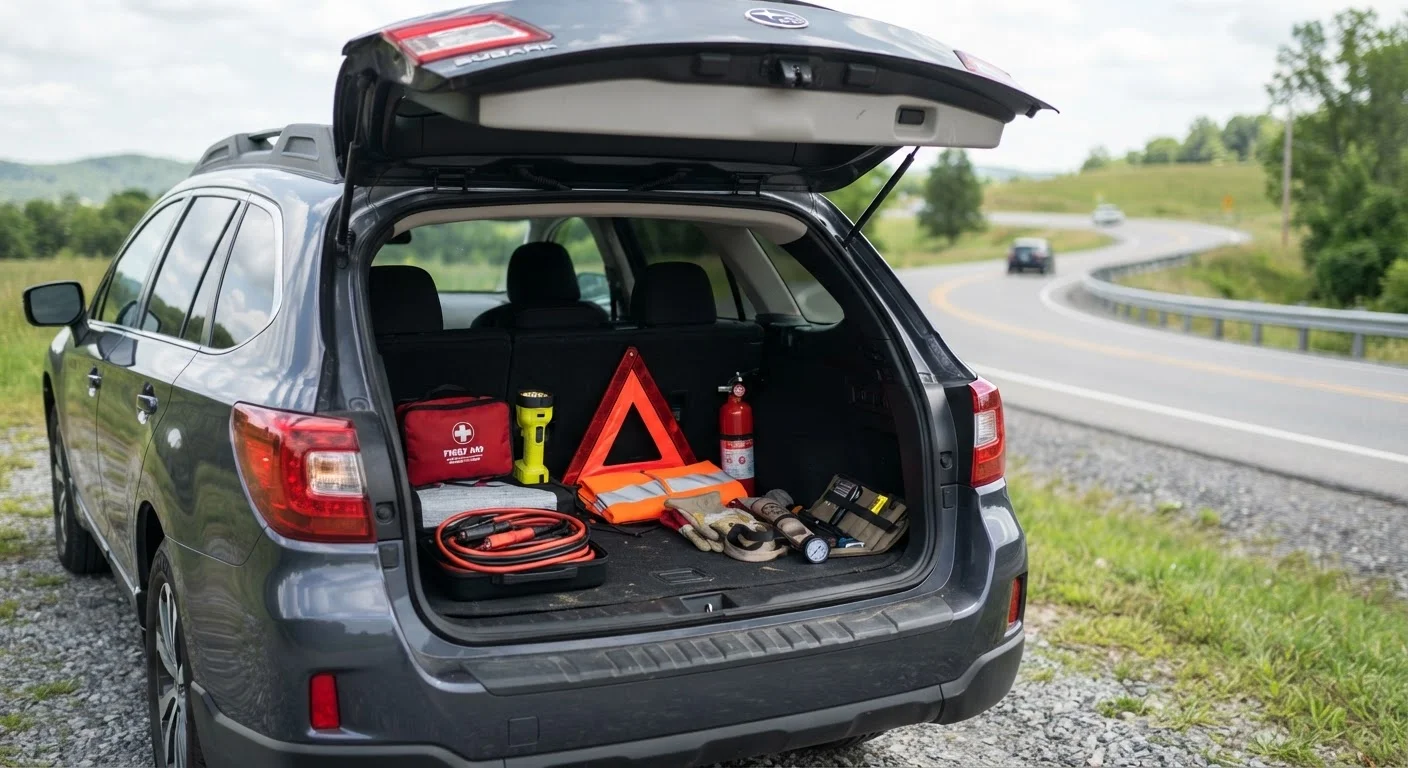
Below are the items worth carrying in any passenger vehicle, along with why each one earns its space.
Jumper cables or a portable jump starter
A dead battery is the single most common roadside breakdown. Jumper cables require a second vehicle with a working battery, so a portable lithium jump starter pack is often more practical. Modern jump starters are compact enough to fit in a glove compartment and can restart most passenger vehicles multiple times on a single charge.
If you carry cables, choose a set at least 12 feet long with heavy-gauge copper clamps. Shorter or thinner cables lose charge over the connection distance and may not work reliably.
A dead battery is the single most common roadside breakdown.
Reflective triangles or LED road flares
Visibility is the first safety concern when you are stopped on or near a roadway. Reflective warning triangles should be placed behind the vehicle at intervals to alert approaching drivers before they close the distance. LED road flares are more visible in rain and fog and do not require batteries in the same way traditional flares do.
Avoid open-flame emergency flares near any vehicle with a fuel leak. Reflective triangles or LED alternatives carry no ignition risk and can be reused indefinitely.
Visibility is the first safety concern when stopped near a roadway.
A properly inflated spare tire, jack, and lug wrench
Many newer vehicles come with a compact spare (sometimes called a donut spare) rather than a full-size tire. These are designed for limited use at reduced speeds, typically no more than 50 mph and for short distances. Check your owner's manual for the specific restrictions on your spare.
The jack and lug wrench should already be in the vehicle from the factory, but it is worth confirming they are there and that you know where they are stored. Practicing a tire change in a driveway, before you need to do it on a dark shoulder, is time well spent.
Know where your jack and wrench are stored before you need them.
Flashlight with fresh batteries (or a hand-crank model)
A flashlight serves multiple purposes: illuminating the area while you work, signaling to other drivers, and reading under the hood. Keep a dedicated flashlight in the kit rather than relying on a phone. Phone flashlights drain battery life you may need to call for help.
A hand-crank or solar-charged flashlight eliminates the dead-battery risk entirely. If you use a battery-powered model, replace the batteries annually regardless of whether they have been used.
Keep a dedicated flashlight in the kit rather than relying on a phone.
First aid kit
A compact first aid kit handles minor injuries that can occur during a breakdown, from cuts on sharp metal edges to blisters from walking for help. A basic kit should include adhesive bandages in multiple sizes, gauze pads, antiseptic wipes, medical tape, and disposable gloves.
Check expiration dates on antiseptics and any medications included. Most items have a shelf life of two to three years. Replace expired contents rather than assuming they will still work when needed.
Check expiration dates on antiseptic wipes and any included medications.
Basic tools and a tire pressure gauge
A small toolkit with adjustable pliers, a flathead and Phillips screwdriver, zip ties, and duct tape covers a wide range of minor mechanical fixes. A tire pressure gauge lets you check whether a slow leak has made a tire unsafe to drive on, which is information worth having before you attempt to drive to a service station.
Keeping tires at the correct pressure also reduces wear and improves fuel efficiency over time. Consistent tire care is one of the more straightforward ways to extend a vehicle's useful life.
A tire pressure gauge tells you whether a slow leak has made driving unsafe.
Water, a mylar blanket, and a phone charger
Waiting for roadside assistance in summer heat or winter cold introduces a physical comfort dimension that is easy to overlook when assembling a kit. A few sealed water bottles, rotated regularly so they do not freeze and burst, address dehydration during a long wait. A mylar emergency blanket folds to the size of a deck of cards and retains body heat in cold conditions.
A car phone charger, whether a 12-volt adapter or a small power bank, keeps your phone functional for calls and navigation. Without a working phone, the rest of the kit is harder to use effectively.
A mylar blanket folds to the size of a deck of cards and retains body heat.
Putting your kit together
Store everything in a durable, water-resistant bag or bin in the trunk. Loose items rattle, get lost, and are harder to locate in the dark or rain. A labeled container means you, and anyone else who drives your car, can find what is needed quickly.
Seasonal adjustments worth making
In winter, add an ice scraper, a small snow brush, and a bag of sand or kitty litter for traction if you get stuck. In summer, add extra water and sunscreen, particularly if you drive in areas with limited cell service or sparse traffic. Adjust the kit when you rotate your tires each season so it becomes part of the same routine.
Check the kit at least twice a year, when clocks change is a convenient trigger. Swap out expired items in the first aid kit, replace any batteries, and verify that the spare tire is properly inflated. Battery failure is one of the leading causes of breakdowns, so the condition of your jumper cables or jump starter pack deserves attention at the same time.
For anyone who drives regularly or takes longer trips, the road trip planning process is also a good prompt to review what is in the car before departing.