What a maintenance schedule actually is
A maintenance schedule is a list of services your vehicle's manufacturer has determined are necessary to keep it running safely and reliably. It is not a upsell tool or a suggestion. Engineers design it based on how components wear under normal operating conditions, what fluids degrade over time, and where mechanical failures are most likely to start.
Every schedule covers two axes: mileage and time. A coolant flush might be specified at 60,000 miles or five years, whichever comes first. That dual trigger exists because driving habits vary. A low-mileage driver who rarely leaves town still experiences fluid degradation simply from the passage of time.
Your schedule lives in your owner's manual. If you do not have a manual, the automaker's website usually publishes the same information, and most dealers can print a copy. For a broader look at which tasks appear most commonly and why intervals differ, see the car maintenance intervals reference.
Maintenance schedule
A manufacturer-specified list of services and the mileage or time intervals at which they should be performed on a particular vehicle.
Severe driving conditions
Operating patterns that put extra stress on a vehicle, such as frequent short trips, stop-and-go traffic, towing, or extreme temperatures. These conditions shorten the useful life of fluids and components.
Service interval
The mileage or time period between required maintenance tasks. Most intervals specify whichever limit arrives first.
Service record
A documented history of maintenance performed on a vehicle, including dates, mileage, and the work completed. Used to verify upkeep and support warranty claims.
Fluid degradation
The gradual breakdown of engine oil, coolant, brake fluid, and other vehicle fluids over time and use, reducing their ability to protect and lubricate components.
How to read your owner's manual schedule
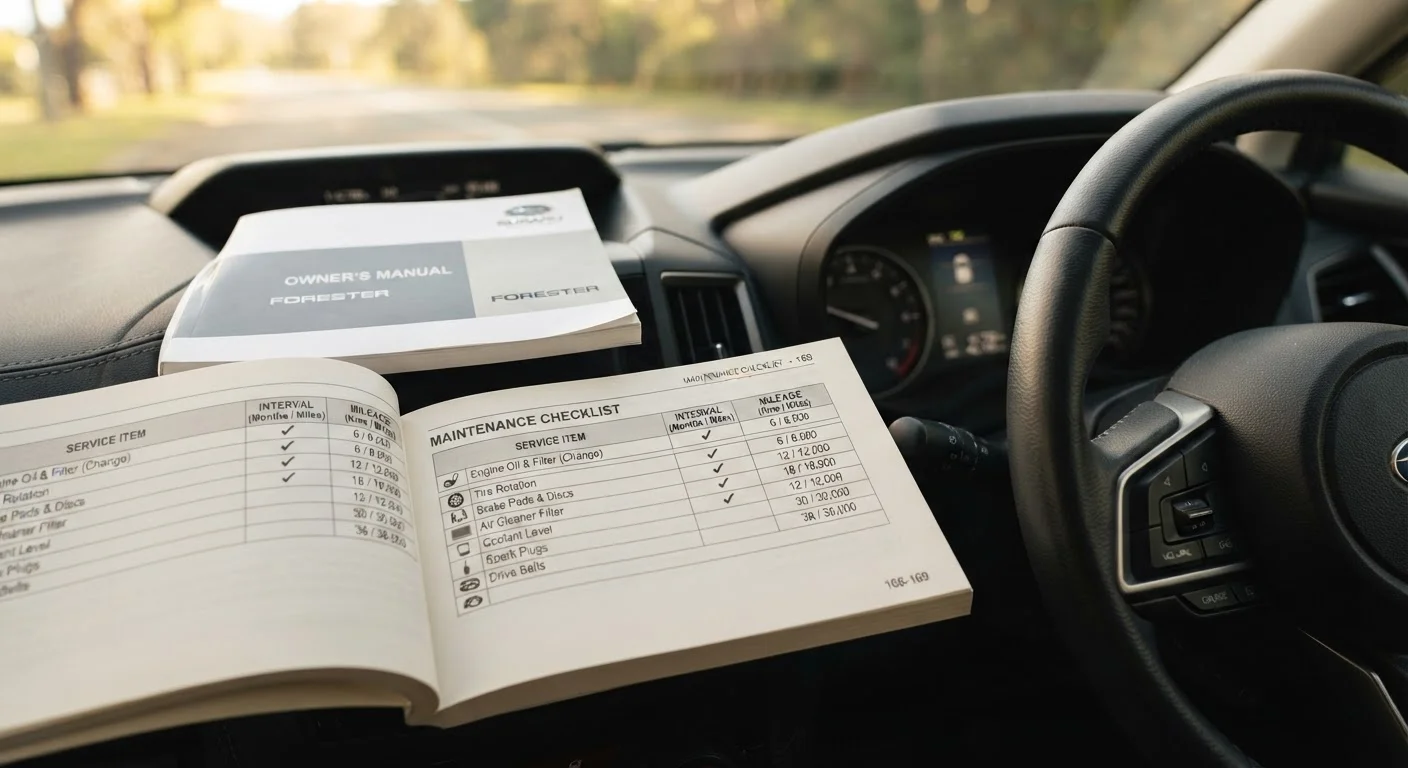
Manufacturer schedules are usually formatted as tables. Rows list individual services, columns represent mileage or time milestones, and check marks or bullets indicate when each service is due. Some manuals use two separate tables: one for normal conditions and one for severe conditions.
Read every column header carefully before drawing conclusions. A check mark at 30,000 miles does not always mean the task repeats at 60,000 and 90,000. Some services appear only once; others repeat at every interval. When in doubt, read the footnotes. Manufacturers often include important exceptions there, such as different intervals for turbocharged engines or vehicles operated in specific climates.
Oil change intervals are a common point of confusion. Many drivers still follow the outdated 3,000-mile rule, but most modern engines specify longer intervals. For a detailed explanation, see the guide on oil change intervals.
Normal vs. severe driving conditions
Most owner's manuals define two operating profiles. The normal schedule assumes highway-dominant driving in moderate temperatures with no towing. The severe schedule applies when your driving pattern puts extra stress on fluids and components.
Severe conditions include: frequent trips shorter than five miles (the engine never fully warms up), stop-and-go city driving, towing or hauling heavy loads regularly, operating in extreme heat or cold, and driving frequently on dusty or unpaved roads. A driver who commutes five miles each way in a city probably qualifies for the severe schedule even if the word "severe" sounds extreme for routine errands.
If you are uncertain which category fits, apply the severe schedule. The cost difference between the two is modest, and the protection is real. Your driving habits also interact directly with tire wear and braking wear, topics covered in the guide to safe driving habits that reduce vehicle wear.
Tracking your service history
A maintenance log does two things: it tells you what is due next, and it documents the car's history for anyone who buys it later. Buyers and dealers regularly use service records to assess a used vehicle's condition, and a complete log can support warranty claims if a dispute arises.
The simplest approach is a small notebook kept in the glove box. After each service, write the date, the odometer reading, what was done, and where. Many repair shops provide printed receipts that contain all of this information. Store those receipts somewhere permanent.
For used-car purchases, request whatever records the seller has and note the current mileage when you take ownership. You cannot change what happened before you owned the car, but you can start a clean record immediately. The guide on long-term car ownership maintenance habits covers how consistent documentation supports reliability over high mileage.
Use a photo for receipts you might lose
After each service visit, photograph the receipt and store the image in a dedicated folder on your phone or cloud storage. Paper receipts fade and tear over years, but a digital record stays legible. This takes about 30 seconds and can save significant headaches during a warranty dispute or resale.
What happens when you skip services
Deferred maintenance rarely produces a dramatic failure on the day a service was due. Engines do not seize the moment an oil change is overdue by a week. The damage is cumulative: worn fluid loses its protective properties gradually, gaskets dry out slowly, and small deposits build up over thousands of miles.
The practical consequence is that repair costs tend to be much higher than the preventive service would have been. A neglected transmission fluid interval can eventually require a full rebuild rather than a simple fluid exchange. A battery that goes untested can leave a driver stranded without warning. For a clear look at how neglect progresses mechanically, see what happens inside an engine when maintenance is deferred.
Some tasks also carry safety implications beyond cost. Brake fluid absorbs moisture over time, which lowers its boiling point and reduces braking performance under heavy use. Worn wiper blades reduce visibility in rain. Following the schedule is less about protecting resale value than about keeping the vehicle safe to drive. For questions about which tasks you can handle yourself versus those that require a professional, the DIY vs. mechanic guide is a practical next step.