
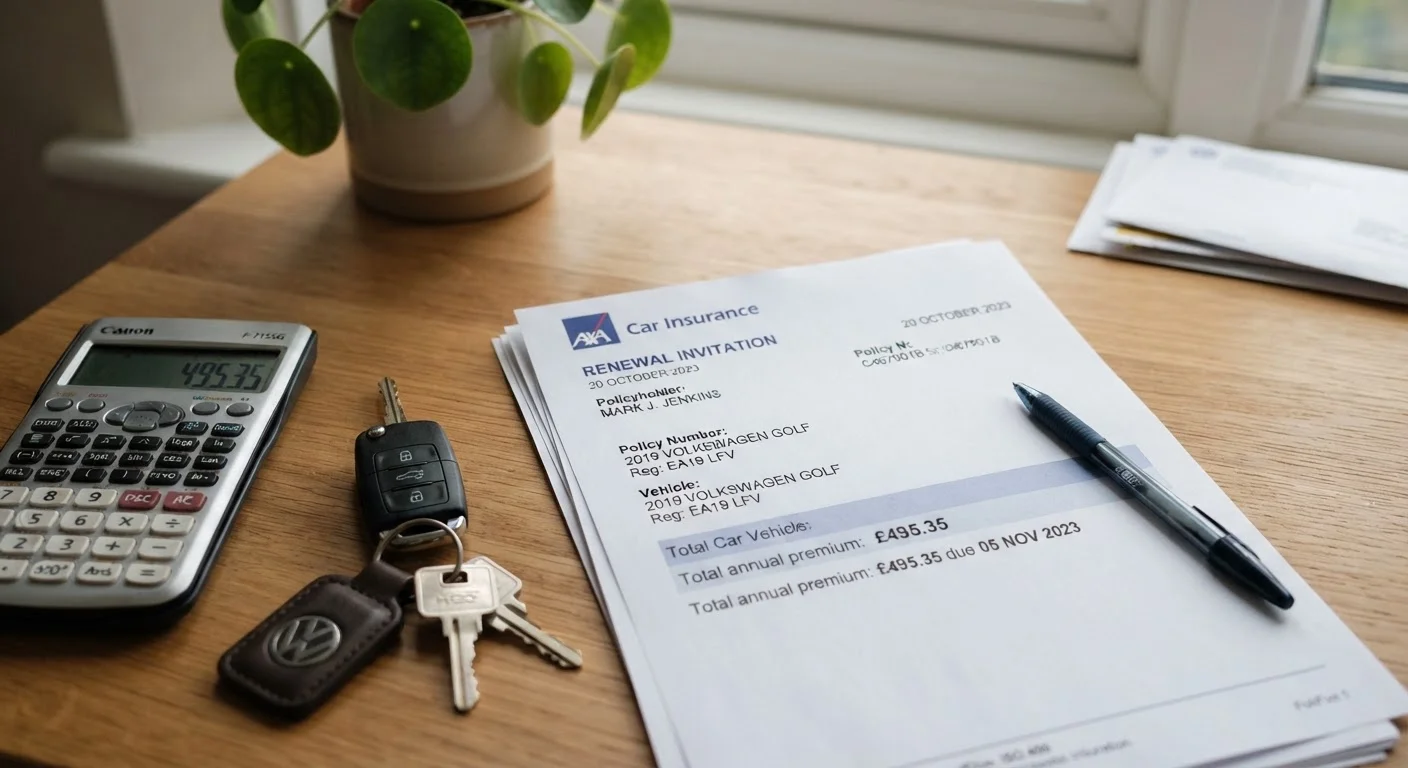
How insurers set your premium
Car insurance pricing is built around risk prediction. Before issuing a policy, an insurer reviews a combination of personal factors, vehicle details, and geographic data to estimate how likely you are to file a claim and how expensive that claim might be. The resulting premium is not arbitrary; it reflects that specific calculation at a specific point in time.
Common factors in that calculation include your driving record, age, the vehicle's make and model, annual mileage, where the car is garaged, and, in most states, a credit-based insurance score. Because any of these inputs can change, the premium can change too, even between identical policy terms.
To understand the full picture of what your policy actually covers, see our guide to reading your car insurance policy, which walks through declarations pages, deductibles, and coverage limits in plain language.
The most common reasons premiums go up
At-fault accidents and traffic violations. An at-fault accident or a serious moving violation tells the insurer that the risk level it priced originally was too low. Rates typically rise at the next renewal and can stay elevated for three to five years.
Adding a driver. A teenage driver or a household member with a poor record added to your policy increases the insurer's exposure substantially. Young drivers, in particular, carry statistically higher accident rates, which is reflected directly in the premium.
Moving. Your zip code matters. Dense urban areas with high theft rates, frequent accidents, or costly repair labor markets produce higher premiums. Moving to a new city or state triggers a full recalculation of your rate.
Market-wide cost increases. When repair costs, parts prices, or medical costs rise across the board, insurers reprice all policies to keep pace. A driver with a clean record in the same city can still see a higher renewal quote because the cost of the average claim in that area went up.
Coverage or vehicle changes. Financing a new car usually means adding comprehensive and collision coverage. Switching to a more expensive vehicle raises the cost to replace or repair it, which lifts the premium.
3 to 5 years
Typical period an at-fault accident affects your rate
The exact window varies by insurer and state law, but most at-fault accidents influence renewal pricing for this range before aging off the record.
Varies by zip code
Premium difference within the same state
The National Association of Insurance Commissioners has documented that premiums for the same coverage can vary significantly based on local claims data, even within a single metropolitan area.
What you can do at renewal
Renewal is the clearest opportunity to act. Start by reviewing the renewal declaration page carefully to see exactly what changed and by how much. Insurers are required to notify you of rate changes before renewal, and that notice should itemize the factors behind any increase.
Comparing quotes from other insurers is one of the most direct checks on whether your current rate is competitive. Prices for the same coverage can differ substantially between companies for the same driver profile, so this step has real value even if you ultimately stay with your current insurer.
Adjusting your deductible is another lever. A higher deductible reduces your premium, but it also means you pay more out of pocket when you file a claim. Make sure any deductible you choose is an amount you can realistically cover.
Ask your insurer which discounts you currently receive and which you might qualify for. Common categories include bundling home and auto policies, low annual mileage, completing a defensive driving course, and having certain vehicle safety features.
For a broader view of how insurance fits into overall ownership costs, see our breakdown of total vehicle ownership costs.
Time your comparison shopping well
Start comparing quotes at least three to four weeks before your renewal date. This gives you enough time to review options, ask questions about coverage differences, and avoid a lapse in coverage if you decide to switch. A lapse, even a brief one, can itself raise your rate with a new insurer.
Coverage decisions that affect your rate long-term
Dropping coverage to cut costs carries real financial consequences. Removing comprehensive or collision coverage on a vehicle you still owe money on, for example, can conflict with your lender's requirements and leave you exposed to a large out-of-pocket loss. If your vehicle was financed and is totaled, gap insurance may also be relevant, since it covers the difference between what you owe and what the car is worth at the time of the loss.
Your driving record is the factor with the longest-term effect on your premium. Keeping a clean record consistently, over multiple years, typically produces lower rates at renewal across most insurers. Completing a defensive-driving course, where your insurer offers a discount for it, can also contribute. For broader practices that help manage ownership costs over time, our article on controlling vehicle ownership costs covers the topic in detail.
This article is for general informational purposes only and is not financial or insurance advice. Coverage requirements and pricing rules vary by state. Consult a licensed insurance professional for guidance specific to your situation.