
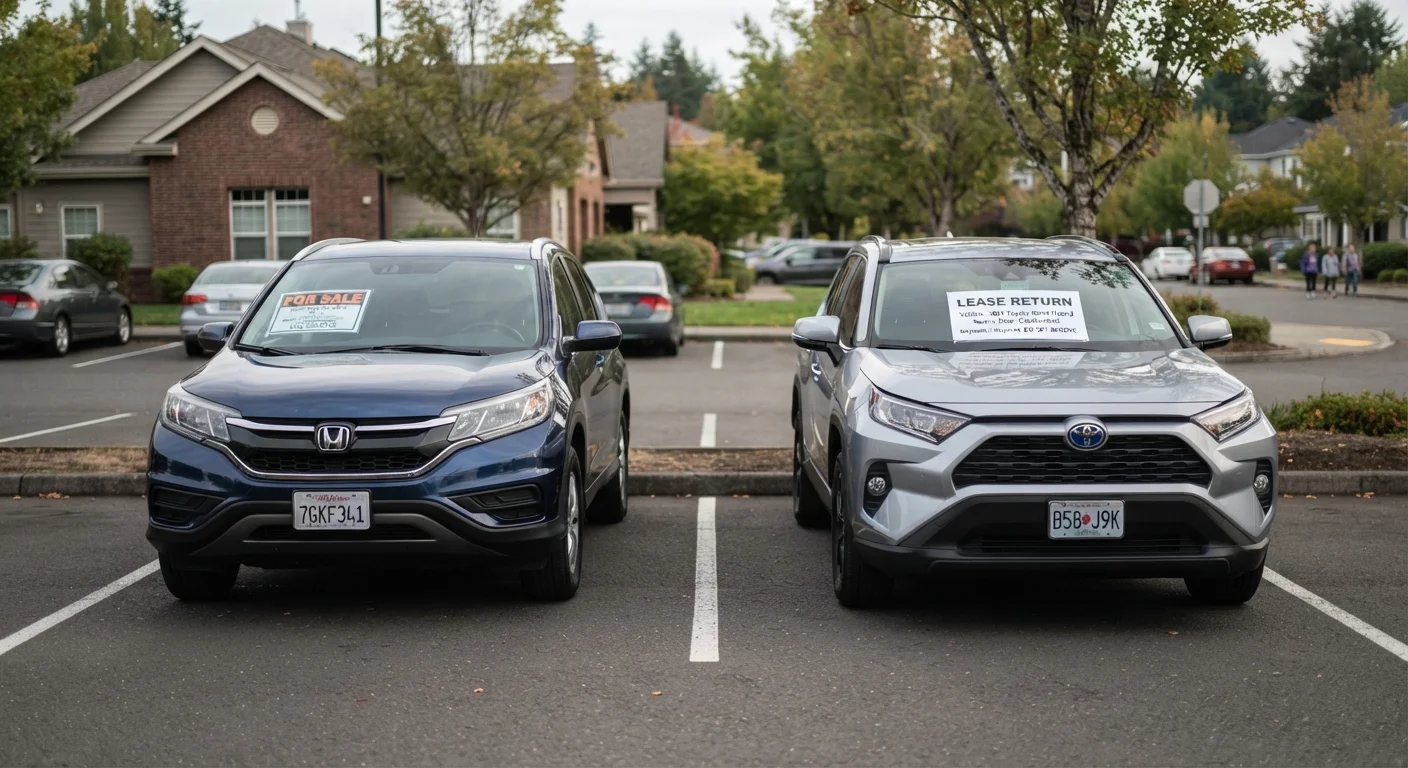
How each arrangement actually works
When you buy a car, you either pay the full purchase price upfront or finance it through an auto loan. Once any loan is paid off, you own the vehicle free and clear. You can drive it as long as you want, sell it, trade it in, or modify it. For more on how loan terms affect what you pay, see this breakdown of auto loan interest rates and terms.
Leasing works differently. You are paying for the right to use a vehicle for a set period, typically two to four years, and for a capped number of miles. At the end of the lease, you return the car to the dealer. You have no ownership stake in the vehicle. Some leases include a purchase option, letting you buy the car at a predetermined residual value, but most lessees simply hand the keys back and move to the next lease or switch arrangements.
The monthly cost difference between the two stems from what is being financed. A loan payment covers the full value of the vehicle plus interest. A lease payment covers only the vehicle's depreciation during the lease term plus fees and a finance charge called the money factor. This is why lease payments tend to run lower for the same vehicle.
The equity question
Ownership builds equity, which is simply the portion of the vehicle's value that belongs to you after subtracting what you owe. As you pay down a loan, equity grows. When you sell or trade in the car, that equity can offset the cost of the next vehicle.
Leasing produces no equity. Every payment goes toward usage, not ownership. After three years of lease payments, you walk away with nothing to show in terms of asset value. For drivers who cycle into a new lease immediately, this can feel invisible because the lower monthly payment compensates psychologically, but over a lifetime of car use, the total outflow tends to be higher than it would be for someone who buys and holds.
That said, depreciation hits hardest in the first few years of a vehicle's life. A buyer financing a new car absorbs that depreciation loss on paper even while building equity. New versus used vehicle ownership math covers this depreciation dynamic in more detail.
| Buying outright | Leasing | |
|---|---|---|
| Monthly payment | Higher (covers full vehicle value) | Lower (covers depreciation only) |
| Ownership at end of term | Yes, full ownership | No, vehicle is returned |
| Equity built | Yes, grows with each payment | None |
| Mileage limits | None | Typically 10,000-15,000 miles/year |
| Ability to modify vehicle | Yes, at owner's discretion | No, modifications not permitted |
| Early exit flexibility | Can sell or trade at any time | Early termination fees apply |
| Long-term cost (7+ years) | Generally lower | Generally higher (ongoing payments) |
| Wear and condition charges | None | Charged for excess wear at return |
Mileage limits and flexibility
Mileage caps are one of the most consequential lease terms. Standard lease agreements set annual limits of 10,000, 12,000, or 15,000 miles. Driving beyond the cap triggers per-mile overage fees, commonly $0.15 to $0.25 per mile. A driver who exceeds the limit by 5,000 miles can owe $750 to $1,250 at lease end, which partially erases the monthly payment savings.
Owners face no such restriction. You can drive as many miles as your lifestyle requires, which matters for those with long commutes, frequent road trips, or rural driving patterns.
Flexibility goes beyond mileage. An owner can sell the car privately, trade it in early, or keep it well past its warranty. A lessee who needs to exit a lease before term ends typically faces early termination fees that can be substantial. Some third-party lease-transfer services exist, but the process is not always straightforward. If your circumstances change, ownership offers more options.
Costs beyond the monthly payment
Insurance requirements differ. Lenders and lessors both require comprehensive and collision coverage, so active financing of either kind keeps insurance costs similar. Once a loan is paid off, an owner can choose to reduce coverage on an older vehicle, potentially lowering premiums. A lessee never reaches that point during the lease period.
Maintenance obligations also vary. Most leases coincide with the manufacturer's warranty period, so major repairs are covered. An owner keeping a vehicle beyond the warranty window takes on repair risk. How large that risk becomes depends heavily on the vehicle and how well it is maintained. The car maintenance hub covers the practices that reduce that risk over time.
Lease agreements typically require the car be returned in good condition. Wear beyond what the contract defines as normal, a cracked windshield, interior damage, or curbed wheels, results in end-of-lease charges. Owners face no such inspection.
For a broader picture of what car ownership actually costs across the life of a vehicle, this total cost breakdown goes through fuel, insurance, maintenance, taxes, and depreciation together.
Which arrangement fits which driver
Buying makes the most financial sense for drivers who plan to keep a vehicle for seven or more years. The loan payment disappears, and the car continues to provide transportation without the ongoing cost of a new agreement. That payment-free period is where ownership delivers its clearest long-term value.
Leasing works better for drivers who genuinely prefer driving a newer vehicle every two to three years, stay within mileage limits, and want costs to remain predictable inside the warranty window. It also suits situations where a vehicle is used primarily for business and the lease payments are deductible as a business expense, though a tax professional should confirm how that applies to any individual situation.
Common misconceptions about car ownership costs include the belief that leasing is always cheaper. The monthly number is lower, but the absence of equity and the indefinite nature of lease payments mean lifetime costs often run higher. Drivers should compare total outlay across a realistic time horizon, not just the monthly figures.
This article is for general informational purposes only and does not constitute financial or legal advice. Consult a qualified financial professional for guidance specific to your situation.