Where blind spots are located on a vehicle
Most drivers think of blind spots as two zones directly behind each shoulder. The reality is more spread out. A typical passenger car has at least four areas where mirror coverage fails.
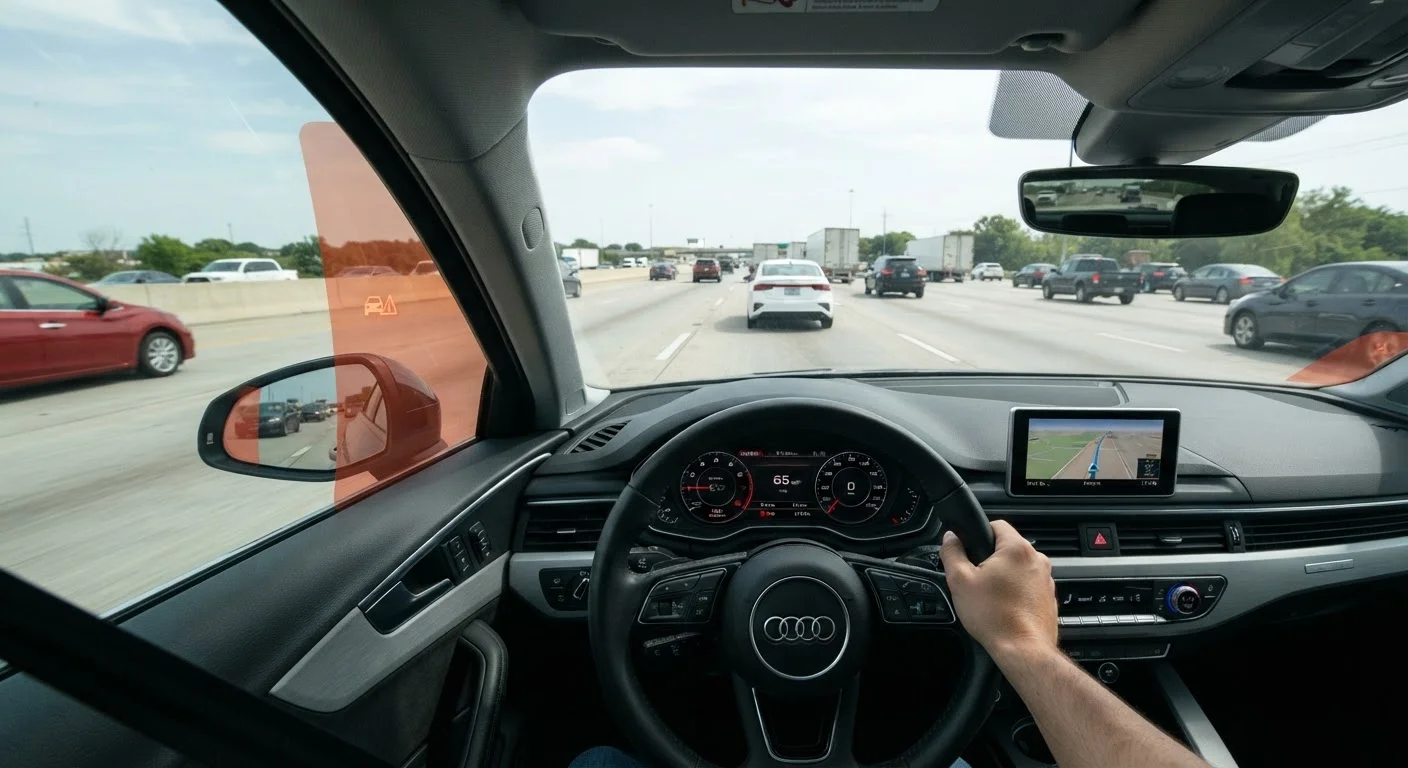
The rear quarter zones are the largest. These sit diagonally behind each rear corner of the car, roughly at the 7 o'clock and 5 o'clock positions relative to the driver. A vehicle traveling alongside yours in an adjacent lane can sit entirely within one of these zones.
The front blind spot is directly ahead of the hood at close range. This matters most at intersections and in parking lots, where a child, a cyclist, or a low obstacle can disappear beneath the sight line of a raised hood.
The rear blind zone runs directly behind the bumper. This zone is why backup cameras became standard equipment on new vehicles sold in the United States after 2018. Without a camera or a physical check, objects less than three feet tall may be completely invisible from the driver's seat.
Thick roof pillars on either side of the windshield create smaller but real blind zones at the front corners, particularly when turning through an intersection. Pedestrians crossing near the far side of a turn sometimes pass through this zone.
Why vehicle size and design matter
Blind spot size is not fixed. It depends on the vehicle's physical design and the driver's seating position relative to the windows and mirrors.
Sedans sit lower to the ground and have relatively thin roof pillars, which keeps blind zones more contained. SUVs and pickup trucks have taller body structures, thicker pillars, and higher seating positions that push the rear view further back. The rear blind zone in a full-size pickup can extend 10 to 15 feet behind the bumper at low speeds, which is why small children have been struck in reversing accidents even when drivers checked mirrors carefully.
Minivans and cargo vans typically have no rear window or a very limited one, making the rear view nearly entirely dependent on side mirrors and cameras. Commercial trucks have blind zones on all four sides, which is why federal regulations require specific mirror configurations and why truck drivers are trained to do wider checks before lane changes.
Aftermarket modifications can make blind spots worse. Tinted windows reduce visibility in low light. Roof racks and cargo carriers block portions of the rear view. Headrests set too high in the rear seats can obscure the rear side windows. These are worth considering when evaluating the visibility around your own vehicle. For more on visibility-related maintenance, see wiper blades, headlights, and visibility checks.
Mirror adjustment and its limits
Mirrors are the first layer of blind spot management, and many drivers have theirs set incorrectly.
A common error is angling side mirrors to show too much of your own car. This is familiar and feels reassuring, but it wastes mirror coverage on your own vehicle rather than the space around it. Setting each side mirror so only a sliver of your car's rear corner appears at the inside edge gives you a much wider view of adjacent lanes.
The center mirror should frame the entire rear window with minimal frame showing. When all three mirrors are correctly positioned, a vehicle moving along your left or right side will transition smoothly from the center mirror into the appropriate side mirror and then become visible in your peripheral vision before disappearing. That hand-off is the goal.
Even with this setup, the rear quarter zones still have gaps that mirrors cannot cover. The geometry of reflection means there is always some space that falls between the edge of the side mirror's coverage and your direct line of sight over your shoulder. That gap is exactly where a motorcycle or bicycle can travel alongside you without appearing in any mirror.
Set your mirrors before every drive
Mirror position shifts when different people drive the same vehicle or when seat position changes. Before pulling out, spend a few seconds confirming each mirror is angled for maximum coverage. This is a quick habit that pays off consistently.
For drivers new to highway merging, highway driving skills for new drivers covers mirror use and lane changes in more detail.
The head check and when to use it
A head check is a brief glance over your shoulder toward the lane you intend to enter. It takes less than a second and fills the gap that mirrors leave behind.
The head check is appropriate before every lane change, every merge onto a highway, every pull away from a curb, and any time you are about to move laterally while other vehicles could be alongside you. It is not a substitute for mirror use. Both steps together give you overlapping coverage that neither provides alone.
The check should be quick, not a prolonged look away from the road ahead. A glance of roughly one second is enough to spot a vehicle in the adjacent lane. Longer than that and you risk drifting or failing to respond to something ahead.
New drivers sometimes hesitate to take their eyes off the road, but a brief head check is far safer than a lane change made without one. Teen drivers face disproportionately high crash rates, and incomplete blind spot checks are among the contributing factors cited in lane-change collisions involving younger drivers.
For a broader look at scanning habits and situational awareness, defensive driving skills and mindset explains how experienced drivers manage space around their vehicle continuously, not just before lane changes.