What actually triggers road rage
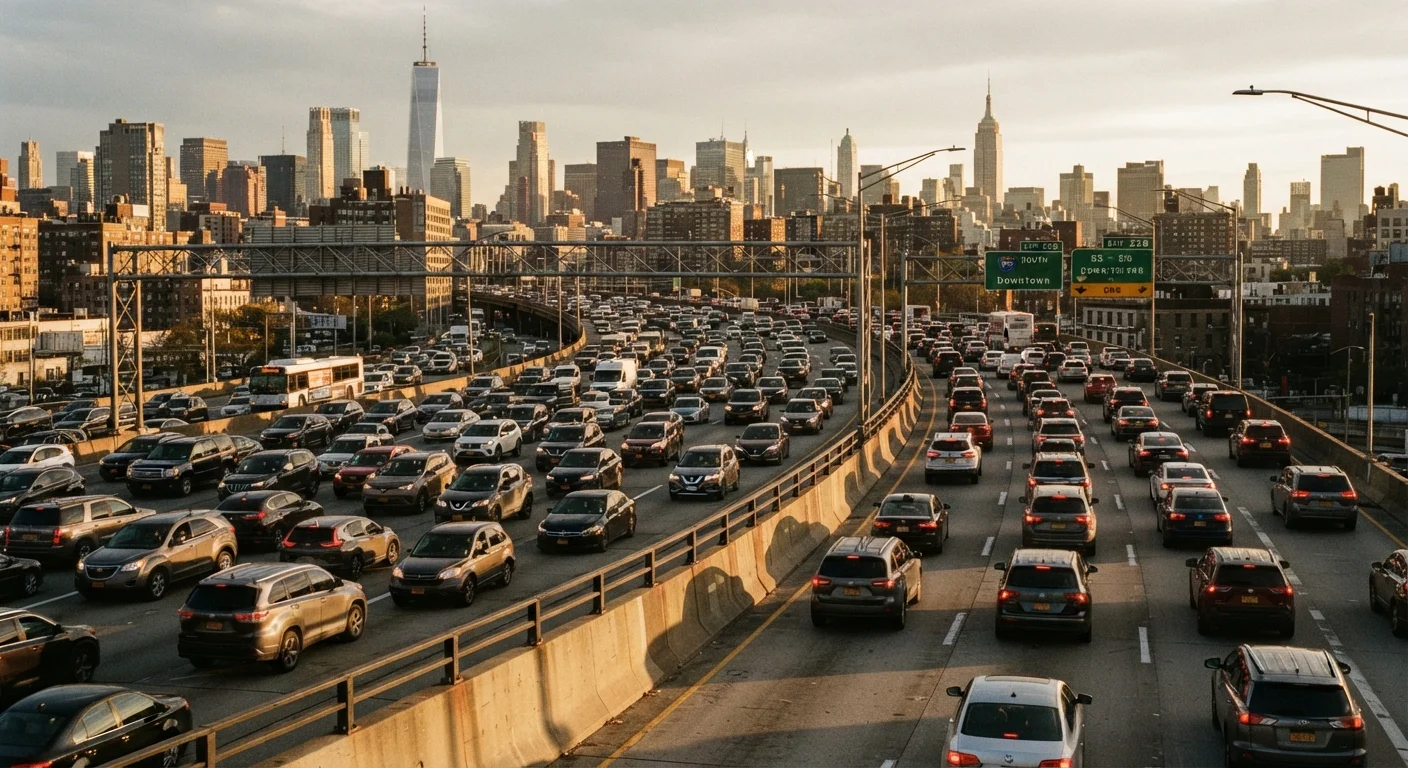
Road rage rarely appears without warning. It builds from a combination of situational stressors and individual mental state. The most common triggers are perceived disrespect, running late, heavy traffic, and physical discomfort such as heat or fatigue.
The word 'perceived' matters here. A driver who cuts across two lanes may simply have misjudged their exit. The driver behind them, already stressed from a difficult morning, reads it as a deliberate insult. That misattribution is where road rage begins. A neutral event gets assigned hostile intent, and the emotional response scales accordingly.
Anonymity amplifies this. Inside a car, a person feels both protected and separated from normal social accountability. The same individual who would hold a door open and apologize profusely for a minor bump in a grocery store may lean on a horn and shout through glass without a second thought. That psychological distance between drivers removes the feedback loop that usually keeps aggression in check.
Stress and fatigue lower your threshold
Sleep deprivation and chronic stress are not just background conditions; they directly lower the threshold at which a driver will respond aggressively. A driver who is rested and not under time pressure is far less likely to escalate a minor traffic event than one who is sleep-deprived or late for an important appointment. If you know you are in a high-stress period, that self-awareness is itself a protective tool.
Sleep deprivation and chronic stress are not just background conditions; they directly lower the threshold at which a driver will respond aggressively. A driver who is rested and not under time pressure is far less likely to escalate a minor traffic event than one who is sleep-deprived or late for an important appointment.
How escalation works, and why it moves fast
Road rage escalates through a predictable pattern: provocation, reaction, counter-reaction. Once the cycle starts, each response is read as justification for the next. A brief horn honk becomes a prolonged one. A gesture prompts brake-checking. Brake-checking prompts a more dangerous maneuver. Within seconds, two strangers are engaged in behavior that could kill both of them.
The speed of escalation catches people off guard because it bypasses rational thinking. The brain's threat-detection system activates, adrenaline rises, and judgment narrows. Drivers in a road rage incident frequently report afterward that the interaction felt much longer and more threatening than it actually was. That perception distortion matters: it means people make high-stakes decisions while functioning below their normal cognitive capacity.
Tailgating is a common road rage behavior that illustrates how quickly danger compounds. At highway speeds, following distances that feel intimidating also leave almost no margin for stopping, turning a hostile gesture into a potential collision with zero reaction time.
~80%
Drivers who admitted to road rage behavior
The AAA Foundation for Traffic Safety reported that nearly 80 percent of drivers admitted to significant aggression, anger, or road rage at least once in a given year.
~30
Annual deaths linked to road rage incidents
The AAA Foundation has estimated that aggressive driving behaviors contribute to roughly 30 or more fatalities per year, though the full toll is likely higher given reporting inconsistencies.
Habits that keep you out of it
The most reliable protection against road rage, both experiencing it and triggering it in others, is behavioral. Several habits make a measurable difference.
Build travel time into your schedule. A driver who is not running late has no time pressure, and time pressure is one of the most consistent predictors of aggressive behavior. Even ten extra minutes reduces the urgency that turns minor delays into major irritants.
Treat other drivers' mistakes as accidental by default. Most errors on the road are exactly that: errors. Assuming bad intent is a choice, and it is a choice that increases your own stress without changing what the other driver did.
Avoid retaliation. If someone cuts you off, the safest response is to ease off the accelerator and add distance. Responding with a horn, lights, or gesture invites a counter-response. Defensive driving teaches this as a core principle: the goal is to arrive safely, not to establish who was right.
If you feel your own anger rising, a concrete physical strategy helps. Lower your shoulders, unclench your grip on the wheel, and breathe slowly. These are not metaphors; they are physical interrupts that reduce the physiological arousal driving the anger.
What to do when another driver is the aggressor
If another driver directs road rage at you, the response that protects you most is also the one that feels least satisfying: do nothing back.
Avoid eye contact. Looking directly at an aggressive driver signals engagement. Keep your eyes on the road ahead and increase the gap between your vehicle and theirs. If they continue following or escalating, do not drive home. Drive to a police station, a fire station, or any busy public location and call 911.
Do not stop and exit your vehicle under any circumstances. A confrontation that starts as a traffic dispute can turn physical or worse within seconds. The car is your safest position. Stay in it, stay in traffic, and stay calm.
Highway driving skills such as smooth lane changes and consistent speed management also reduce the chance of accidentally provoking another driver. Many road rage incidents begin because one driver's poor technique was misread as aggression. Predictable, signaled driving behavior gives other drivers less to react to.
This article provides general information about driving behavior and safety. It is not legal advice. If you are involved in a threatening situation on the road, contact local law enforcement.