What the physics actually show
Speed creates distance problems that feel abstract until the numbers are written out. At 60 mph, a vehicle covers 88 feet every second. The average driver takes between 1.5 and 2.5 seconds to perceive a hazard and move a foot to the brake pedal. That reaction window alone consumes 130 to 220 feet of road before the brakes make any contact.
Once braking starts, a typical passenger car traveling at 60 mph on dry pavement needs roughly another 130 to 180 feet to reach a full stop. Add those together and the total stopping distance can reach 350 to 400 feet. A driver following two car lengths behind, roughly 30 to 40 feet, has closed that gap long before the car ahead has finished stopping.
Wet or degraded road surfaces extend braking distance further. Water reduces tire friction, and on wet asphalt, braking distance can increase by 50 percent or more. Ice can multiply it several times over. The physics do not change based on driver confidence or vehicle quality alone; stopping distance is governed by speed, friction, and mass.
29%
Share of serious injury crashes that are rear-end collisions
According to the National Highway Traffic Safety Administration, rear-end crashes are consistently among the most common serious injury crash types in the U.S.
88 ft/sec
Distance traveled per second at 60 mph
This figure illustrates how quickly available stopping distance disappears when following too closely at common highway speeds.
400 ft
Approximate total stopping distance at 60 mph
This estimate combines a 2-second reaction distance with typical dry-pavement braking distance for a passenger vehicle.
Why human perception makes it worse
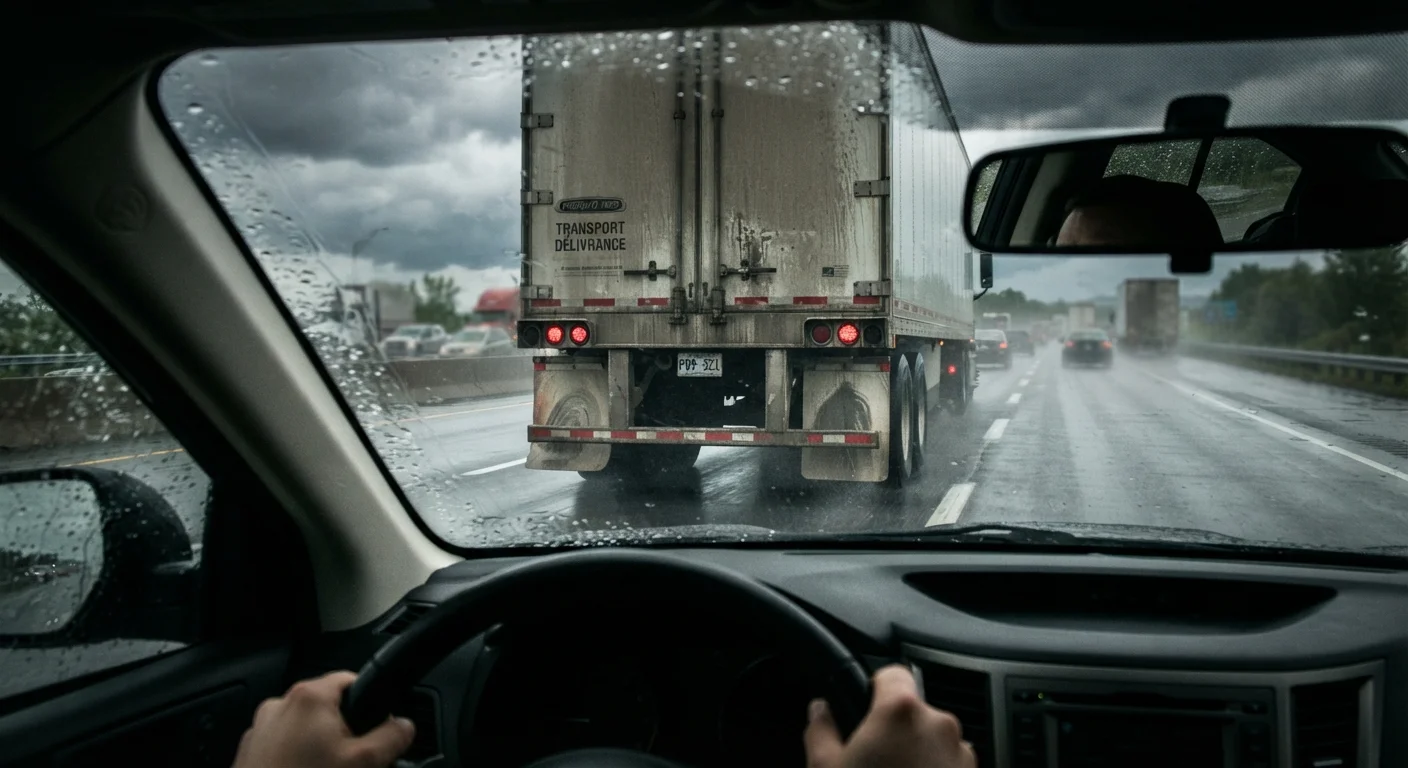
Drivers consistently underestimate how fast a gap closes. At highway speeds, the visual difference between a three-second gap and a one-second gap is subtle. The vehicle ahead simply looks slightly closer, and the brain does not register the change as urgent until the situation is already critical.
Fatigue amplifies this problem. Reaction times of well-rested drivers average around 1.5 seconds; fatigued or distracted drivers can exceed 2.5 or even 3 seconds. At 70 mph, that extra second of delay means the car travels an additional 103 feet before the driver even begins to brake.
This is why defensive driving explicitly addresses space management: the habit of maintaining a cushion is not about being cautious, it is about buying time that physics cannot otherwise provide.
How rear-end crashes actually unfold
Most rear-end collisions follow a predictable sequence. The lead vehicle brakes, either for traffic, a hazard, or a sudden stop. The trailing vehicle driver perceives the brake lights, begins to react, and presses the brake pedal. If the gap is insufficient, the collision happens before deceleration is complete.
The severity of the impact depends on the speed difference at the moment of contact. A rear-end crash at a closing speed of 15 mph feels minor; at 40 mph, it is likely to cause serious injury or death. Tailgating at highway speeds means any braking event in front of you becomes a potential high-speed impact, because there is no distance to reduce the speed differential before contact.
Rear-end crashes account for roughly 29 percent of all serious injury crashes in the United States, according to data from the National Highway Traffic Safety Administration. Following distance is consistently identified as a contributing factor in these events. The approach to following distance should also shift based on road type, since rural highways and city streets present different hazard profiles.
The behavioral dimension: aggression and road rage
Tailgating is not always inattentive; sometimes it is deliberate. Drivers use close following to pressure a slower vehicle to move over, express frustration, or assert dominance on the road. In these cases, the physical danger is compounded by an interpersonal escalation risk.
A driver who feels pressured by a vehicle behind them may brake suddenly, slow deliberately, or respond aggressively. These reactions can trigger the exact crash the tailgating driver presumably did not intend. Road rage often begins with exactly this dynamic, and what starts as a following-distance issue can become a multi-vehicle incident.
The practical guidance is straightforward: if traffic ahead is moving too slowly, use a lane change when it is safe and legal to pass. Holding a three-second gap in the meantime costs almost no time on a long trip and removes the risk entirely. Consistent following distance is also part of habits that reduce wear on your vehicle, since hard braking from close-following situations accelerates brake pad wear and suspension stress.